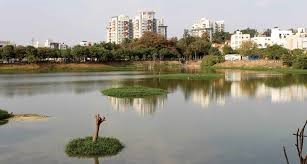
Bengaluru Kalena Agrahara Lake Revival Reshapes Urban Ecology
A long-degraded water body on Bengaluru’s southern edge has re-emerged as a functioning ecological and civic asset, underscoring how targeted public investment can reverse years of urban environmental damage. Kalena Agrahara Lake, located off Bannerghatta Road, has been restored after decades of sewage inflow and illegal dumping, transforming a public health liability into a stabilising element of the city’s fragile water network.
The revival of Kalena Agrahara Lake comes at a time when Bengaluru is grappling with declining groundwater levels, recurrent flooding and the steady disappearance of urban commons. Spread across just over seven acres, the lake had effectively ceased to function as a water body, overwhelmed by untreated wastewater and solid waste accumulation. Its restoration marks a rare instance where engineering intervention, hydrological correction and ecological planning have converged at a neighbourhood scale. The project was financed through Member of Parliament Local Area Development Scheme support, with funds channelled towards core structural and environmental works rather than cosmetic upgrades. Urban development officials involved in the exercise say the focus was on reinstating the lake’s basic hydrological integrity. Desilting operations removed years of accumulated sludge, increasing storage capacity and restoring depth. Reinforcement of the main embankment and the creation of a peripheral bund using reclaimed earth helped stabilise the shoreline and protect against erosion.
A critical intervention involved cutting off sewage inflows that had turned the lake into a waste receptacle. By diverting wastewater and allowing natural processes to resume, water quality gradually improved, enabling aquatic vegetation and microfauna to return. Environmental planners note that such improvements often trigger a cascading effect, supporting bird populations and improving soil moisture levels in surrounding areas.
Beyond ecological recovery, the Kalena Agrahara Lake revival has direct urban resilience implications. The restored lake now functions as a flood moderation basin during intense rainfall, temporarily holding runoff and reducing pressure on downstream stormwater drains. In a city where flash flooding has become increasingly common due to surface sealing and encroachment, such decentralised buffers are gaining importance in planning conversations. The lake has also emerged as a shared public space in a rapidly densifying corridor dominated by residential and commercial development. Residents now use the area for walking and informal recreation, illustrating how environmental infrastructure can simultaneously serve social needs when access is preserved.
Urban economists point out that while the financial outlay was modest compared to large infrastructure projects, the returns are multidimensional ranging from groundwater recharge and microclimate regulation to improved liveability and property value stability in nearby neighbourhoods. However, they caution that long-term success will depend on sustained maintenance, protection from future encroachments and strict enforcement against renewed sewage connections.
As Bengaluru debates large-scale solutions to its water and climate challenges, the Kalena Agrahara Lake revival offers a practical lesson: restoring small, neglected assets can collectively strengthen the city’s environmental backbone, provided governance and upkeep keep pace with initial investment.