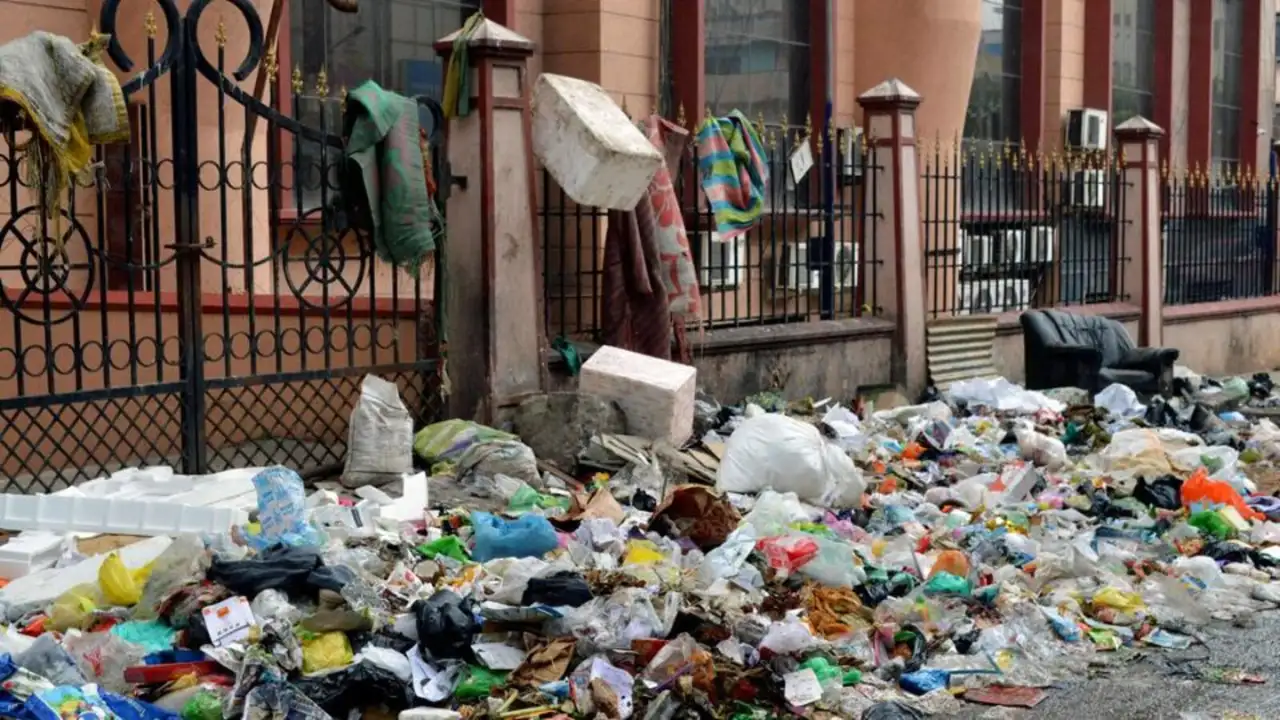
A key residential and transit stretch in south Bengaluru has emerged as a growing pressure point in the city’s solid waste management system, with Kadirenahalli facing recurring garbage accumulation despite routine civic interventions. The situation has raised broader concerns about ward-level coordination, waste segregation practices and the limits of decentralised collection infrastructure in dense urban neighbourhoods.
The affected corridor runs along a busy section of the Outer Ring Road, linking commercial establishments, healthcare facilities and residential clusters. Persistent dumping along footpaths, underpasses and road edges has reduced pedestrian access and created hygiene concerns for daily commuters. Urban planners note that such unmanaged waste pockets often appear along boundary zones between administrative wards, where responsibility for maintenance becomes fragmented. Civic authorities have attempted preventive measures, including temporary barriers and designated collection points. However, these interventions have struggled to curb indiscriminate disposal of mixed waste and construction debris. Senior officials familiar with the area say that enforcement remains weak, particularly during late evenings and early mornings when dumping is harder to monitor.
The presence of a local dry and wet waste collection centre was expected to ease pressure on roadside dumping. Instead, residents and business owners report that limited operating hours and inadequate clearance frequency have reduced its effectiveness. Overflowing waste and odour issues have discouraged proper use, reinforcing informal dumping along nearby streets. Public health experts warn that such conditions can intensify vector-borne risks, especially in neighbourhoods with high footfall and commercial activity. Another challenge lies in behavioural patterns linked to rental housing and short-term accommodation. Civic workers point out that waste segregation compliance is inconsistent, with unsegregated household waste often being disposed of from vehicles rather than handed over to collection staff. Without adequate bins or clearly marked transfer points along long boundary walls, the road itself becomes an informal dumping ground.
Operational coordination has also come under scrutiny. Street sweeping teams and waste collection units reportedly function under separate mandates, leading to gaps in accountability when bulk waste appears on arterial roads. Urban governance experts say this reflects a systemic issue in metropolitan waste management, where service contracts and ward boundaries do not always align with how residents actually use public space. Kadirenahalli’s experience highlights a wider urban challenge for Bengaluru as it transitions towards cleaner, low-carbon neighbourhoods. Efficient waste systems are not only an environmental necessity but also a critical component of urban liveability, public health and local economic activity. Poorly managed streetscapes can affect small businesses, reduce walkability and undermine confidence in civic institutions.
Looking ahead, experts suggest that sustained solutions will require extended operating hours at collection centres, better lighting and surveillance at known dumping spots, and clearer division of responsibility across ward boundaries. As Bengaluru expands and densifies, resolving hyperlocal waste failures like Kadirenahalli may prove essential to building a more resilient and people-first city.