


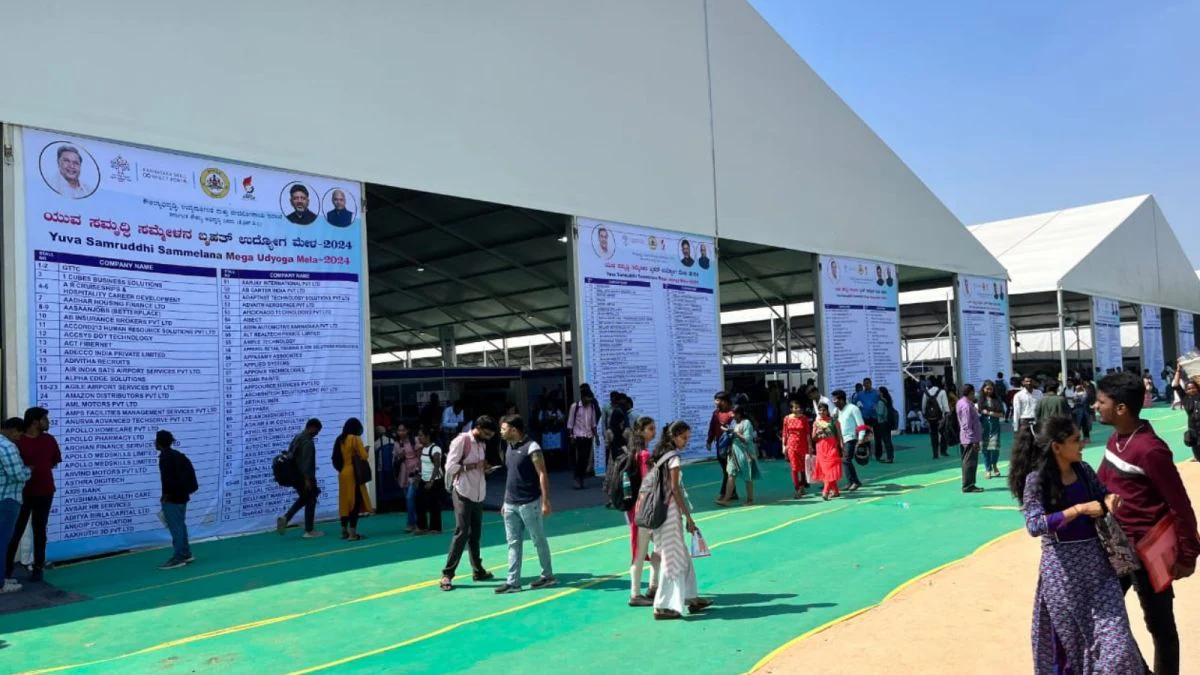
Bengaluru is preparing to host a large-scale international job fair aimed at connecting local talent with global employers, signalling a renewed push to align the city’s workforce with evolving industry demands.
The initiative comes at a time when urban labour markets are undergoing rapid transformation driven by technology, migration, and shifting economic priorities.Organised with participation from recruitment agencies, training institutions, and overseas employers, the event is expected to draw job seekers from across Karnataka and neighbouring states. Officials involved in the planning indicate that sectors such as healthcare, construction, hospitality, logistics, and information technology are likely to dominate hiring demand, reflecting both domestic skill gaps and international labour shortages.For Bengaluru, often positioned as India’s technology capital, the job fair represents a broader diversification of employment pathways beyond its established IT ecosystem. Urban planners note that such initiatives can help redistribute economic opportunity by linking semi-skilled and skilled workers to global markets, thereby easing pressure on local job saturation while enhancing income mobility.The structure of the event is designed to go beyond conventional recruitment drives. Participants are expected to undergo preliminary screenings, documentation support, and orientation sessions on international work standards.Industry observers suggest that this approach addresses a key barrier in overseas employment—lack of awareness about regulatory processes, contract norms, and worker rights.
From a city development perspective, employment-linked events of this scale have implications for urban infrastructure and services. Increased labour mobility, particularly outbound migration, can influence housing demand, remittance flows, and skill development ecosystems. Experts highlight that cities like Bengaluru must simultaneously invest in training infrastructure to ensure that workforce transitions are inclusive and sustainable.The emphasis on international placements also raises questions around skill readiness and certification standards. Training providers associated with the initiative are reportedly aligning curricula with global benchmarks, particularly in sectors like healthcare and engineering services. This reflects a growing trend where cities are positioning themselves as talent exporters in addition to innovation hubs.At a policy level, such job fairs underscore the need for coordinated frameworks between local authorities, industry bodies, and international employers. Ensuring transparency in recruitment practices and safeguarding worker welfare remain critical concerns, particularly in cross-border employment scenarios.
As Bengaluru continues to evolve as a multi-sector urban economy, the success of this job fair could serve as a model for other Indian cities seeking to expand employment access beyond traditional sectors. The coming months will reveal whether such initiatives can translate into long-term workforce resilience and more equitable urban growth.
Also Read:Bengaluru Civic Budgets Shape Future Urban Development
