


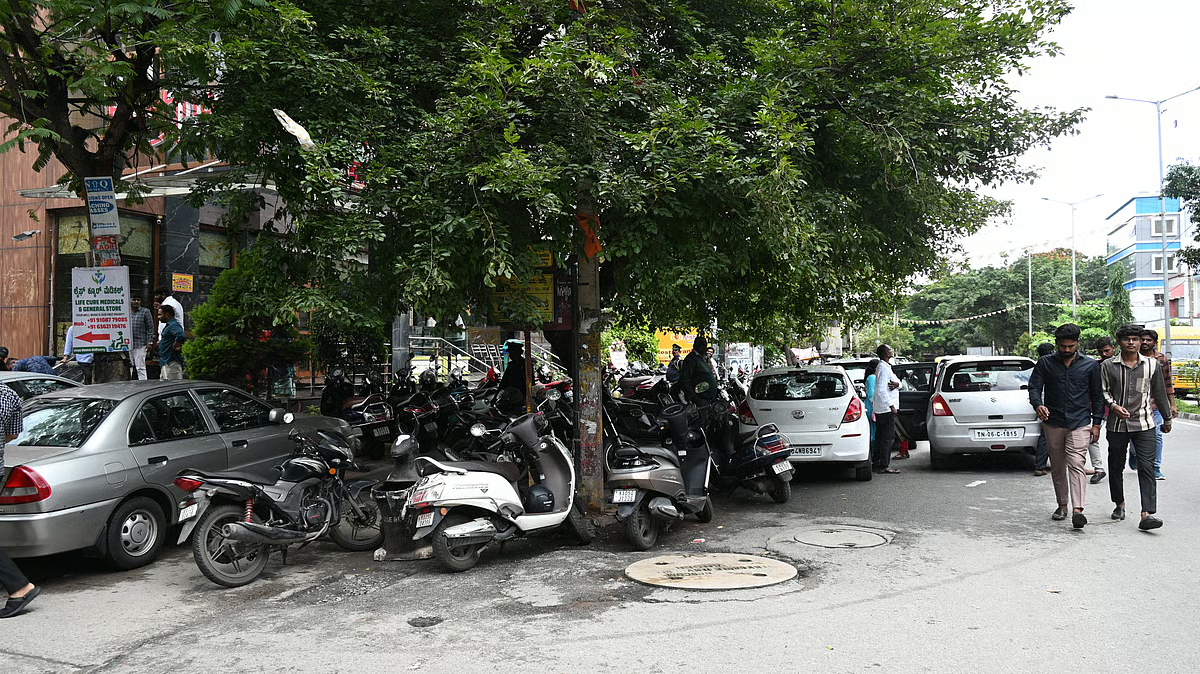
Bengaluru Footpaths Struggle Despite JC Road White Topping
Bengaluru’s JC Road, recently upgraded with white-topped surfacing aimed at improving traffic flow and urban mobility, continues to face congestion and footpath obstructions.
Persistent bike parking, informal stalls, and unregulated encroachments have rendered pedestrian pathways largely unusable, raising concerns about urban planning, citizen safety, and equitable access to public spaces.Urban planners emphasise that upgrading road surfaces without concurrent enforcement of pedestrian and traffic regulations often undermines the intended benefits of such infrastructure projects. A senior city official highlighted that while the white-topping project enhanced vehicle movement on the main carriageway, footpath encroachments limit accessibility for pedestrians, the elderly, and differently-abled citizens, affecting the city’s commitment to inclusive mobility.Economically, the unregulated occupation of footpaths can influence local commerce in unintended ways. Industry analysts note that informal vendors, while contributing to microeconomic activity, can disrupt the flow of customers to established retail outlets and create congestion that reduces overall commercial efficiency. From a real estate perspective, the functionality and perception of commercial streets like JC Road directly impact property values, tenancy demand, and urban investment patterns.Traffic experts also point out that motorcycles and bicycles parked on pedestrian zones exacerbate safety risks, especially during peak hours.
Multi-modal integration, where pedestrian, two-wheeler, and vehicular traffic are planned holistically, remains underdeveloped in parts of Bengaluru. Effective urban design would require physical demarcations, strict enforcement, and incentives for responsible parking to ensure equitable access to public space.Environmentally, the continued encroachment has indirect consequences. Pedestrian movement is a low-carbon mode of transport; when pathways are blocked, more residents rely on motorised transport, increasing emissions and contributing to local air pollution. City planners argue that preserving walkable corridors aligns with broader climate-resilience objectives and helps the city meet zero-carbon urban mobility goals.Looking forward, urban development experts suggest integrated solutions combining regulatory oversight, citizen awareness campaigns, and digital monitoring of pedestrian pathways. Potential interventions include designated micro-stall zones, multi-level parking options, and smart signage to guide traffic flow without compromising footpath usability. By addressing these challenges, Bengaluru can ensure that infrastructure investments translate into inclusive, safe, and environmentally responsible urban spaces.
JC Road’s experience illustrates the broader challenge for Indian cities: infrastructure improvements alone cannot guarantee functional public spaces without systemic enforcement, citizen cooperation, and planning that prioritises equity and sustainability.
Also Read:Bengaluru Airbound Medical Corridor Enhances Healthcare
