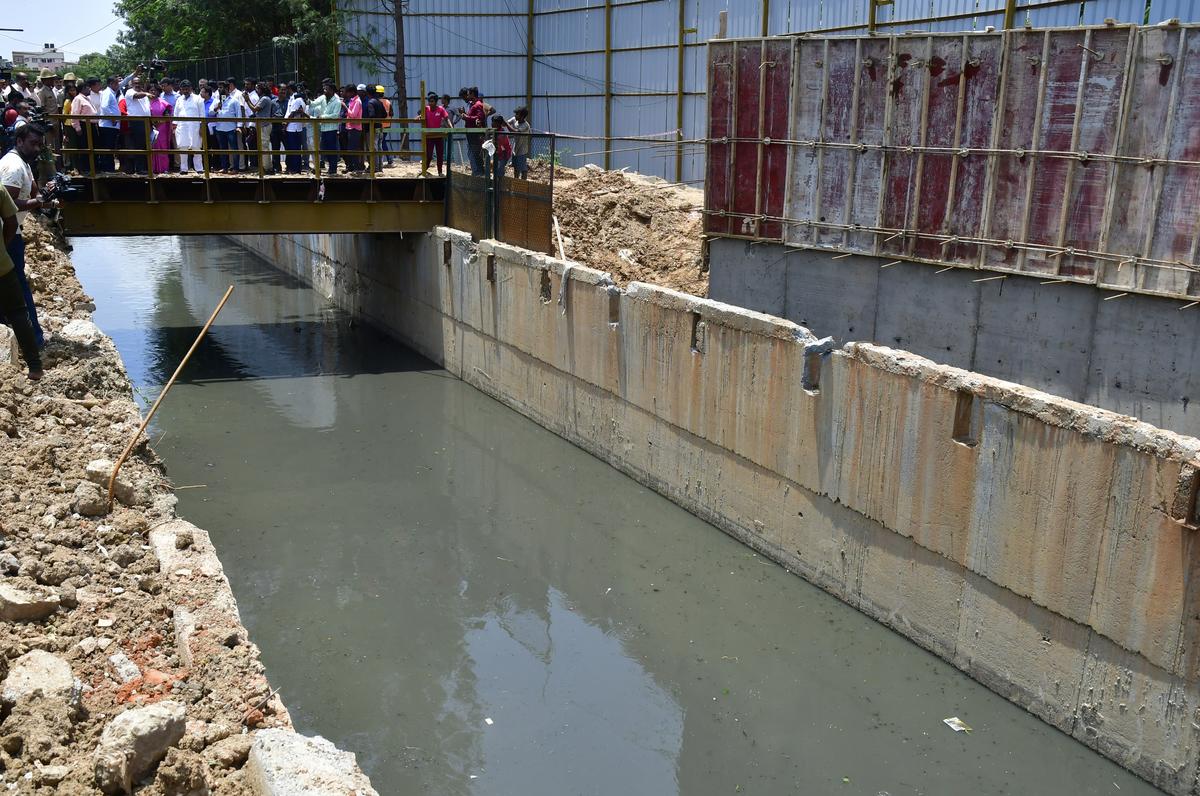
Bengaluru Invests In Sewer Upgrade For Cleaner Water
Bengaluru has approved a long-awaited underground drainage upgrade for Jigani town, aiming to halt untreated sewage flowing into Hennagara Lake—one of the city’s fast-degrading waterbodies. The move, prompted by regulatory pressure and sustained citizen concern, signals a course-correction in how urban wastewater is managed in rapidly industrialising peri-urban areas.
A recent assessment by the Karnataka State Pollution Control Board found that several settlements, including Jigani and nearby villages, were releasing domestic and industrial wastewater directly into stormwater channels. With no underground drainage system in large parts of Jigani town, raw sewage had continued to enter Hennagara Lake unchecked. The issue drew criticism from the National Green Tribunal last year for slow governmental action and poor pollution control. The Urban Development Department has now issued a work order worth over ₹82 crore to a private contractor to build a 73-km sewer network and provide drainage connections to more than 6,000 households. The package includes construction of machine holes, procurement of suction-jetting and desilting vehicles, and installation of pumping infrastructure. A senior department official told Urban Acres that the project is designed for phased execution with completion expected within three years, followed by five years of maintenance by the contractor.
The project also includes two sewage treatment plants—one with a capacity of 6 million litres a day near Hennagara and another of 110 kilolitres a day in Srirampura—intended to treat wastewater before it reaches any waterbody. Land acquisition has reportedly begun, with the local municipal council sharing part of the acquisition cost. Until the facilities are operational, wastewater from Jigani and adjoining areas will be transported by tankers to an existing treatment plant in Anekal. Government officials maintain that interim measures will prevent further contamination of Hennagara Lake. However, environmental analysts warn that sustained compliance monitoring will be essential, as tanker-based sewage transport has historically been linked to illegal dumping when oversight is weak.
Urban experts argue that lakes in Bengaluru’s outer zones have become collateral damage of unchecked industrial expansion and housing growth without parallel investment in sanitation. “If the city is serious about water security and climate resilience, wastewater infrastructure must be prioritised at every stage of urban growth,” an independent water-management researcher noted. The Hennagara initiative, though delayed, could become a testing ground for how Bengaluru integrates restoration of natural assets into planning. If executed effectively, the project aligns with broader efforts to build cities that are cleaner, more inclusive, and environmentally responsible—where lake ecosystems are valued as public commons rather than sacrifice zones for development. For residents who rely on lakes for microclimate regulation, groundwater recharge, and public spaces, the progress may finally offer hope that urban growth and ecological health need not be opposing forces.
Bengaluru Invests In Sewer Upgrade For Cleaner Water