


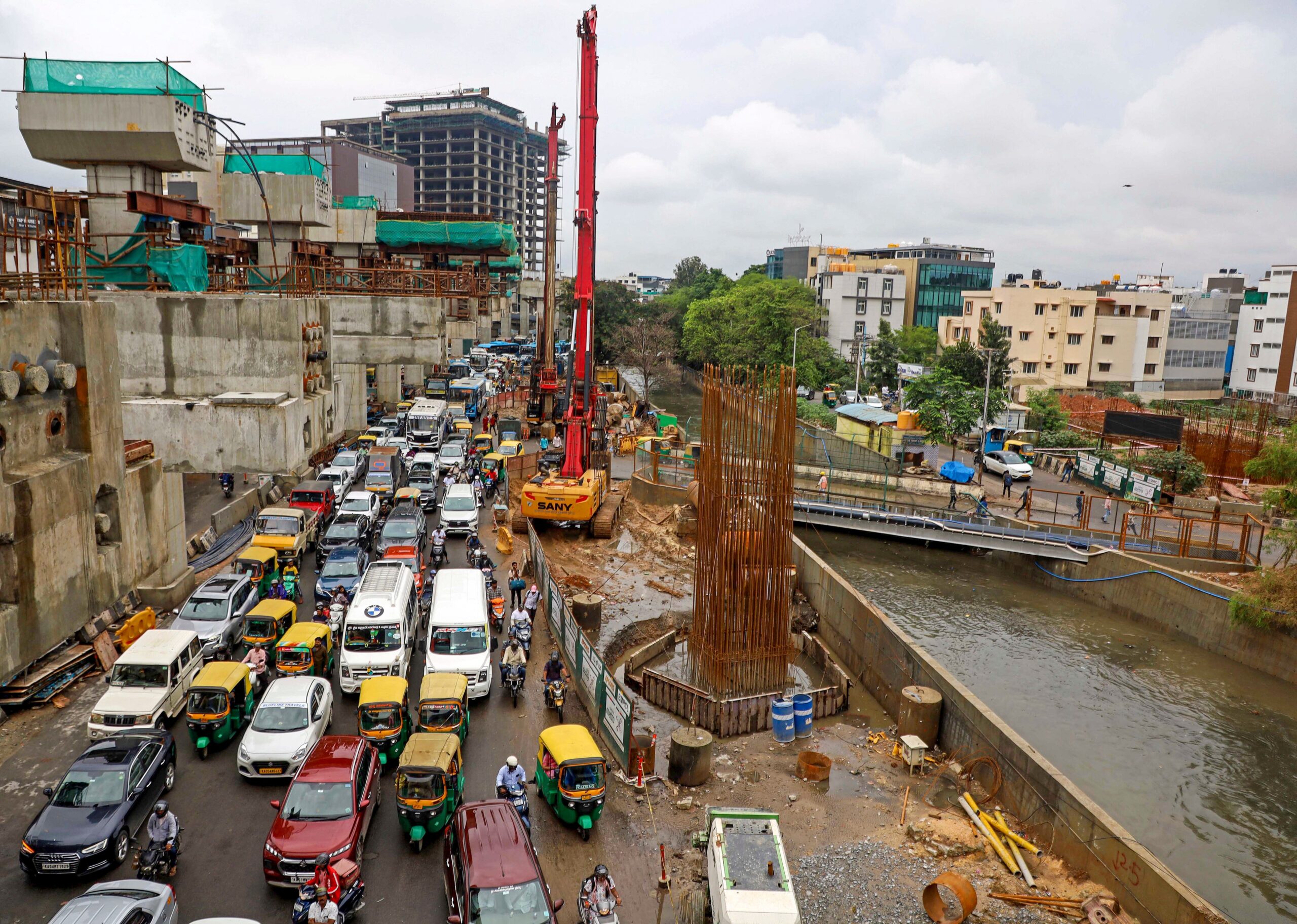
Civic protests in Bengaluru have intensified scrutiny over the city’s infrastructure priorities, with activists questioning the long-term impact of flyovers and other large-scale projects on urban sustainability.
The demonstrations reflect growing public engagement with planning decisions and a demand for more transparent, climate-sensitive development strategies.The campaign, led by environmental groups and citizen collectives, has brought attention to what critics describe as inefficient investments in road-centric infrastructure. At the centre of the debate is the concern that such projects may offer short-term congestion relief while failing to address systemic mobility challenges. The discourse around Bengaluru infrastructure protests highlights a broader shift in how urban residents are evaluating development outcomes.Urban planners note that Bengaluru’s rapid growth has placed immense pressure on its transport systems, leading to a reliance on flyovers and signal-free corridors as quick fixes. However, experts argue that these solutions often induce additional traffic demand over time, potentially exacerbating congestion rather than resolving it.This has prompted calls for a greater focus on public transport, non-motorised mobility, and integrated land-use planning.The Bengaluru infrastructure protests also underscore concerns about environmental impact.
Large construction projects can lead to tree loss, increased emissions, and disruption of local ecosystems. Activists are advocating for alternatives that prioritise green cover, pedestrian-friendly streets, and sustainable mobility solutions, aligning with global urban resilience frameworks.From a governance perspective, the protests point to the need for more participatory decision-making processes. Citizens are increasingly seeking involvement in planning discussions, particularly when projects have long-term implications for neighbourhoods and urban ecosystems. Experts suggest that incorporating public feedback at early stages can improve project outcomes and build trust between authorities and residents.Economic considerations are also part of the debate.Infrastructure investments require significant public expenditure, and questions are being raised about cost-effectiveness and return on investment. Analysts argue that funds allocated to large-scale road projects could be balanced with investments in metro expansion, bus systems, and last-mile connectivity to deliver more inclusive benefits.At the same time, city officials maintain that infrastructure expansion is necessary to support Bengaluru’s economic growth and rising population. The challenge lies in aligning these development goals with sustainability and liveability benchmarks.
As Bengaluru infrastructure protests continue, the city stands at a critical juncture in its urban evolution. The outcome of this debate could influence how future projects are planned and executed, shaping a development model that balances growth with environmental responsibility and citizen well-being.
Also Read:Bengaluru Metro IPL Services Extended Till 2 AM
