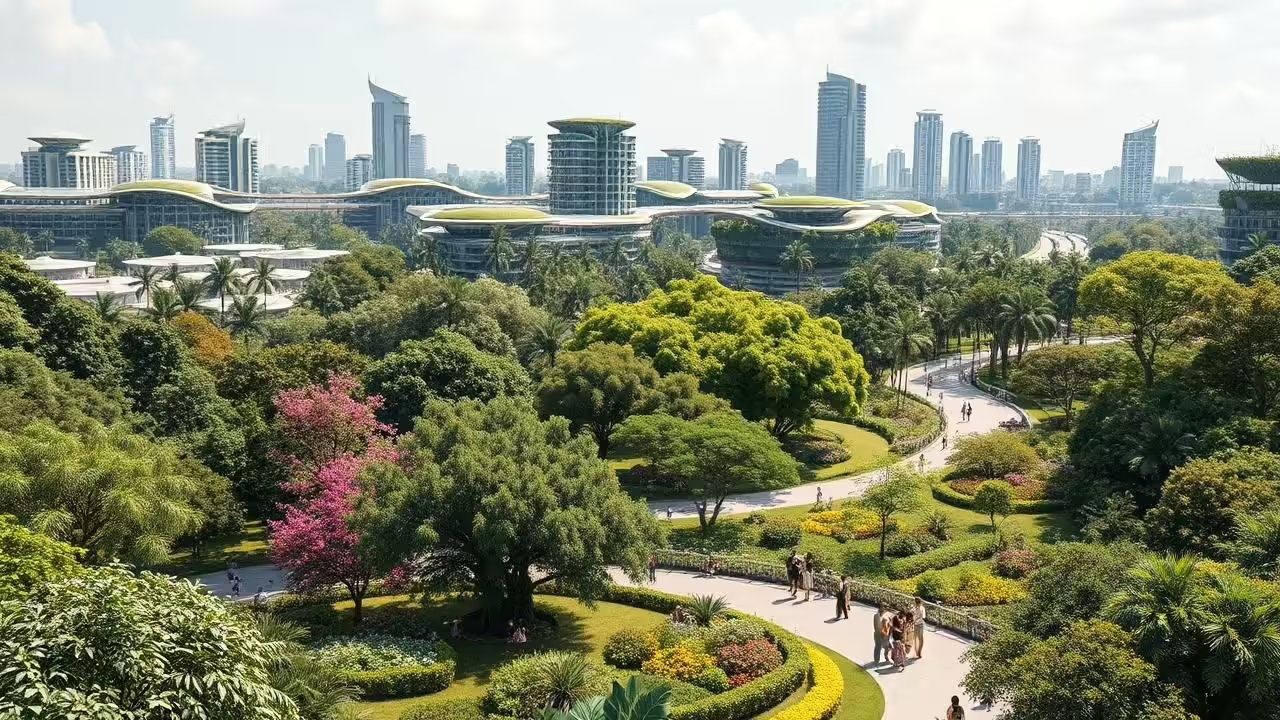
Nagpur Parks Redevelopment Project Revamps Urban Green Spaces
Bengaluru has taken a targeted step toward embedding sustainability into its urban systems by backing five early-stage companies whose solutions address construction emissions, water reuse, and waste generated by the city’s service economy. Selected under a city-focused innovation challenge, the startups will receive financial support to pilot their technologies across Bengaluru, signalling a shift from policy intent to on-ground experimentation in sustainable urban development. The initiative reflects a growing recognition among city administrators that climate resilience cannot be achieved through regulation alone. Instead, Bengaluru is increasingly turning to market-ready innovations that can be deployed within existing urban infrastructure, particularly in sectors where municipal capacity remains stretched.
With over 600 applications received, the final shortlist highlights the depth of interest in building commercially viable responses to urban sustainability challenges. A significant share of the winning solutions focuses on the built environment, which accounts for a major portion of urban emissions and resource consumption. Two of the selected companies work on lowering the carbon footprint of construction materials, addressing an area that has drawn increasing scrutiny as Bengaluru continues to expand vertically and horizontally. Low-carbon concrete and alternative building materials are seen by urban planners as essential to decarbonising real estate without slowing development. Water management emerged as another priority. One startup offers decentralised filtration systems that allow treated wastewater to be reused for non-drinking purposes such as landscaping and construction.
With Bengaluru facing recurrent water stress, such solutions are increasingly viewed as critical to reducing dependence on freshwater sources while easing pressure on ageing sewerage networks.The challenge also placed strong emphasis on the circular economy, particularly waste generated by the city’s food and hospitality sectors. Two of the selected ventures focus on replacing single-use plastics commonly used by eateries and delivery services with compostable or reusable alternatives. These interventions are timely, as municipal authorities struggle to manage rising volumes of mixed waste despite segregation mandates. Urban development experts note that the importance of the programme lies not only in funding, but in its focus on scalability and replication. City officials involved in the selection process indicated that preference was given to solutions that could be adapted across wards and potentially other Indian cities, rather than niche or pilot-only concepts.
Access to institutional feedback and operational guidance is expected to be as valuable as the financial grant itself. For Bengaluru, the experiment offers a test case for integrating private innovation into public urban systems whether in lakes, infrastructure projects, or waste management operations. If successful, such collaborations could reduce long-term civic costs while accelerating progress toward low-carbon, resource-efficient cities. As Indian metros confront the twin pressures of rapid growth and climate risk, Bengaluru’s approach suggests a pragmatic path forward: treating sustainability not as a constraint on development, but as an opportunity to redesign how cities build, consume, and regenerate.