


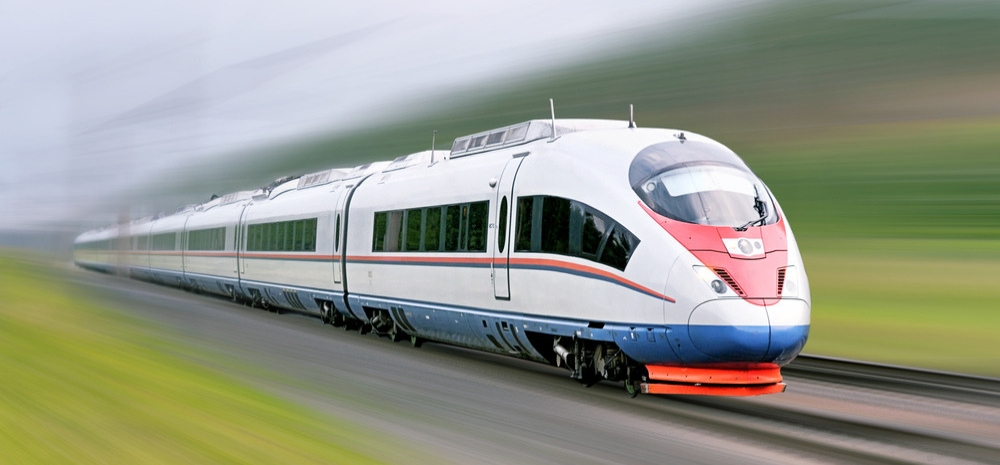
Bengaluru, Hyderabad, Chennai and Amravati are poised to witness India’s next major leap in transport infrastructure, as the government has ordered a survey for a new high-speed rail corridor linking these four southern cities. Officials confirmed that the project will serve over five crore residents, offering a faster, more sustainable alternative to road and air travel.
The announcement signals a transformative phase in South India’s connectivity ambitions. At present, large parts of the country remain dependent on road corridors or short-haul flights, both of which are heavily carbon intensive. A high-speed rail corridor across Bengaluru, Hyderabad, Chennai and Amravati would not only shorten travel times but also set the benchmark for greener transport solutions in the region.Transport experts highlight that bullet trains are more energy efficient than domestic flights, producing significantly lower carbon emissions per passenger kilometre. For a region witnessing rapid urbanisation, this corridor represents both economic opportunity and an environmental necessity. With urban populations expanding, the reliance on eco-friendly long-distance transport is seen as vital for sustainable growth.
Also Watch: An Exclusive Interview with Sanjeev Jaiswal (IAS), CEO MHADA
Officials explained that the survey, once completed, will determine the feasibility, environmental considerations, and alignment of the high-speed tracks. This phase will be crucial, as previous mega-projects in India have faced delays due to land acquisition hurdles, funding bottlenecks, and questions around ecological impact. To address such concerns, the current plan is expected to integrate global best practices in green mobility, with emphasis on low-emission technologies, energy-efficient stations, and integration with renewable energy sources.
The project is expected to reshape passenger logistics in southern India. At present, intercity travel between Bengaluru, Hyderabad and Chennai takes several hours by road. A bullet train operating at speeds of up to 320 kmph could reduce travel times to a fraction, while easing congestion on highways and lowering vehicular pollution. Economists also point to the potential boost to regional markets, as smoother connectivity between urban clusters will enable faster movement of people and goods, catalysing job growth across the corridor.
Beyond the southern plan, the Mumbai-Ahmedabad high-speed rail project India’s first offers a preview of what may come.
