


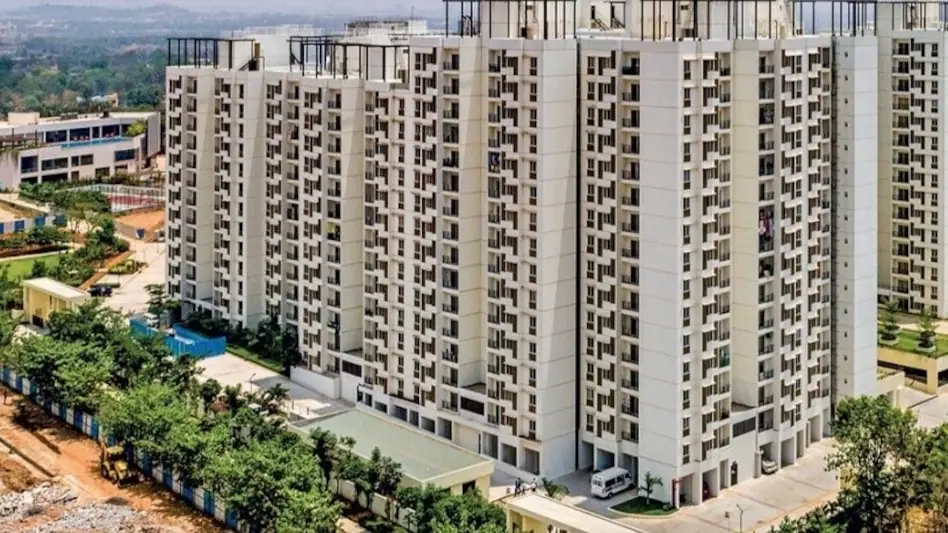
Bengaluru is emerging as one of the strongest contributors to India’s growing appetite for larger homes, with average apartment sizes in the city rising by around 21 per cent between 2023 and 2025. The increase reflects a decisive move by buyers toward expansive three- and four-bedroom configurations, reshaping the city’s residential development pipeline.
Industry data tracking the top seven metropolitan markets shows that average unit sizes have expanded nationwide over the past two years. However, Bengaluru’s performance stands out for both scale and consistency, positioning it alongside Chennai as one of the fastest-growing markets for larger dwellings. Developers attribute the trend to evolving household needs and hybrid work patterns that have made additional rooms often used as home offices or study spaces a practical requirement rather than a luxury. In Bengaluru’s technology-driven economy, where a significant portion of the workforce continues flexible working arrangements, demand for spacious layouts has remained resilient despite rising property values. Across India’s major cities, the average flat size increased from roughly 1,420 sq ft in 2023 to about 1,676 sq ft in 2025 a growth of nearly 17 per cent. Hyderabad currently records the largest average unit sizes, while the National Capital Region has posted the steepest growth, driven by an upswing in high-end supply. By contrast, markets such as Kolkata and Pune have seen more moderate expansion, and the Mumbai Metropolitan Region continues to report comparatively compact configurations due to land constraints. Urban economists suggest that the growth in larger homes signals more than a lifestyle upgrade. It reflects a shift in purchasing power among upper-middle-income households and professionals employed in technology, finance and research sectors. In Bengaluru, steady job creation and the expansion of global capability centres have reinforced the city’s reputation as a premium residential destination.
Yet the trend raises broader planning questions. Larger apartments, particularly in gated communities, can increase per-unit resource consumption if not designed efficiently. Planners emphasise the importance of green building standards, energy-efficient systems and water recycling measures to offset the environmental footprint of bigger homes. Compact urban design, public transport connectivity and mixed-use neighbourhoods remain critical to ensuring that growth does not translate into higher congestion and carbon intensity. Between 2019 and 2025, average apartment sizes across India’s leading cities have grown by approximately 45 per cent, underlining a sustained post-pandemic recalibration of housing preferences. For Bengaluru, the momentum reinforces its position as a market where aspirational living, employment growth and real estate investment intersect.
As developers recalibrate supply toward larger configurations, the long-term challenge will be balancing premium demand with affordability and sustainable land use ensuring that the city’s housing evolution supports inclusive and climate-resilient urban growth.
Also Read: Devanahalli North Bengaluru draws property investors
Bengaluru housing market tilts to bigger apartments
