


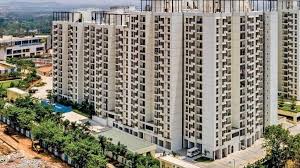
Bengaluru’s residential property market is beginning to encounter a subtle but significant shift in buyer behaviour as rising home prices, job uncertainty and single-income household pressures reshape ownership decisions in India’s technology capital.
While demand for housing remains structurally strong, especially in established IT corridors, market participants say a growing segment of salaried professionals is delaying home purchases despite relatively high monthly incomes. The hesitation reflects deeper concerns around long-term financial exposure rather than short-term affordability. Industry analysts note that apartments priced between Rs 1 crore and Rs 1.5 crore once considered aspirational but achievable for mid-career professionals are now prompting reassessment, particularly among households dependent on a single income stream. Elevated ticket sizes translate into multi-decade loan commitments, leaving limited buffers against employment disruption or economic shocks. This caution comes amid renewed volatility in the technology sector, which underpins Bengaluru’s housing demand. Recent workforce rationalisation by large global and domestic IT firms has heightened sensitivity around income continuity, especially for professionals in their late 30s and early 40s who often carry education, healthcare and eldercare responsibilities alongside housing costs. Urban economists say this environment is encouraging alternative housing strategies. Instead of immediately purchasing a finished apartment, some buyers are considering phased asset-building approaches including land investments or smaller starter homes to preserve liquidity and reduce future debt exposure. While land parcels offer flexibility and long-term appreciation potential, experts caution that they do not provide immediate shelter or rental savings, and outcomes depend heavily on location, infrastructure timelines and regulatory clarity.
At the same time, the rental market continues to tighten across employment hubs, eroding the traditional argument that postponing ownership significantly lowers monthly outflows. With rents rising steadily, households delaying purchases may face cumulative costs without asset security, particularly if price correction remains shallow or localised. Property consultants argue that Bengaluru’s real estate market is not entering a downturn but a phase of behavioural recalibration. Premium housing continues to attract demand from dual-income families, senior executives and investors, while mid-segment end-users are becoming more selective about size, location and timing. The city’s long-term fundamentals a deep talent pool, diversified technology ecosystem, strong startup culture and ongoing infrastructure expansion remain intact. However, planners and policymakers note that sustained housing momentum will increasingly depend on aligning supply with income realities, improving mass transit connectivity to peripheral areas, and expanding options for mid-income ownership.
As Bengaluru evolves from a rapid-growth tech hub into a more mature metropolis, its housing market appears to be transitioning from aspiration-led buying to risk-aware decision-making a shift that could influence pricing, product design and urban development patterns in the years ahead.
Also Read: Hyderabad Property Sector Showcases Market Depth
Bengaluru Housing Costs Force Rethink Of Ownership
