


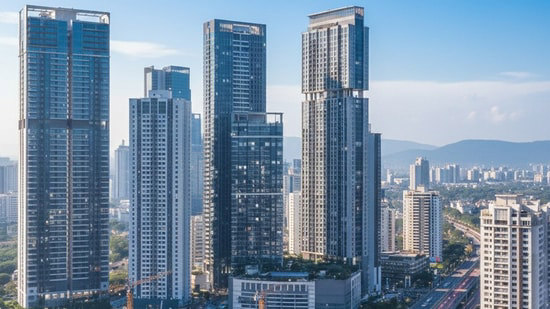
As property values in several neighbourhoods breach the Rs 2 crore mark, Bengaluru housing affordability is emerging as a defining concern for salaried households navigating high borrowing costs and rising living expenses. Market participants say the debate is no longer about loan eligibility alone, but about long-term financial resilience in a volatile urban economy.
Industry advisors estimate that purchasing a Rs 2 crore apartment typically requires a minimum 20 per cent upfront contribution, with the balance financed through a housing loan of roughly Rs 1.6 crore. At prevailing interest rates, monthly repayments can approach Rs 1.5 lakh, depending on tenure. When routine household expenses are added, total monthly outgo may comfortably exceed Rs 2.5 lakh. Financial planners argue that housing-related costs should ideally remain within half of total household income. By that metric, families would need earnings in the range of Rs 3 lakh per month or higher to sustain such commitments without compromising savings, insurance and emergency reserves. This threshold rises further once stamp duty, registration charges and interior fit-outs are factored in costs that often stretch liquidity at the time of purchase. The recent decision by the Reserve Bank of India to hold policy rates steady has brought predictability to borrowers. However, analysts note that stable interest rates alone do little to ease Bengaluru housing affordability pressures when capital values remain elevated. For many middle-income families, affordability is increasingly determined by the size of the down payment rather than loan approvals.
Dual-income households are better positioned to absorb risk, especially when one partner’s income may fluctuate due to career breaks or caregiving responsibilities. Urban economists caution that long-tenure mortgages can restrict mobility and constrain spending on education, healthcare and retirement planning. In a city driven by technology-led employment cycles, income continuity cannot be assumed over two decades. Supply dynamics further complicate the picture. In North Bengaluru, new and recently completed projects are quoting between Rs 1.5 crore and Rs 2 crore, while resale homes transact slightly lower. East Bengaluru particularly along Sarjapur Road and in Whitefield continues to witness strong demand linked to IT corridors, pushing prices higher. Relatively lower entry points are found along Kanakapura Road in the south, though many such projects are located at the urban periphery. Urban planners observe that sustained price escalation risks pushing ownership farther from employment hubs, increasing commute distances and transport emissions. This outward shift has implications for infrastructure planning, public transit investment and climate-responsive growth.
As Bengaluru expands, the challenge is to align housing supply with income realities. Without calibrated pricing, diversified housing typologies and stronger rental ecosystems, access to ownership may narrow further. The coming years will test whether policy stability, infrastructure upgrades and responsible development can restore balance to one of India’s most dynamic urban markets.
Also Read: Mumbai Mahalaxmi duplex deal closes at 14 crore
Bengaluru homebuyers rethink two crore budgets
