


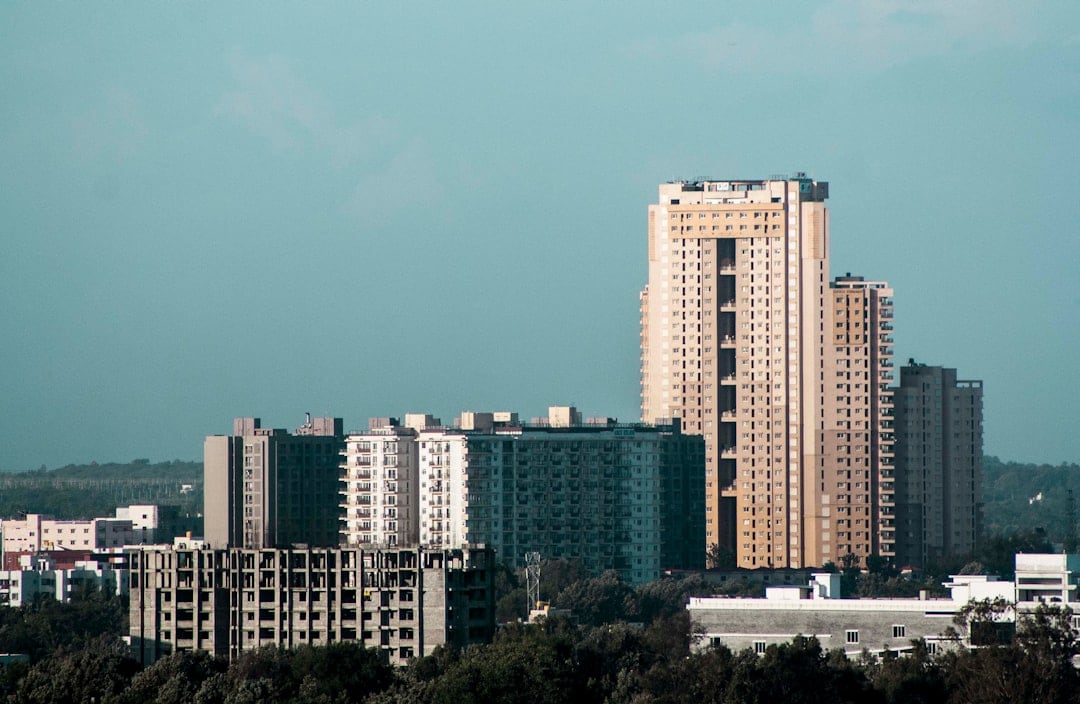
Tighter aviation-linked building regulations are increasingly shaping the trajectory of real estate development in Bengaluru, with height restrictions around key flight paths influencing both project design and land valuation.
The enforcement of these controls is emerging as a critical factor in how the city expands vertically, particularly in high-growth corridors near the airport.At the centre of the issue are Bengaluru height restrictions, which are governed by aviation safety norms to ensure unobstructed air navigation. These rules limit how tall structures can be within designated zones, creating uneven development potential across the metropolitan region. For developers, this translates into recalibrated project plans, reduced floor area potential, and in some cases, altered financial viability.Real estate analysts note that such constraints are beginning to shift investment patterns. Areas outside restricted zones are attracting higher interest for high-rise developments, while affected locations may see a pivot towards mid-rise or low-density projects. This spatial redistribution of growth has implications for land pricing, infrastructure demand, and urban density management.For homebuyers and investors, the impact of Bengaluru height restrictions is less direct but equally significant. Limited vertical expansion in certain areas can constrain housing supply, potentially influencing property prices over time. At the same time, lower-density developments may offer improved liveability through reduced congestion and better access to light and ventilation—factors increasingly valued in post-pandemic urban living.
Urban planners highlight that such regulatory frameworks, while restrictive, play a vital role in ensuring safety and long-term sustainability. However, they also underscore the need for integrated planning between aviation authorities and urban development bodies. Aligning zoning policies, infrastructure investments, and growth corridors can help mitigate unintended consequences such as uneven urban sprawl or pressure on already dense neighbourhoods.The situation also brings into focus the broader challenge of balancing infrastructure expansion with real estate growth. As Bengaluru continues to strengthen its position as a major economic hub, demand for both housing and commercial space is expected to rise. Managing this demand within the constraints of aviation safety requires a coordinated approach that leverages transit-oriented development, mixed-use planning, and efficient land utilisation.From a sustainability perspective, controlled building heights can support more balanced urban ecosystems by preventing excessive vertical congestion and encouraging distributed growth. However, without adequate public transport and civic infrastructure, such dispersion risks increasing commute times and carbon emissions.
Looking ahead, stakeholders suggest that clearer regulatory communication and digital mapping of permissible heights could improve transparency and planning efficiency. For Bengaluru, the challenge will be to harmonise safety-driven constraints with the need for inclusive, well-planned urban expansion—ensuring that growth remains both economically viable and environmentally resilient.
Also Read:Bengaluru Short Getaway Travel Drives Regional Tourism
