


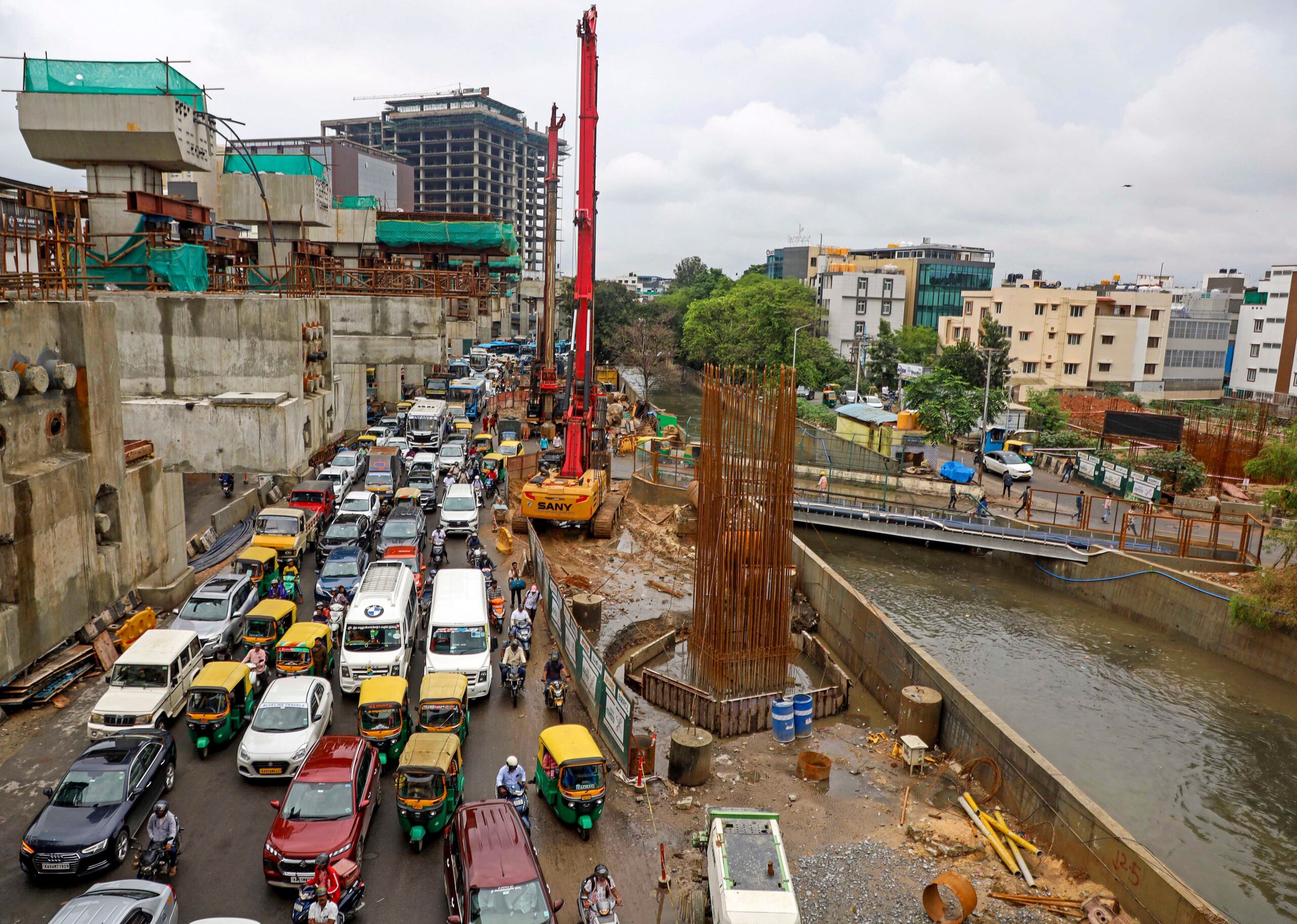
A national-level innovation challenge hosted in Bengaluru is bringing together students and emerging technologists to address pressing urban challenges, reflecting the city’s growing role as a hub for civic-focused innovation.
The event, organised at a leading engineering institution, aims to develop practical solutions for issues ranging from mobility to sustainability.The Bengaluru hackathon has attracted participants from across the country, encouraging interdisciplinary teams to design technology-driven responses to real-world urban problems. Organisers indicate that the focus is on actionable ideas that can be scaled or integrated into existing city systems, rather than purely conceptual prototypes.Urban experts suggest that such platforms are becoming increasingly relevant as cities grapple with complex challenges linked to rapid growth. Issues such as traffic congestion, waste management, water stress, and air quality require innovative approaches that combine technology with policy and community engagement. In this context, the Bengaluru hackathon serves as a testing ground for new ideas that could influence future urban planning strategies.The event also highlights the role of academic institutions in shaping the next generation of urban problem-solvers. By engaging students in real-world challenges, hackathons can bridge the gap between theoretical learning and practical application. Industry observers note that this approach not only enhances skill development but also creates a pipeline of talent for sectors such as urban technology, infrastructure, and sustainability.From an economic perspective, innovation-driven initiatives contribute to strengthening the city’s knowledge ecosystem.
Bengaluru’s position as a technology hub is reinforced by events that encourage entrepreneurship and collaboration, particularly in areas aligned with smart city development.Solutions emerging from the hackathon could potentially evolve into start-ups or partnerships with public agencies, generating both employment and investment opportunities.There is also a sustainability dimension to the initiative. Many of the problem statements are expected to focus on resource efficiency, renewable energy integration, and climate-resilient infrastructure. Experts emphasise that embedding such priorities into early-stage innovation is critical for building cities that can withstand environmental pressures while maintaining quality of life.However, the transition from prototype to implementation remains a key challenge. While hackathons generate a wealth of ideas, scaling these solutions requires institutional support, funding, and regulatory alignment. Urban planners highlight the need for stronger collaboration between government bodies, private sector players, and academic institutions to ensure that promising concepts translate into tangible outcomes.The Bengaluru hackathon underscores a broader shift towards participatory urban development, where citizens and young innovators play an active role in shaping city futures. As urban challenges become more complex, such collaborative approaches may prove essential in designing solutions that are both effective and inclusive.
Looking ahead, the success of initiatives like the Bengaluru hackathon will depend on their ability to move beyond ideation and contribute to measurable improvements in urban systems. For a rapidly evolving city, harnessing the creativity and expertise of its young population could be a key driver of sustainable and resilient growth.
Also Read:Bengaluru Fuel Price Cut Lowers Petrol Diesel Rates
Bengaluru innovation challenge targets smarter city development
