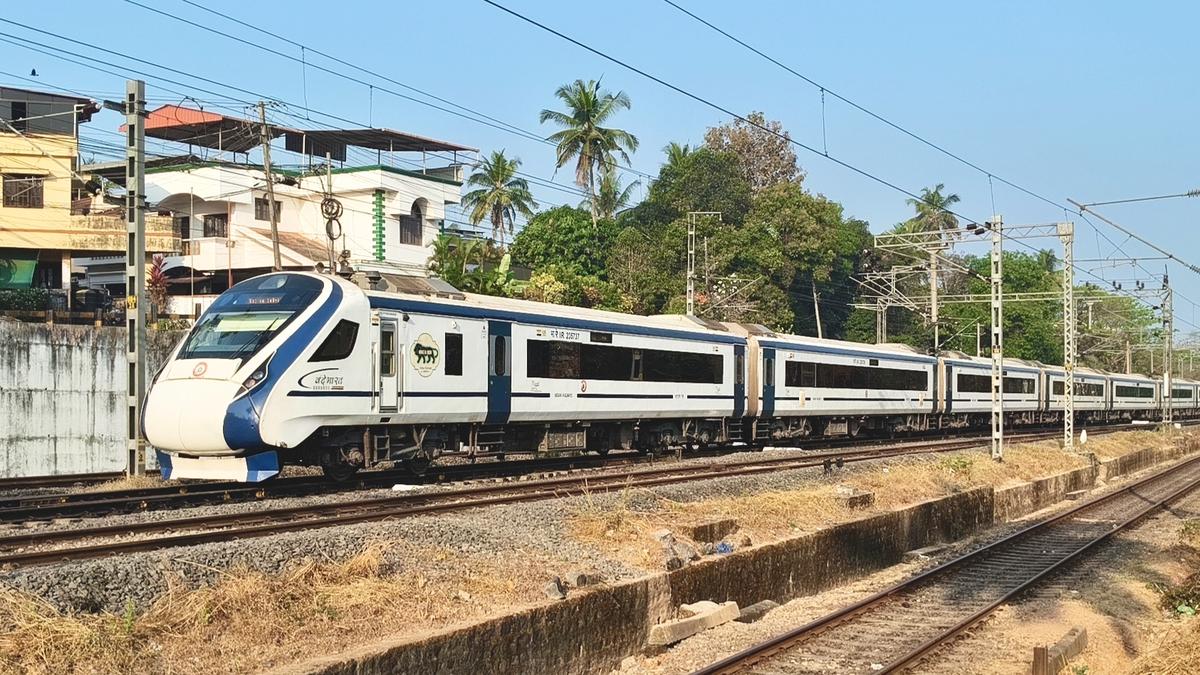
Bengaluru is poised to gain a new semi-high-speed rail connection to Goa, as the South Western Railway (SWR) finalises proposals for a Vande Bharat Express linking Yesvantpur and Madgaon. If approved, the service promises to cut current travel time significantly, offering commuters and business travellers a faster, more reliable alternative to road and conventional rail networks. The route’s approval is under consideration by the Railway Board, with operational details contingent on clearance and availability of trainsets.
The proposed service aims to depart Yesvantpur early morning and reach Goa by evening, with the return journey following a similar schedule. Key to the plan is a streamlined route through the Mangaluru railway region, utilising the Padil Bypass to skip congested central stations. Speed enhancements are also under review, with targeted increases between Chikka Banawara and Hassan, as well as along the steep gradients of the Sakleshpur–Subramanya Road section, reflecting a push to combine safety with efficiency. Trial runs are expected using Vande Bharat rakes equipped with Automatic Emergency Braking systems before final commissioning.
Urban planners and transport economists note that such connectivity improvements have cascading implications for regional mobility and urban development. A faster Bengaluru–Goa link could support more balanced tourism flows, reduce reliance on long-distance bus travel, and incentivise sustainable travel choices over private vehicles. Moreover, enhanced rail corridors often stimulate peripheral economic activity, from local hospitality clusters near stations to residential demand along commuter routes. From a climate and urban resilience perspective, shifting high-volume travel to electrified semi-high-speed rail aligns with broader low-carbon mobility objectives. Experts highlight that optimised scheduling and energy-efficient rolling stock can substantially reduce carbon footprints compared to conventional diesel trains or private cars. Equitable access also emerges as a consideration, as semi-fast rail services can democratise intercity travel for diverse socio-economic groups, supporting inclusive mobility strategies in rapidly urbanising regions.
The economic case for the new service intersects with infrastructure capacity and land-use planning. SWR’s proposed route bypasses major junctions to reduce congestion, yet maintaining local accessibility will require integrated feeder services and last-mile connectivity solutions. Coordination between urban transport authorities and railway operations will be crucial to maximise benefits without straining existing urban transport networks. Pending approvals, the Bengaluru–Goa Vande Bharat Express could set a precedent for connecting major urban centres to key regional destinations through sustainable, semi-high-speed rail. Stakeholders are watching closely, with potential ripple effects across tourism, real estate, and commuter patterns along the corridor.