


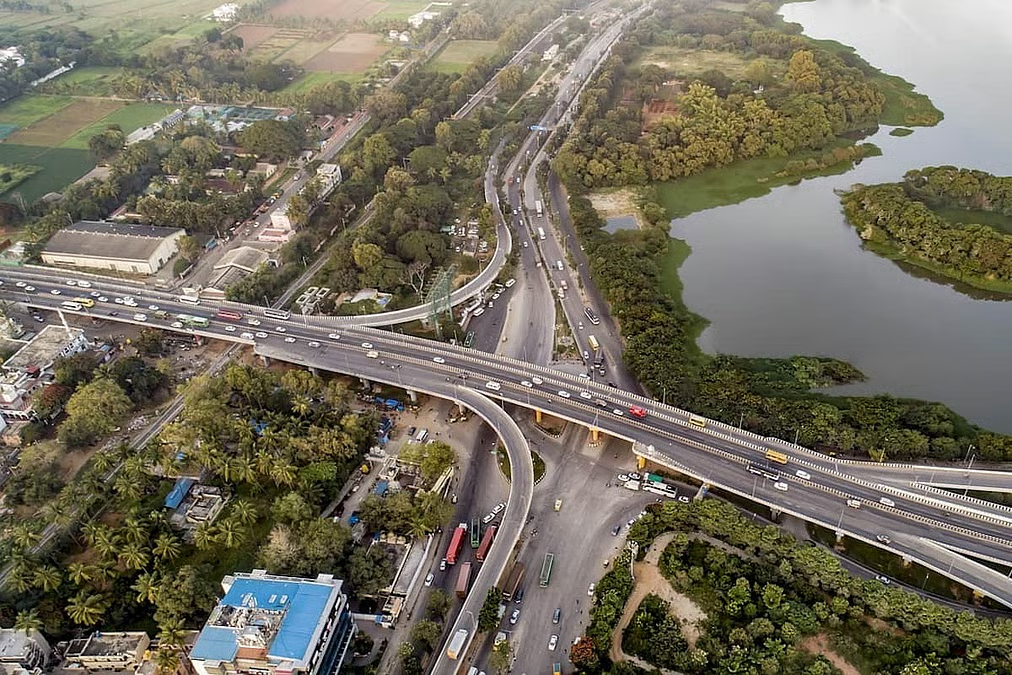
Bengaluru Authorities Plan Revamp Of Under Flyover Spaces
Urban planners in Bengaluru are preparing a citywide strategy to transform neglected areas beneath major elevated roads into functional public spaces, as officials look to improve urban aesthetics while addressing parking, waste management and green infrastructure needs.
The initiative aims to convert underutilised land below flyovers into organised civic assets that support mobility and environmental goals in India’s technology capital.Senior officials from the state’s urban development administration recently instructed multiple civic agencies to identify sites suitable for redevelopment. Many locations beneath elevated roads built over the past two decades currently remain vacant or poorly maintained, often becoming informal parking areas or waste dumping spots.Urban design experts say the Bengaluru flyover spaces present a significant opportunity for city improvement if planned effectively. Such areas can be converted into structured parking bays, pedestrian zones, recreational pockets, or small public plazas that enhance neighbourhood liveability while reducing visual clutter.Officials have asked agencies such as Bruhat Bengaluru Mahanagara Palike and Bangalore Development Authority to map locations beneath elevated roads where design interventions could be introduced. The goal is to create a comprehensive blueprint covering landscaping, parking management and waste infrastructure.The review also highlighted the importance of expanding urban greenery across the metropolitan area. Authorities are encouraging large-scale plantation drives, including bamboo and other fast-growing vegetation along major corridors and near water bodies.
Environmental planners say increasing tree cover within dense urban zones helps reduce heat stress, improve air quality and support climate resilience.Another focus area discussed during the review was the improvement of solid waste handling systems. Officials indicated that several secondary waste transfer facilities are already operational, while additional sites are being prepared to strengthen the city’s waste logistics network. In neighbourhoods where land availability is limited, smaller waste consolidation points may be introduced.Mobility management has also emerged as a critical component of the plan. Unregulated roadside parking continues to disrupt traffic flow across many parts of Bengaluru, particularly in high-density commercial areas. Authorities are exploring ways to create structured parking solutions, including the temporary use of vacant private land parcels near busy corridors.Urban mobility specialists say integrating parking areas within Bengaluru flyover spaces could help reduce pressure on roadside lanes while improving traffic discipline. However, they caution that design and safety considerations—such as lighting, pedestrian access and surveillance—must be carefully incorporated.The plan also includes stronger enforcement against abandoned vehicles and illegal parking. Dedicated teams may be deployed across municipal zones to ensure quicker removal of unattended vehicles that obstruct public spaces.
For a rapidly expanding metropolis like Bengaluru, experts believe such initiatives signal a broader shift in urban planning priorities—from simply building infrastructure to optimising the spaces around it. Transforming Bengaluru flyover spaces into well-managed civic areas could help the city balance mobility needs with environmental sustainability and urban design quality.If implemented effectively, the strategy could demonstrate how overlooked infrastructure zones can be repurposed to create cleaner, greener and more accessible urban environments.
Also Read:Bengaluru Restaurants Face Commercial LPG Supply Challenges
