


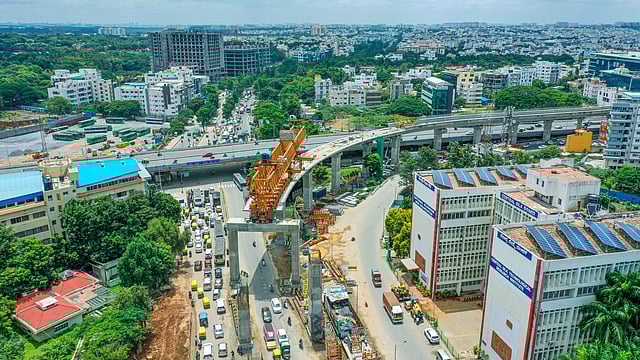
Concerns over Bengaluru’s flyover-led infrastructure strategy are gaining momentum, with civic groups questioning the long-term effectiveness of elevated road projects in addressing congestion.
The debate highlights a growing shift in urban planning discourse, where the focus is moving from road expansion to more sustainable and integrated mobility solutions.The Bengaluru flyover planning debate has intensified as stakeholders raise issues around cost efficiency, land use and actual traffic impact.Critics argue that flyovers often provide temporary relief while encouraging increased vehicle usage, potentially exacerbating congestion over time.Urban mobility experts note that the Bengaluru flyover planning approach reflects a traditional response to traffic challenges, prioritising vehicular movement over multimodal transport systems. In rapidly growing cities, such strategies may not align with evolving mobility needs that emphasise public transport, walkability and reduced dependence on private vehicles.From an infrastructure perspective, flyover construction involves significant investment and can reshape urban landscapes. However, questions are being raised about whether such projects deliver proportional benefits in terms of travel time reduction and congestion management.The Bengaluru flyover planning discussion also touches on opportunity costs.Funds allocated to elevated road projects could potentially be directed towards expanding public transport networks, improving last-mile connectivity or enhancing pedestrian infrastructure.Environmental implications are central to the debate.Increased road capacity can lead to higher vehicle usage, contributing to emissions and air quality concerns.Sustainable urban development frameworks increasingly advocate for solutions that reduce carbon footprints rather than accommodate higher traffic volumes.
There are also social dimensions to consider.Flyover construction can affect neighbourhoods through land acquisition, changes in accessibility and altered urban environments. Ensuring that infrastructure development is inclusive and minimises displacement is a key challenge for city planners.Economic factors play a role as well.While infrastructure projects can stimulate economic activity, their long-term value depends on alignment with broader urban growth strategies. Investments that support efficient, low-carbon mobility may yield more sustainable returns.The Bengaluru flyover planning debate underscores the need for evidence-based decision-making. Data on traffic patterns, commuter behaviour and environmental impact can inform more effective solutions tailored to the city’s needs.Urban planners are increasingly advocating for integrated transport strategies that combine road improvements with investments in mass transit, cycling infrastructure and smart traffic management systems. Such approaches can offer more balanced and resilient outcomes.The discussion also reflects changing public expectations around urban development.Citizens and civic groups are playing a more active role in shaping infrastructure priorities, demanding transparency and accountability in planning processes.Looking ahead, Bengaluru’s approach to congestion management may need to evolve to address both immediate and long-term challenges. The ongoing debate around flyover projects presents an opportunity to reassess priorities and align infrastructure investments with sustainable urban mobility goals.
As the city continues to expand, building a transport system that balances efficiency, inclusivity and environmental responsibility will be critical. The outcome of this debate could influence the direction of Bengaluru’s urban development for years to come.
Also Read:Chennai Railway Boarding Point Change Deadline Extended
