


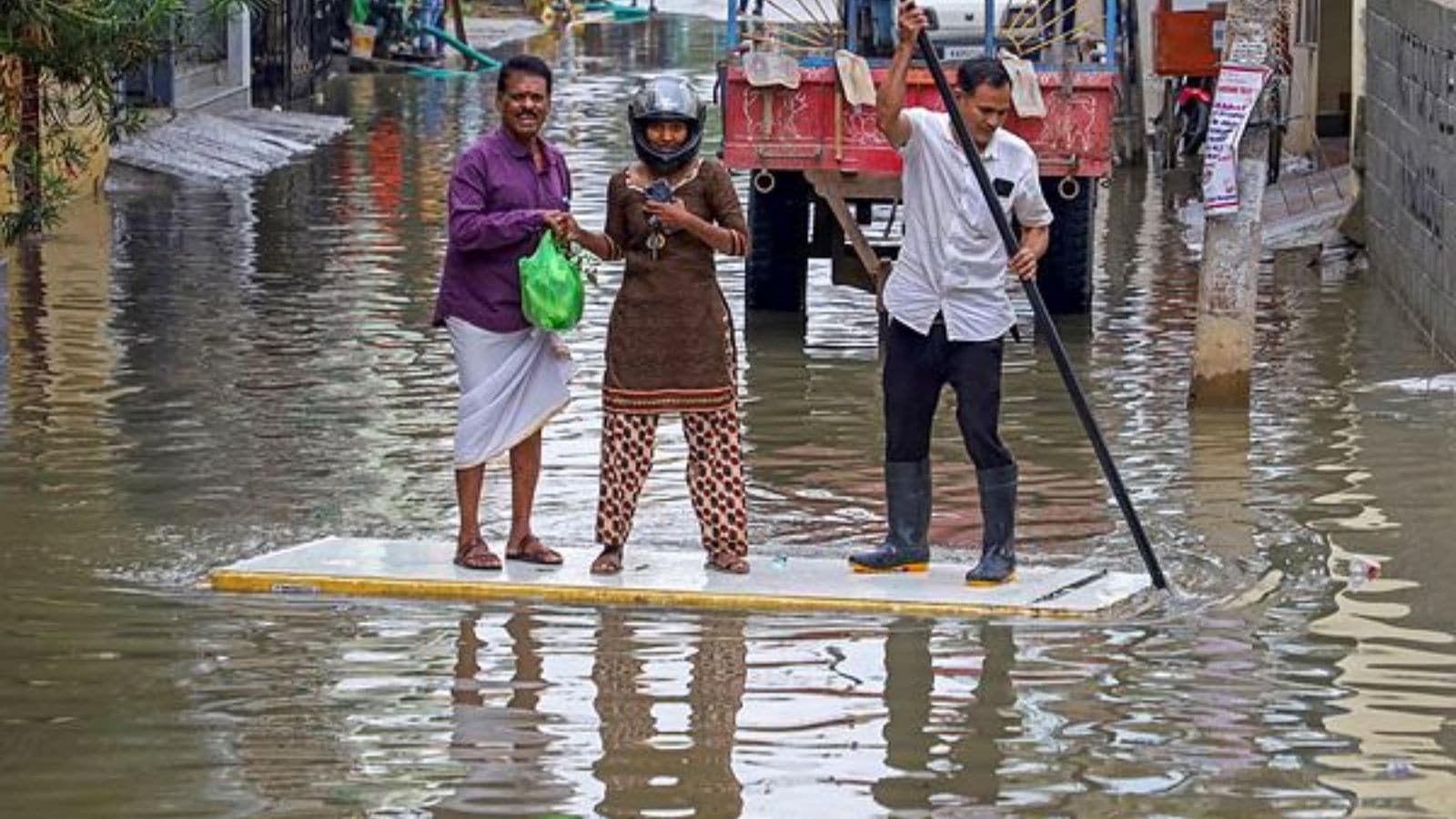
Bengaluru’s civic authorities have set a firm deadline for completing key flood mitigation works ahead of the monsoon, signalling heightened urgency in addressing the city’s recurring waterlogging challenges.
The directive includes strict accountability measures for engineers and officials, reflecting a shift towards performance-driven urban governance.The timeline aims to accelerate ongoing projects such as stormwater drain desilting, encroachment clearance, and infrastructure upgrades in flood-prone zones. With the monsoon season approaching, timely execution has become critical to minimising disruptions to mobility, housing, and economic activity.The emphasis on meeting targets within a defined schedule highlights the growing importance of proactive planning in urban infrastructure management. In recent years, Bengaluru has faced repeated instances of flooding triggered by heavy rainfall, exposing vulnerabilities in drainage systems and land-use practices.The Bengaluru flood mitigation works push underscores the need for coordinated action across multiple agencies. Effective flood management requires integration of drainage networks, road infrastructure, and water bodies, along with consistent maintenance and monitoring.From an urban development perspective, the directive reflects a broader move towards accountability in public projects. By linking performance to clear deadlines, authorities aim to improve execution efficiency and reduce delays that have historically impacted infrastructure outcomes.
Experts note that while deadlines can drive progress, the quality and sustainability of interventions are equally important. Ensuring that drainage systems are designed to handle increased rainfall intensity, and that natural water channels are preserved, is essential for long-term resilience.The Bengaluru flood mitigation works also have significant economic implications. Flooding can disrupt business operations, damage property, and increase maintenance costs for both public and private infrastructure. Preventive measures, therefore, play a crucial role in safeguarding the city’s economic stability.Urban planners emphasise the importance of addressing underlying issues such as unplanned urbanisation, encroachments on water bodies, and inadequate waste management, all of which contribute to flooding. Without tackling these root causes, short-term interventions may have limited impact.Technology is increasingly being seen as a tool to enhance flood management. Real-time monitoring systems, predictive analytics, and data-driven planning can help authorities anticipate risks and respond more effectively.There is also a growing call for community involvement in maintaining drainage systems and preventing waste dumping, which often leads to blockages. Public awareness and participation can complement official efforts, creating a more resilient urban environment.As Bengaluru moves towards its deadline, the focus will be on execution and coordination.
The outcome of this initiative will serve as a critical test of the city’s ability to transition from reactive responses to proactive, accountable infrastructure management.
In the long term, building flood resilience will require sustained investment, integrated planning, and a commitment to aligning urban growth with environmental realities—ensuring that the city remains functional and liveable even under increasingly unpredictable climate conditions.
Also Read:Bengaluru Filmmaking Training Empowers Women In Creative Industry
