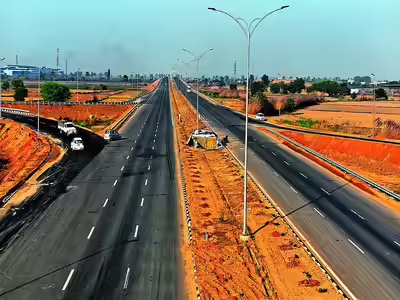
Bengaluru’s Peripheral Ring Road (PRR) project faces renewed legal scrutiny as farmers and landowners have signalled a coordinated court challenge against the Bangalore Development Authority (BDA) over compensation practices. The association representing affected landowners has cited gaps in rehabilitation support and alleged procedural inconsistencies, raising questions about the project’s social and economic management.
The group claims the BDA is proceeding with compensation disbursements without establishing a comprehensive rehabilitation framework, a demand that has persisted for several years. Members have threatened to pursue legal remedies under the Central government’s Land Acquisition Act, 2013, potentially seeking project suspension or judicial oversight to ensure compliance with statutory provisions. While a portion of landowners have agreed to voluntary transfers of smaller plots, the majority remain cautious, citing perceived coercion and misleading assurances from officials regarding settlement procedures. Urban planners and legal experts note that the dispute highlights a recurring tension in rapidly expanding Indian cities: the balancing of infrastructure development with equitable treatment of affected communities. Large-scale transport projects, such as the PRR, often require extensive land acquisition, yet delays in implementing statutory rehabilitation mechanisms can erode trust and stall progress. In Bengaluru’s case, pending High Court matters and contested compensation options may complicate timelines for a project seen as critical for easing traffic congestion in the metropolitan periphery.
Economically, unresolved disputes over land acquisition and compensation can deter private investment and inflate project costs. Analysts emphasise that adherence to transparent compensation frameworks, coupled with fair rehabilitation, is crucial for maintaining investor confidence while safeguarding livelihoods. From an urban sustainability perspective, inclusive planning and people-first approaches help ensure that new infrastructure benefits the broader community without disproportionately disadvantaging marginal stakeholders. The environmental dimension also warrants attention. Peripheral transport corridors, if implemented without adequate social buy-in, risk generating localised resistance that can delay climate-resilient planning measures, such as integrated drainage, green buffers, and low-emission road design. Ensuring equitable land acquisition can, therefore, indirectly contribute to more sustainable urban mobility networks.
BDA officials have yet to formally respond to the association’s legal notice, though internal sources indicate ongoing efforts to streamline compensation and expedite project phases. Observers expect that the litigation trajectory could influence not only the PRR schedule but also policy approaches to large-scale land acquisition in Karnataka’s rapidly urbanising regions. The PRR dispute underscores the importance of aligning statutory compliance, community engagement, and long-term urban planning. Moving forward, resolution may hinge on the establishment of legally robust, transparent rehabilitation mechanisms that balance infrastructure expansion with social equity, ensuring Bengaluru’s peripheral growth aligns with sustainable and inclusive urban development goals.