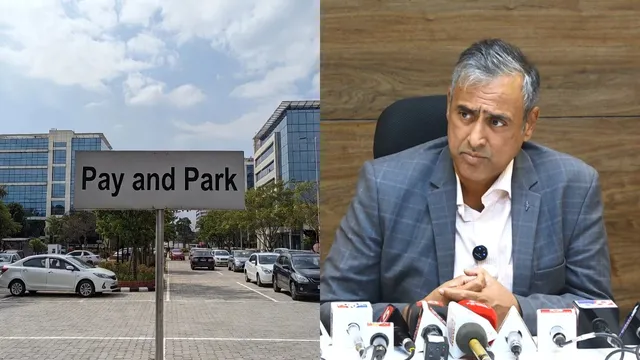
Bengaluru is moving toward a citywide pay-and-park framework, as the Greater Bengaluru Authority (GBA) has initiated tenders to formalise structured roadside parking. The initiative, building on a pilot on MG Road, aims to address chronic congestion, improve road safety, and standardise urban parking practices in one of India’s fastest-growing metropolitan centres.
The GBA has identified high-footfall corridors, including Commercial Street, Dickenson Road, Miller’s Road, and St John’s area, for the initial expansion of the paid parking system. Under the proposed structure, two-wheelers will incur hourly charges of ₹15, while four-wheelers will pay ₹30 per hour. A monthly pass option is also being considered to facilitate frequent commuters, particularly residents and local businesses in commercial hubs.Urban planners note that Bengaluru has historically faced unregulated parking along busy streets, with vehicles often occupying pedestrian pathways, service lanes, and other informal spaces. This unorganised pattern contributes to traffic bottlenecks, increased travel time, and heightened risk of accidents. The GBA’s phased implementation of a pay-and-park system signals a move toward evidence-based urban mobility management, aligning with global best practices in city planning.
The tender process currently underway will select operators to manage parking zones, with enforcement expected in phases. Officials emphasise that roadside parking without payment in designated areas will no longer be permissible, creating a predictable and accountable parking ecosystem. Experts suggest that such structured approaches can also generate additional revenue streams for municipal authorities, which can be reinvested into sustainable urban infrastructure, including cycling lanes, pedestrian pathways, and last-mile public transport solutions.Residents and local businesses are likely to experience both convenience and adjustment challenges. While predictable parking spaces reduce time spent searching for spots, adherence to payment regulations may require behaviour change, particularly in areas where informal parking has long been tolerated. Urban mobility analysts also point out that complementary measures, such as real-time parking availability apps, dynamic pricing, and integrated public transport incentives, will be crucial to maximise efficiency and reduce congestion.
Bengaluru’s citywide pay-and-park rollout reflects a broader trend in Indian metros seeking to balance mobility, safety, and urban sustainability. By formalising parking, authorities aim to create streets that are not only functional for vehicles but also safer for pedestrians and more equitable for diverse city users. The success of this initiative could serve as a template for other rapidly urbanising cities facing similar congestion pressures.