Bengaluru Emerges Central To Google Workforce Plans
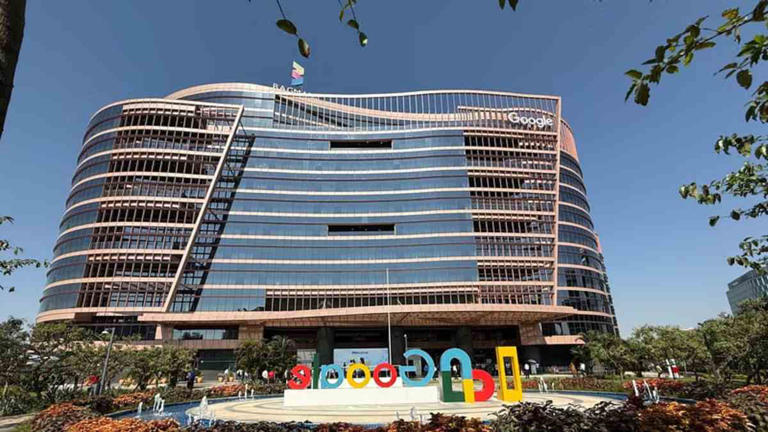
A major expansion planned by Google in Bengaluru is quietly reshaping how global technology companies structure their workforce, placing Indian cities at the centre of long-term talent strategy amid tightening immigration regimes in the United States. The proposed campus in Whitefield, one of the city’s most congested yet commercially vital technology corridors, could eventually support nearly 20,000 employees, marking one of the largest single-location workforce commitments by a global tech firm in India.
The development, spread across multiple office towers at Alembic City, underscores a broader recalibration underway across the technology sector. Industry observers note that rising costs, regulatory uncertainty and prolonged processing timelines associated with US work visas have pushed companies to rethink where advanced engineering, research and product development teams are based. Bengaluru’s deep talent pool, established tech ecosystem and relatively mature office infrastructure have made it a natural choice. Urban planners say the scale of the Google Bengaluru expansion is significant not just for employment numbers, but for how global firms are integrating Indian cities into core operations rather than treating them as peripheral delivery centres.
With India already hosting thousands of Google employees across multiple cities, a consolidated campus of this size could effectively double its local workforce and elevate the city’s role in global product development, particularly in artificial intelligence, cloud computing and semiconductor-related research. The Bengaluru office expansion also carries implications for the city’s built environment. Large-format campuses increase demand for public transport, last-mile connectivity, water management and energy efficiency in areas already under strain. Whitefield, which has seen rapid commercialisation over the past decade, is now at the centre of discussions around sustainable office design, transit-oriented development and climate-resilient infrastructure. Urban development experts caution that without coordinated planning, workforce concentration at this scale can intensify congestion and resource stress. From an economic standpoint, the shift supports India’s positioning as a global hub for high-value digital work. Staffing analysts point to a sharp rise in India-based hiring by US technology firms over the past year, reversing a period of slowdown.
This growth is increasingly concentrated in advanced roles, including artificial intelligence systems, machine learning architecture, hardware design and applied research fields critical to the next phase of the tech industry. For cities like Bengaluru, the challenge now lies in aligning commercial real estate growth with inclusive urban planning. As global employers deepen their footprint, policymakers will be under pressure to ensure that employment-led expansion translates into improved mobility, affordable housing and lower-carbon workplaces. The Google Bengaluru expansion reflects a structural shift rather than a temporary adjustment. As global companies adapt to geopolitical and regulatory realities, Indian cities are becoming central to how innovation is built, scaled and sustained placing urban governance and infrastructure resilience firmly in the spotlight.