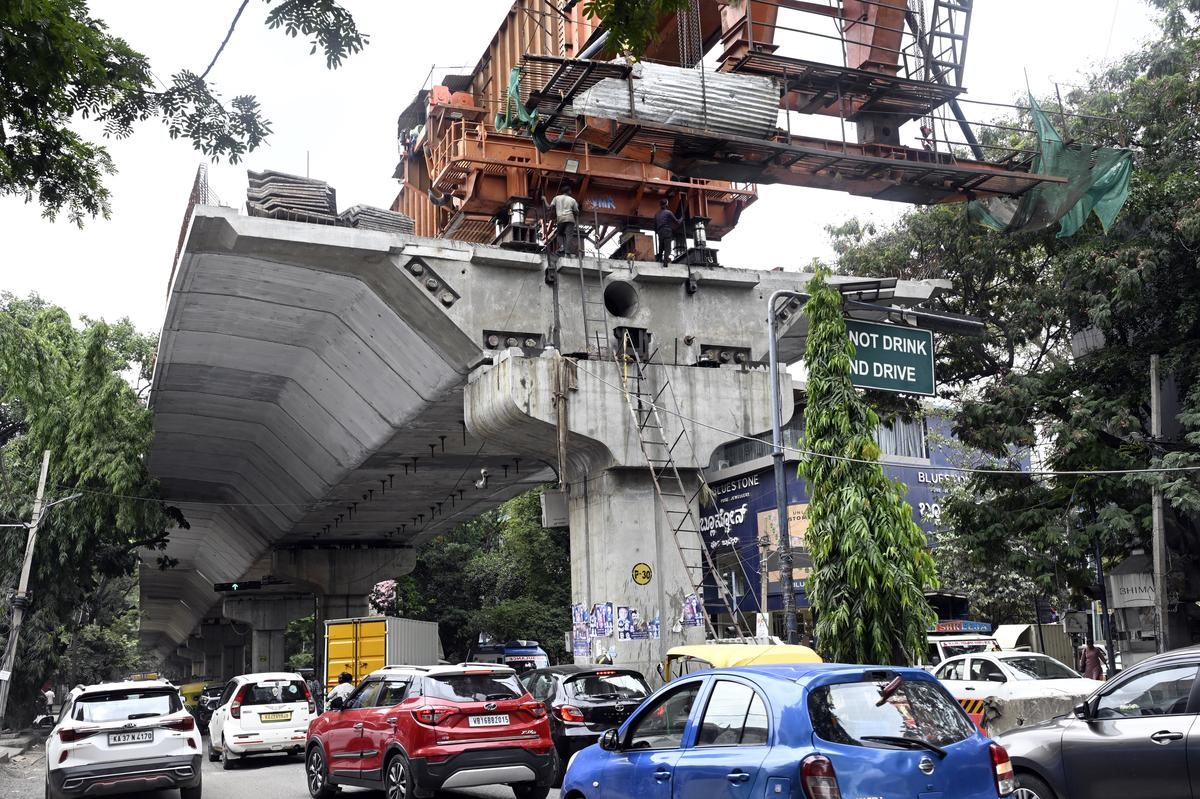
A long-stalled elevated corridor in south-east Bengaluru is once again facing uncertainty, underscoring deeper challenges in the city’s approach to urban infrastructure delivery. The Ejipura flyover, planned to ease congestion between Inner Ring Road and Hosur Road, was expected to be completed by mid-2026. However, unresolved land acquisition issues continue to delay progress, raising questions about timelines, costs, and governance capacity in India’s technology capital.
Stretching roughly 2.4 kilometres, the Ejipura flyover was conceived as a critical link to decongest traffic moving between Koramangala, the Inner Ring Road, and the Hosur Road corridor, which connects to National Highway infrastructure. Urban transport planners say the corridor remains one of the city’s most strained arterial routes, affecting daily commuters, freight movement, and last-mile connectivity to employment hubs. Despite renewed construction activity over the past year, senior officials associated with the project indicate that the acquisition of nearly 8,800 square metres of land is still incomplete. Without full possession of the required parcels, contractors are unable to execute key structural components, particularly entry and exit ramps that determine whether the flyover can function as intended.
The Ejipura flyover’s history reflects the systemic risks that large urban projects face when planning, approvals, and execution fall out of sync. Work began in 2017 with an initial completion target of 2019 and an estimated cost slightly above ₹200 crore. Since then, prolonged stoppages, administrative transitions, and contractual delays have driven costs sharply upward, with revised estimates now running several times higher than the original projection. Urban economists note that such cost escalations have broader implications beyond public finances. Prolonged construction disrupts neighbourhoods, reduces productivity due to traffic delays, and increases vehicle emissions as idling times rise along congested corridors. For residents of Koramangala and surrounding areas, the half-built structure has become a permanent part of the streetscape, altering pedestrian movement and local commerce.
Recent months have seen visible construction momentum, offering some optimism to commuters. Yet urban infrastructure experts caution that acceleration alone cannot offset structural bottlenecks such as delayed land handovers and fragmented project oversight. They argue that Bengaluru’s experience highlights the need for integrated land, transport, and environmental planning—especially as the city seeks to balance growth with climate resilience. From a sustainability perspective, flyovers remain a contested solution. While they can provide short-term traffic relief, long-term urban mobility strategies increasingly prioritise public transport, walkability, and demand management. In this context, delays to projects like the Ejipura flyover also reflect the tension between legacy road-centric planning and evolving urban transport goals.
For now, authorities maintain that efforts are underway to resolve outstanding land issues and adhere to revised schedules. Whether the Ejipura flyover transitions from a symbol of stalled development to functional infrastructure will depend on coordinated execution, transparent timelines, and lessons drawn for future urban projects in Bengaluru.
Also Read:
Bengaluru Ejipura Project Tests Urban Governance