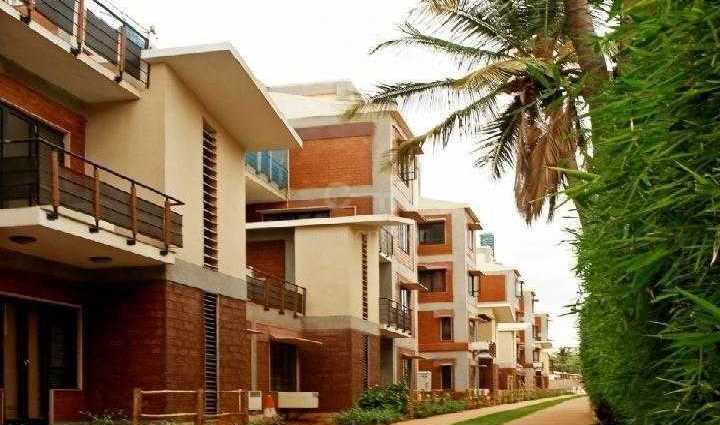
Bengaluru’s eastern growth corridor has once again demonstrated the resilience of the city’s residential market, with a newly launched housing development in the Sarjapur region witnessing rapid buyer interest during its early access phase.
The project secured bookings for more than 170 homes within two days of its pre-launch, signalling continued strength in Bengaluru East housing demand despite broader economic uncertainties.Industry observers say the strong response reflects structural shifts underway in the city’s real estate landscape. Bengaluru’s expanding technology and services economy continues to generate steady employment growth, supporting end-user demand for homes close to major work clusters. At the same time, improved infrastructure connectivity and social amenities across the eastern corridor are reshaping residential preferences among working professionals and young families.The development, planned across roughly 15 acres, combines high-rise residential towers with landscaped open areas and a mixed-use component that includes retail and neighbourhood commercial spaces. Such integrated planning models are becoming more common in Bengaluru as developers respond to changing urban expectations around liveability, walkability, and access to daily services within residential communities.
Urban planners note that the surge in Bengaluru East housing demand is closely linked to the corridor’s proximity to several of the city’s largest technology parks and employment hubs. Areas around Sarjapur, Outer Ring Road and nearby innovation districts have experienced rapid residential expansion over the past decade as companies in information technology, consulting and global services continue to scale operations.
Housing market analysts say Bengaluru consistently ranks among India’s most active residential markets, with a high share of end-user purchases compared with investor-driven transactions seen in some other metropolitan regions. Demand in the mid-to-premium housing segment has remained particularly stable, supported by rising household incomes and a growing preference for long-term home ownership.At the same time, the city’s urban expansion is raising important questions about infrastructure capacity and sustainable growth. As new residential clusters emerge along the eastern corridor, urban policy experts stress the importance of aligning housing supply with transportation networks, water management systems and climate-resilient planning.Projects that incorporate larger open spaces, energy-efficient design and integrated community services are increasingly viewed as part of this broader shift towards more sustainable urban development. In fast-growing districts such as Sarjapur, these approaches are also helping address concerns around density and quality of life.
For Bengaluru’s real estate sector, the strong pre-launch response suggests that buyer confidence remains intact even as construction costs and land values continue to rise. Developers are likely to monitor absorption levels closely as additional housing projects enter the market across the eastern corridor.Looking ahead, the trajectory of Bengaluru East housing demand will depend not only on employment growth but also on how effectively civic infrastructure keeps pace with the city’s expanding residential footprint.
Bengaluru East Housing Demand Powers New Project Sales.