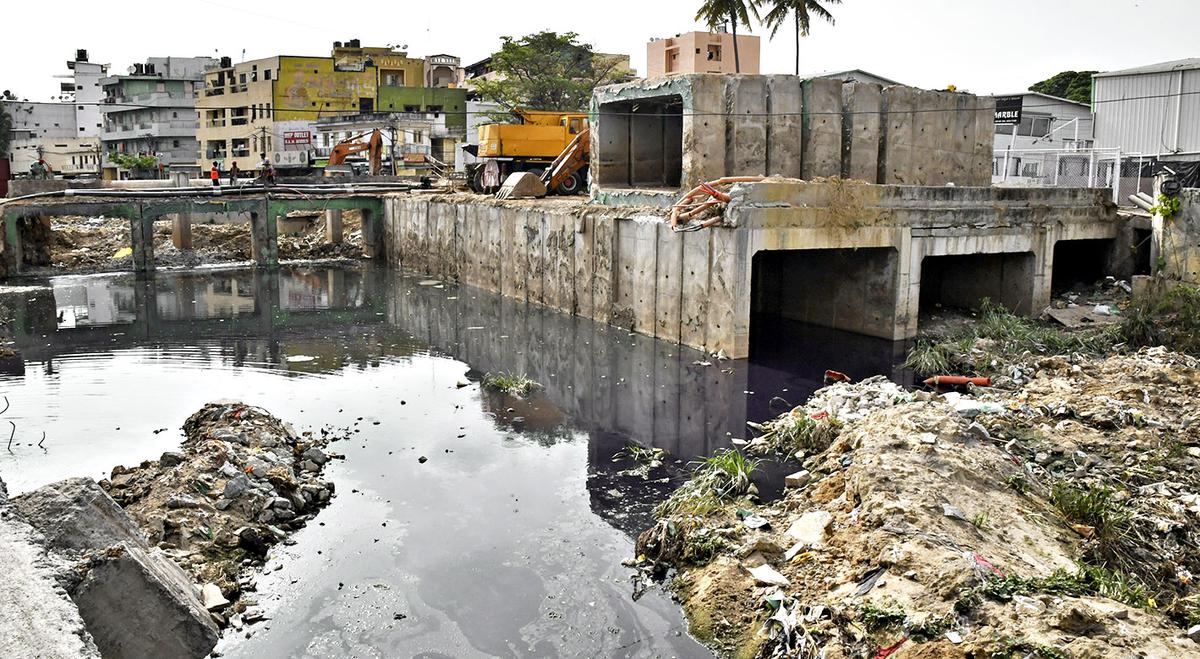
Bengaluru Drain Network Exceeds Roads By Forty Five Percent
Bengaluru’s stormwater infrastructure is revealing cracks despite an extensive network of drains running nearly 45 percent longer than the city’s road stretches. Experts analysing the city’s urban planning data point to a critical gap between infrastructure capacity and on-ground maintenance, emphasising the risks of waterlogging during monsoons.
According to recent official data, the city maintains 1,647.54 km of arterial and sub-arterial roads, while its stormwater drainage extends to 2,394.41 km. This 1.45:1 ratio highlights a deliberate design strategy aimed at redundancy, yet experts note that the system’s effectiveness is undermined by encroachment and insufficient upkeep. Officials clarified that drain coverage exists on both sides for 666 key roads, while 24 roads have drains on only one side, signalling near-complete redundancy in critical areas.
Infrastructure authorities have embedded drainage maintenance within road development contracts. Contractors are responsible for upkeep for three years post-completion, a measure intended to promote accountability and ensure that drains function alongside newly developed roads. Analysts suggest this approach reflects a cost-effective model that avoids duplicated budget allocations but may fall short if enforcement and monitoring are inconsistent.
Encroachment remains a persistent challenge. Drain and footpath occupations restrict water flow, aggravating flooding risks in low-lying neighbourhoods. Officials report weekly joint operations between the Road Infrastructure Division and local ward-level authorities to reclaim obstructed drains, highlighting the city’s ongoing struggle to maintain civic order alongside rapid urbanisation.Experts point out that while Bengaluru’s drain-to-road ratio illustrates a robust planning framework, the monsoon season often exposes mismatches between design and execution. Flooded streets, impassable neighbourhoods, and disrupted commutes remain visible reminders that infrastructure planning must be paired with proactive maintenance, urban discipline, and community engagement.
Urban planners emphasise that integrating sustainability into the drainage network through permeable pavements, rainwater harvesting, and eco-friendly channel designs can strengthen the city’s resilience to extreme weather. They advocate for a city-wide assessment of both structural integrity and maintenance efficacy to ensure that the extensive drainage network translates into tangible flood mitigation benefits.As Bengaluru continues to expand, bridging the gap between infrastructure potential and operational reality will be crucial for sustaining an equitable, eco-friendly, and resilient urban environment. Experts note that the city’s stormwater system can serve as a model for other rapidly urbanising Indian cities, provided maintenance and encroachment issues are systematically addressed.