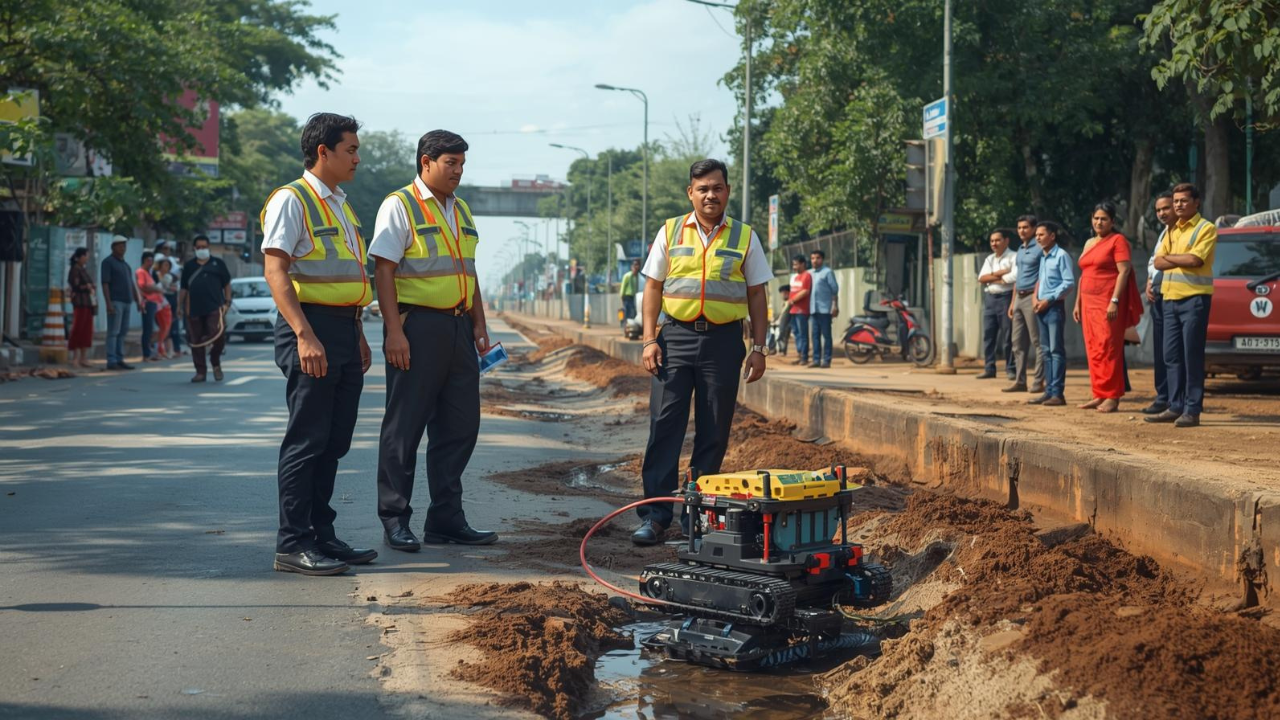
Bengaluru Deploys Robotic Technology To Reduce Excavation And Preserve 38 City Roads
Bengaluru is leveraging robotics to overhaul urban sewer inspections, successfully preventing excavation at 38 locations and preserving key city roads. The Bangalore Water Supply and Sewerage Board (BWSSB) introduced robotic systems last month, enabling high-resolution, non-invasive assessments of underground pipelines. By detecting blockages, cracks, and structural issues without road cutting, the initiative has streamlined maintenance operations, reduced costs, enhanced worker safety, and marked a significant step toward predictive and sustainable urban infrastructure management.
Since its rollout on 12 November, the technology has been deployed to evaluate 75 service requests, with 67 sites already inspected and addressed. Engineers identified over 93 defects, ranging from minor blockages to structural deformations, that would have otherwise required multiple rounds of disruptive excavation. By precisely locating these issues, the initiative not only avoided unnecessary road cutting but also optimised the deployment of repair teams, reducing operational costs and restoring city surfaces more efficiently.An official involved in the project highlighted that the technology enables “real-time understanding of underground infrastructure, shifting operations from reactive repairs to predictive maintenance.” This approach allows Bengaluru to anticipate failures before they manifest at the surface, aligning with broader goals of sustainable and resilient urban development. Industry experts note that predictive maintenance powered by robotics could serve as a model for other Indian metros struggling with ageing sewer networks and high traffic disruption.
The adoption of robotics has also significantly improved worker safety. Manual sewer inspections expose staff to confined spaces, hazardous gases, and potential structural collapses. Robotic systems allow detailed surveys to be conducted remotely, limiting human exposure while maintaining precise data collection. A senior BWSSB engineer emphasised that such urban asset intelligence supports long-term planning and ensures more equitable maintenance interventions across the city.Beyond operational efficiency, the initiative benefits citizens and the urban environment. Avoiding repeated excavation preserves road quality, reduces traffic congestion, and lowers environmental impacts associated with construction. Moreover, data collected through robotic inspections can guide inclusive urban planning, helping authorities prioritise repairs in densely populated or underserved neighbourhoods, ultimately contributing to safer and more accessible city infrastructure.
Bengaluru’s robotic sewer initiative exemplifies how technology can harmonise urban efficiency with sustainability and civic responsibility. By combining precise diagnostics, predictive maintenance, and a focus on worker safety, the city demonstrates a forward-looking model of infrastructure management that balances economic, social, and environmental considerations, paving the way for more resilient and liveable urban spaces.