


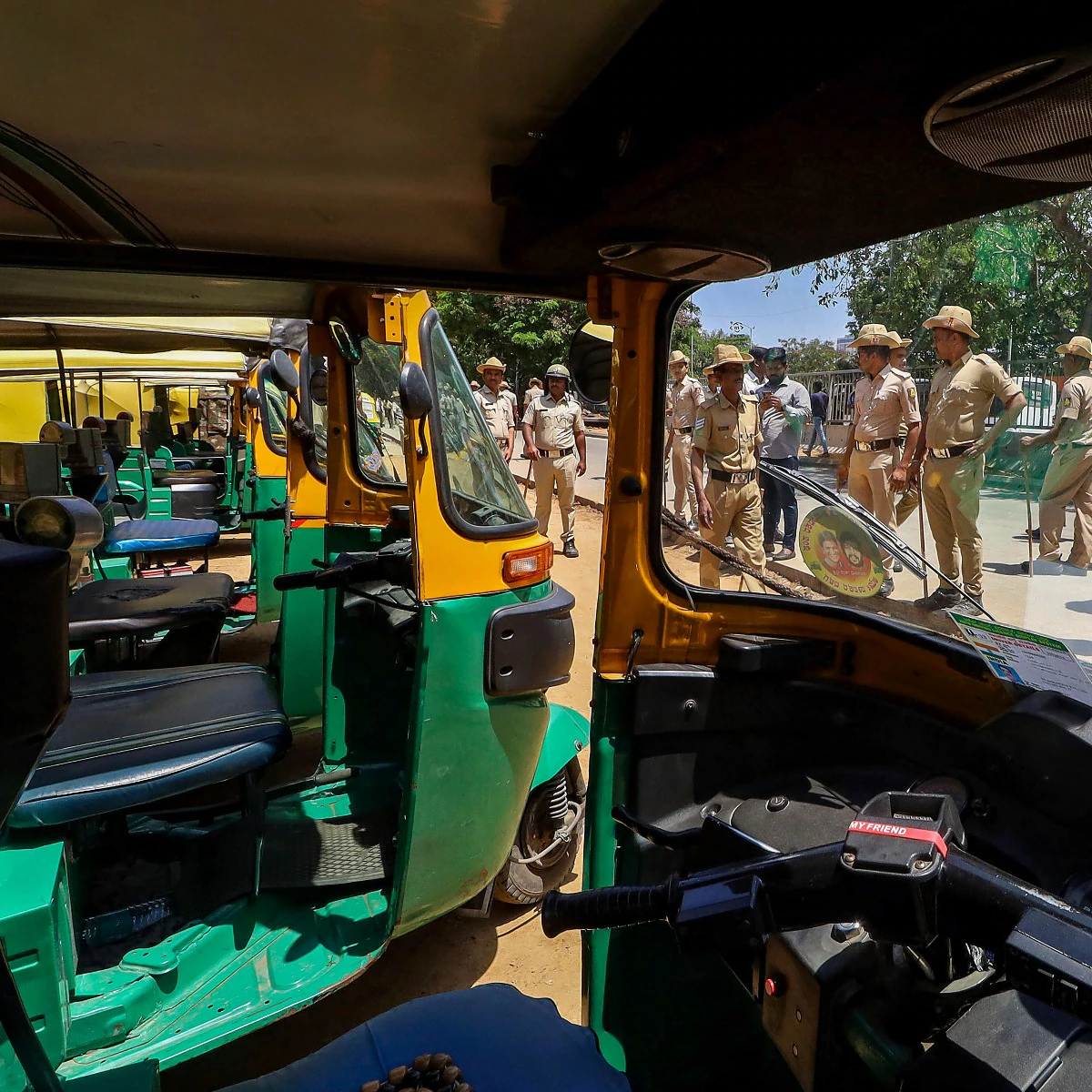
The Karnataka Transport Department booked 260 autorickshaw drivers and impounded 98 vehicles across Bengaluru in a single-day enforcement drive. Triggered by a spike in commuter complaints, 22 teams from the city’s Regional Transport Offices cracked down on fare overcharging, unauthorised aggregators, and missing permits—marking one of the city’s most assertive regulatory actions this year amid mounting concerns over ride pricing irregularities and the need for transparent, inclusive urban mobility.
The operation, initiated following a surge in commuter complaints, reflects the growing pressure on authorities to regulate public transport fares and ensure compliance with state-mandated tariffs. Transport officials confirmed that violations were not only limited to inflated fares, but also included lack of required documentation such as fitness certificates, driver licences, and valid permits. According to officials, the highest number of cases were registered in Bengaluru South, where 48 drivers were booked and 18 vehicles were seized. Bengaluru West followed closely, recording 36 violations and impounding 13 autos. Central and East divisions each recorded 30 cases, while Electronic City and North Bengaluru logged 26 and 25 cases respectively. Additional actions were taken in Jnana Bharathi, K R Puram, Yelahanka, Chandapur, and Devanahalli, as part of the coordinated enforcement exercise.
The crackdown comes amid mounting criticism against app-based autorickshaw aggregators for fare irregularities, particularly after a recent hike in fares following the state’s decision to ban bike taxis on June 16. In response, senior transport authorities had instructed officers to draft a stringent action plan, including recommendations to suspend permits or pursue criminal action against repeat offenders. Despite a 2022 interim relief granted by the Karnataka High Court to aggregator platforms like Ola, Uber, and Rapido—protecting them from coercive state actions—transport officials clarified that current penalties target only those violating existing fare norms and operational rules. The court had earlier restrained the government from initiating punitive action until the legality of these aggregators operating under licences issued for cab services is determined.
An official from the Transport Department emphasised that Monday’s action was part of routine enforcement, triggered by a growing number of complaints. “Our objective is not just punitive but corrective. Operators must respect fare structures set by the government and ensure compliance with documentation requirements,” the official noted. As per the most recent fare revision issued in December 2021, the base fare for autorickshaws was fixed at ₹30 for the first two kilometres, with ₹15 charged for every subsequent kilometre. Following a court order in October 2022, app-based aggregators are permitted to levy a maximum of 10% commission above the government-notified fare, along with 5% Goods and Services Tax (GST). However, many passengers have reported being charged over ₹70 for short rides of 1.5 kilometres, owing to additional charges such as surge pricing, pickup fees, and other hidden costs.
Experts in urban transport policy have criticised the opaque fare structures employed by aggregators. “Dynamic pricing without regulatory checks can distort fare equity and impact affordability, especially for daily commuters,” noted a Bengaluru-based transport economist. Transparency in pricing and standardised fare systems are central to building public trust in shared mobility services, they added. The Transport Department’s enforcement initiative also ties into a broader campaign to strengthen sustainable and affordable urban mobility in Bengaluru, a city already battling congestion, pollution, and an over-reliance on private vehicles. By targeting regulatory violations, the state aims to restore commuter confidence in public transport and ensure that ride-hailing services adhere to principles of fair pricing and service quality.
Officials said detailed reports from the RTO divisions are being compiled to assess the scale of the violations and determine the next steps, including possible penalties for aggregator platforms that facilitated such violations. “Aggregator compliance is being monitored closely. If platforms are found enabling unlicensed or non-compliant drivers, stricter penalties including delisting may follow,” said a senior official. Meanwhile, citizen groups have welcomed the government’s tough stance, urging the department to institutionalise fare monitoring and develop a digital grievance redressal system. Several passengers have reported discrepancies between quoted and actual fares, often leading to disputes at drop-off points.
Analysts pointed out that while digital ride-hailing has improved convenience and access to autos, the absence of fare transparency and the perception of arbitrary pricing erodes long-term user loyalty. “The state must ensure that app-based convenience does not override basic regulatory obligations like fair pricing and proper documentation,” said a transport technology analyst. As the matter remains under legal review, the state government’s calibrated approach appears aimed at balancing commuter rights with the operational freedom of private mobility platforms. Officials reiterated that enforcement efforts will continue, with a renewed focus on areas reporting high commuter grievances and unlicensed operations.
In a city where more than 1.5 lakh autos ply the streets daily, the challenge lies not only in enforcing existing norms but also in ensuring that public transport evolves in a direction that is sustainable, inclusive and fair for both drivers and passengers.
Also Read : Pune Metro Sees Record ₹8.33 Crore Revenue and 52.41 Lakh Ridership in June
