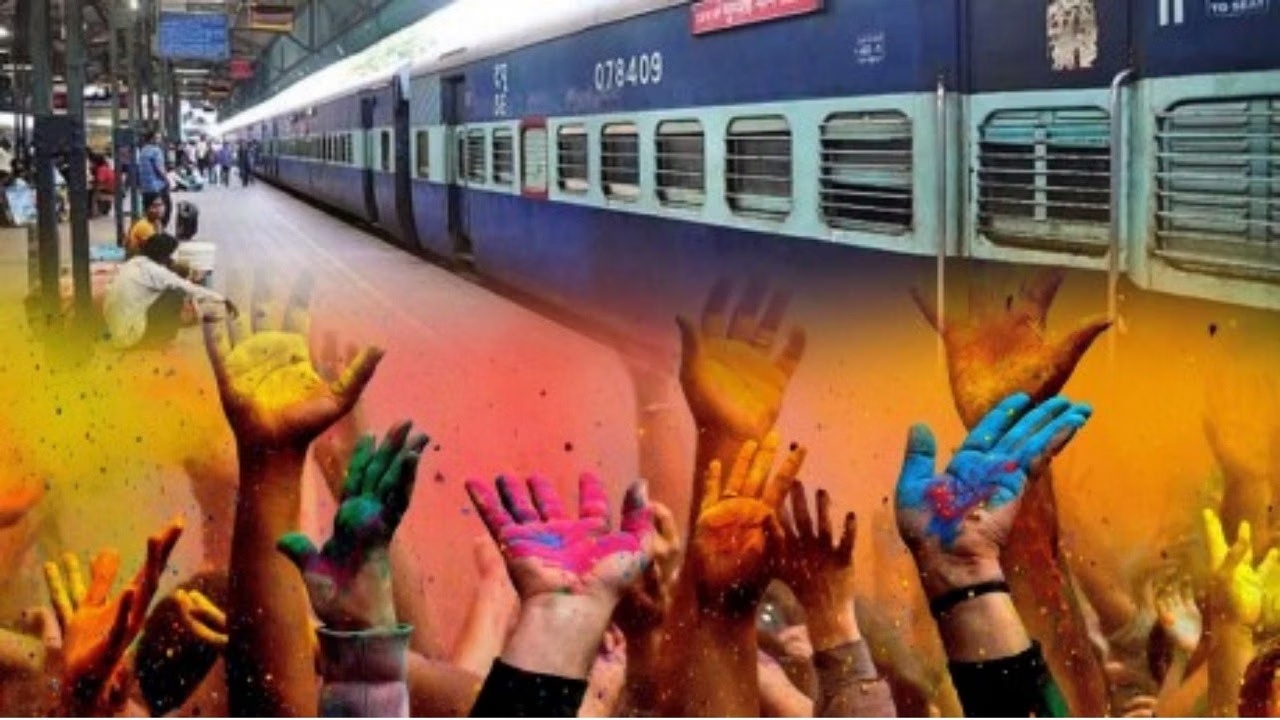
Bengaluru Connects North and East India With Holi Trains
Bengaluru’s rail network is preparing for a surge in passenger demand this Holi season, with the South Western Railway introducing new bi-weekly and weekly special train services connecting the city to northern and eastern Karnataka as well as Kolkata. These services aim to ease travel for commuters, seasonal migrants, and families attending festival celebrations, while reflecting the need for resilient and flexible urban transport during peak travel periods.
The new bi-weekly express will operate between Sir M. Visvesvaraya Terminal in Bengaluru and Bidar, running twice a week on Fridays and Sundays. Along its route, the train stops at multiple intermediate stations, enhancing connectivity for smaller towns and semi-urban hubs in northern Karnataka. Additionally, a weekly service linking Bengaluru Cantonment with Kalaburagi provides a direct option for travellers in northern districts, ensuring timely mobility while reducing congestion on regular services. For long-distance travel, a dedicated weekly service from Yelahanka in Bengaluru to Santragachi in Kolkata has been introduced, offering a direct link between southern and eastern India. Urban transport planners note that such seasonal special services are critical in mitigating pressure on existing rail capacity and can reduce reliance on road transport, which contributes disproportionately to urban emissions and congestion.
Railway officials stress that all special trains will follow their regular schedules and halts, maintaining consistency and predictability for passengers. Experts in urban mobility highlight that proactive scheduling and early ticket availability are essential for inclusive transport access, allowing households across socio-economic groups to plan travel without last-minute uncertainty. From a city planning perspective, these measures underscore the need for scalable and climate-conscious infrastructure in urban corridors that support festival-driven mobility spikes. Seasonal surge management, such as this Holi special deployment, illustrates how public transport networks can balance passenger convenience with operational efficiency while limiting environmental impacts relative to private vehicle alternatives.
Economic analysts also observe that robust festival connectivity can stimulate local economies by facilitating labour mobility, regional trade, and tourism. Cities like Bengaluru, which act as both employment hubs and cultural centres, benefit when infrastructure adapts dynamically to festive travel demands, reinforcing the broader goals of inclusive urban growth. The South Western Railway’s Holi special services will operate through late March, providing temporary capacity enhancements. Authorities encourage passengers to plan journeys early, noting that tickets are expected to sell out quickly. For policymakers and transport planners, the initiative highlights an ongoing need for investment in resilient, demand-responsive rail infrastructure capable of accommodating both daily commuting and seasonal mobility peaks.