


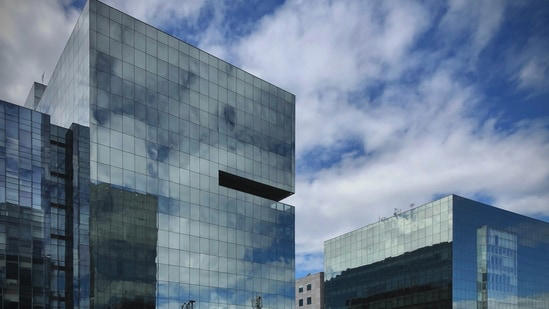
India’s technology capital has recorded its strongest year yet in commercial real estate, with Bengaluru office leasing reaching an unprecedented 24.1 million sq ft in 2025. The surge, driven by large corporate expansions and flexible workspace demand, underscores the city’s deepening role in global business operations and urban economic growth.
Data reviewed by Homes and Buildings show that the final quarter alone accounted for 9.3 million sq ft of gross leasing, marking an 18.6% increase year-on-year. The momentum was concentrated in the Southern Business District, particularly along the Outer Ring Road South-East corridor, where Grade A supply and transit connectivity continue to attract multinational occupiers. The technology sector retained its dominance, contributing nearly a quarter of annual leasing volumes. Flexible workspace operators and manufacturing-linked occupiers closely followed, reflecting the city’s diversification beyond pure IT services. Large transactions above 100,000 sq ft formed the bulk of activity, signalling long-term commitments rather than short-term expansions. Pre-commitments in under-construction projects also indicated sustained occupier confidence. Importantly, the expansion occurred alongside a significant supply pipeline. Approximately 12 million sq ft of new office stock was delivered in 2025, including 3.5 million sq ft in the final quarter. Much of this was added in the Southern Business District, with the ORR South-East micro-market accounting for more than half of recent completions.
Despite the influx of new buildings, vacancy rates declined to 10.5%, down by 70 basis points quarter-on-quarter. Analysts attribute the absorption strength to global capability centre (GCC) expansions, engineering and R&D investments, and the growing role of Bengaluru as a back-office and innovation hub for multinational firms. Rental values continued to firm up across premium assets. Average office rents rose 6.6% year-on-year, supported by limited availability in prime submarkets. Capital values increased 8.6%, reflecting investor appetite for stabilised, ESG-compliant office properties with strong tenant covenants. Developers have increasingly positioned new projects with energy-efficient systems, enhanced air quality standards, and digital building management tools features now viewed as essential rather than optional. Urban planners note that sustained Bengaluru office leasing growth reinforces the need for parallel investment in mobility, housing supply, and civic infrastructure. The clustering of demand along established corridors highlights the importance of metro expansions, last-mile connectivity, and mixed-use zoning to prevent congestion-led constraints. Looking ahead, market observers expect continued diversification of occupiers, including healthcare, BFSI, engineering services, and managed workspace operators.
With vacancy levels tightening in prime corridors and institutional capital targeting income-producing assets, Bengaluru appears positioned to remain India’s most active commercial office market in 2026. The durability of this growth, however, will depend on infrastructure readiness and the city’s ability to integrate sustainability, transport efficiency, and workforce housing into its next phase of expansion.
Also Read: NCR housing market enters measured growth phase
Bengaluru commercial real estate hits leasing peak
