


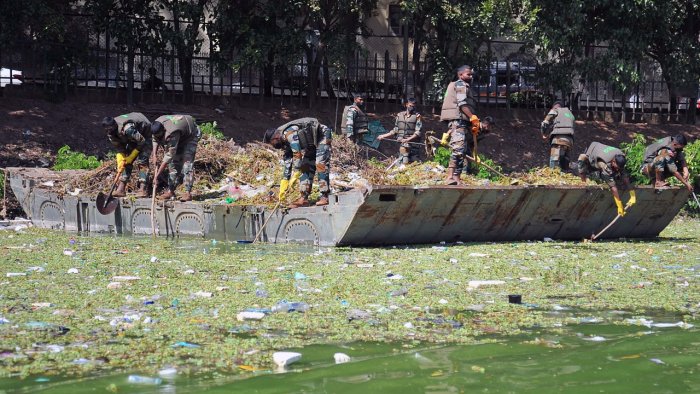
Bengaluru’s civic authorities have undertaken an intensive 48-hour cleanup operation targeting flyovers and stormwater drains, removing significant volumes of accumulated waste in an effort to strengthen urban resilience ahead of seasonal rainfall.
The drive highlights the growing urgency of proactive maintenance in a city increasingly vulnerable to flooding and infrastructure stress.Officials overseeing the operation report that around 10 tonnes of debris were cleared from critical points across the city, including underpasses, elevated corridors, and drainage channels.These locations are often prone to waste accumulation due to limited monitoring and high traffic activity, making them key risk zones during heavy rain events.The initiative reflects a broader shift towards preventive urban management, particularly in cities like Bengaluru where rapid expansion has outpaced infrastructure maintenance.Blocked drains and clogged stormwater systems are a leading cause of waterlogging, disrupting mobility, damaging property, and affecting economic activity during monsoon periods.From an infrastructure perspective, the Bengaluru civic cleanup drive underscores the importance of regular maintenance in ensuring the functionality of urban systems.While large-scale infrastructure projects often receive attention, routine upkeep—such as waste removal and drainage clearing—plays an equally critical role in sustaining city operations.Urban planners note that flyovers and elevated structures can become informal dumping zones due to lack of oversight and public awareness.
Addressing this requires not only periodic cleanups but also systemic interventions, including better waste management systems, surveillance, and community engagement to discourage littering.The environmental implications are significant. Accumulated waste in drains can lead to contamination of water bodies, while stagnant water caused by blockages can become breeding grounds for disease vectors.By clearing these systems, authorities aim to reduce public health risks and improve overall environmental quality.The Bengaluru civic cleanup drive also highlights the economic dimension of urban maintenance. Efficient drainage systems help prevent disruptions to transport networks and business operations, ensuring that the city remains functional during adverse weather conditions. For a major economic hub like Bengaluru, such measures are essential to maintaining productivity and investor confidence.Experts suggest that integrating technology—such as real-time monitoring of drainage systems and data-driven maintenance schedules—could enhance the effectiveness of such initiatives. Additionally, decentralised waste management and stronger enforcement mechanisms can help reduce the recurrence of similar issues.
As the city prepares for the monsoon season, the focus will be on sustaining these efforts beyond short-term drives. The success of such initiatives depends on continuous maintenance, public participation, and coordinated planning across agencies.
Bengaluru’s latest cleanup effort serves as a reminder that building resilient cities requires not just new infrastructure, but consistent care of existing systems—ensuring that urban growth is supported by reliable and sustainable civic management.
Also Read:Bengaluru Rajdhani Platform Change Affects Rail Operations
