


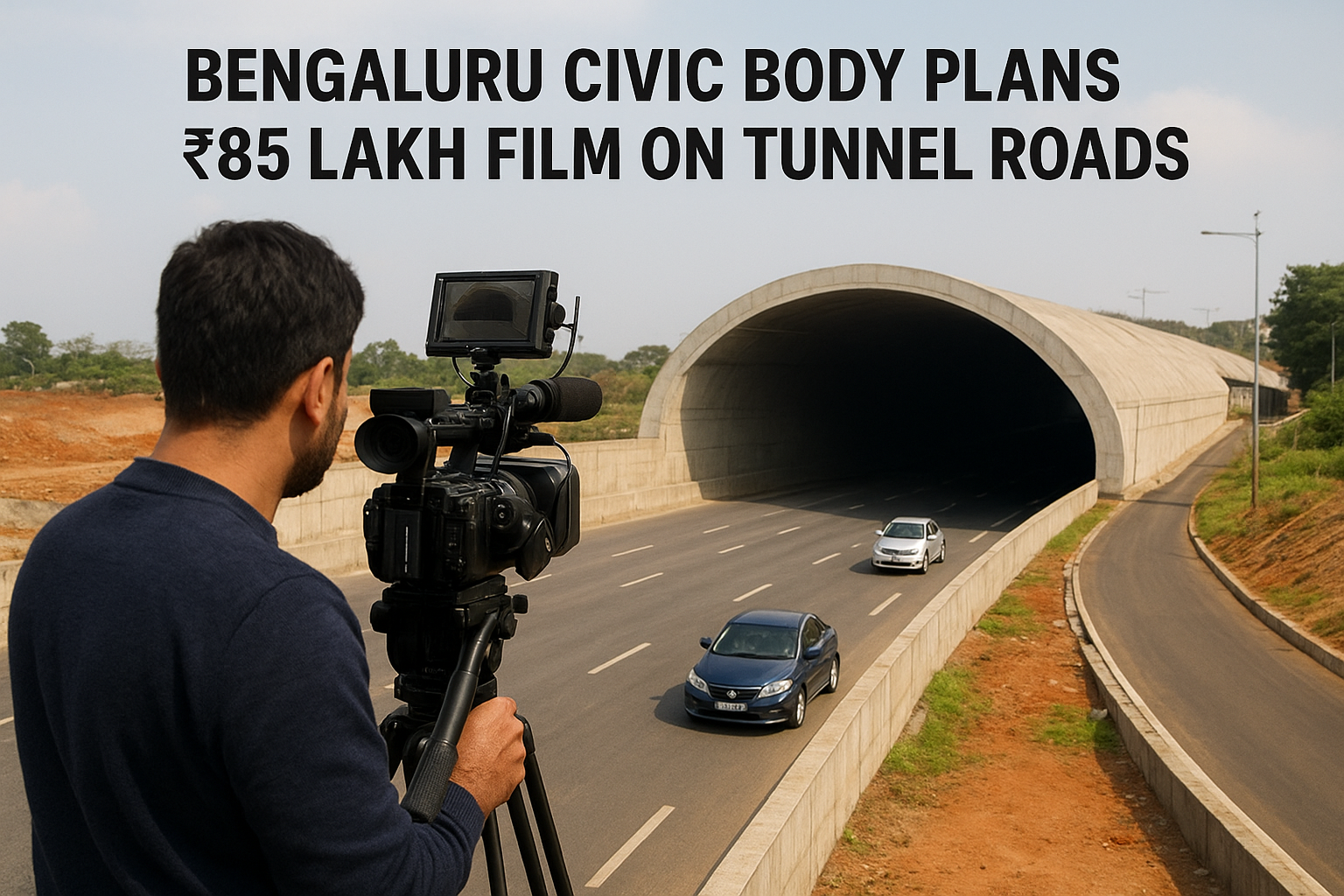
Bengaluru’s civic body is stepping into the world of storytelling, commissioning a short film worth ₹85 lakh to showcase its ambitious tunnel road and elevated corridor projects. The film is expected to illustrate the city’s current challenges, including traffic bottlenecks and urban flooding, before presenting a futuristic vision of seamless mobility through twin tunnel corridors and flyovers.
The six-minute production is being designed as more than a publicity exercise. Officials describe it as a strategic communication tool aimed at rebuilding public trust, attracting investment, and aligning stakeholders with the city’s long-term infrastructure roadmap. The civic agency argues that films and visual storytelling can help demonstrate how large-scale projects, worth an estimated ₹50,000 crore, will transform Bengaluru into a modern, resilient, and globally competitive city.
Also Watch: An Exclusive Interview with Sanjeev Jaiswal (IAS), CEO MHADA
The proposed projects include East–West and North–South twin tunnel corridors, a flyover network spanning close to 120 kilometres, and new road alignments along stormwater drains. Officials suggest that the film will not only be circulated on digital platforms and television but also presented to investors to secure participation in public-private partnerships.However, the proposal has stirred mixed reactions across the city. Critics have questioned the rationale of spending ₹85 lakh on a promotional film at a time when roads remain riddled with potholes and seasonal rains continue to expose fragile drainage systems.
Civic activists insist that funds should instead be directed towards execution and maintenance rather than promotion. They argue that while glossy narratives may attract attention, they do little to address the immediate realities commuters face every day.Urban mobility experts, meanwhile, note that narrative-building plays a vital role in shaping how citizens perceive mega projects. They believe that while communication tools are valuable, they cannot substitute accountability in project delivery. As Bengaluru’s infrastructure backlog runs deep, success will ultimately be measured not by cinematic vision but by visible improvements on the ground.
Supporters of the film argue that Bengaluru’s infrastructure push requires large-scale funding and political capital, and for that, a compelling narrative is critical. They emphasise that visual storytelling can foster a sense of collective ownership and pride, bridging the trust gap between government plans and public scepticism.The debate reflects the broader challenge Bengaluru faces balancing immediate civic needs with long-term infrastructure aspirations. Whether the short film becomes a turning point in shaping public sentiment or merely a symbolic gesture will depend on how swiftly the promises translate into functional, sustainable, and equitable road systems for India’s technology hub.
