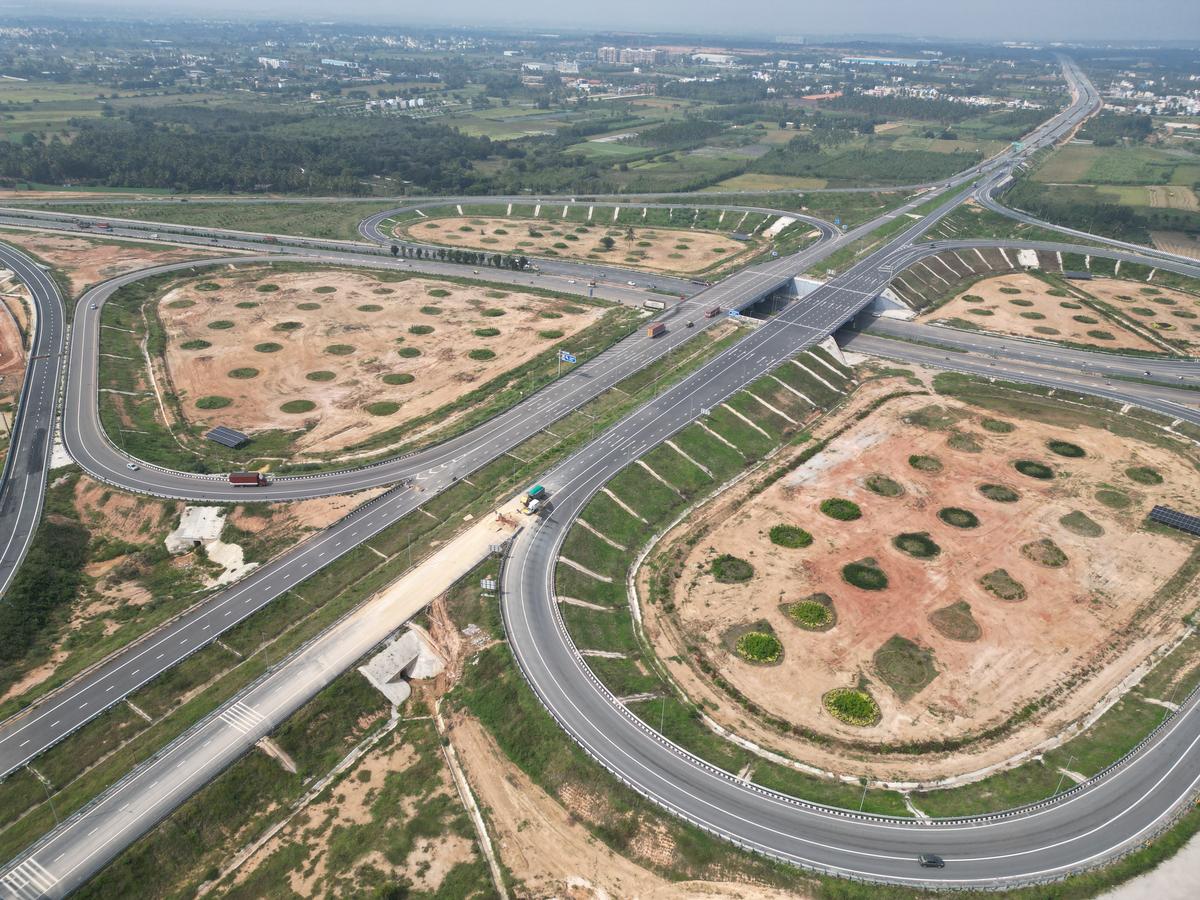
Bengaluru Chennai Expressway Pushed To July 2026 completion
The much-anticipated Bengaluru–Chennai expressway, designed to transform connectivity between two of South India’s economic hubs, is now scheduled for completion by July 2026. Initially targeted for 2023, the 263-km corridor worth over Rs 15,000 crore has been hit by persistent delays, with less than half the work completed so far. Officials confirmed that challenges in land acquisition, environmental clearances, and complex geological conditions across three states have pushed the deadline by over three years.
The expressway, stretching across Karnataka, Andhra Pradesh, and Tamil Nadu, is being built to provide a high-speed corridor between the cities, reducing travel time to under three hours. Of the total length, only 100.7 km has been completed, including stretches near Bengaluru and Gudipala. Segments connecting Walajahpet to Arakkonam and further to Kancheepuram are expected to be ready by late 2025, while the final section towards Sriperumbudur will only be finished by mid-2026, officials said.
According to experts, the project delays underline the challenges of large-scale infrastructure development in densely populated and ecologically sensitive regions. In Karnataka, resistance from landowners and disputes over compensation stalled progress. In Tamil Nadu, permissions for land levelling and technical hurdles in cutting hard rock surfaces slowed construction. In Andhra Pradesh, work was held up around a 10 km eco-sensitive zone of the Koundinya Wildlife Sanctuary, where approvals were delayed to protect biodiversity.
Despite the setbacks, planners stress the project’s long-term significance. Once complete, the expressway is expected to reduce dependence on existing congested highways, lower vehicular emissions by enabling smoother high-speed travel, and strengthen the logistics corridor connecting the industrial belts of Tamil Nadu and Karnataka. Transport specialists believe the new road will become a backbone for freight movement while easing passenger traffic, contributing to regional economic integration. Sustainability advocates argue that while the project promises economic gains, equal attention must be given to its environmental footprint. Experts note that eco-sensitive stretches demand careful planning with wildlife underpasses, noise barriers, and carbon-mitigating design. Integrating such measures, they say, could make the expressway a model for balancing infrastructure growth with ecological responsibility.
Officials have assured that the expressway will not only save travel time but also deliver safer and greener mobility options. By diverting long-haul freight from city roads and introducing energy-efficient designs, the project is expected to reduce congestion and pollution in both Bengaluru and Chennai, two cities battling rising vehicular emissions. The expressway’s delays, though frustrating for commuters and industries, highlight the complex interplay of development, environmental safeguards, and public interest. As the new completion date nears, stakeholders say success will depend on ensuring that speed does not come at the cost of sustainability.