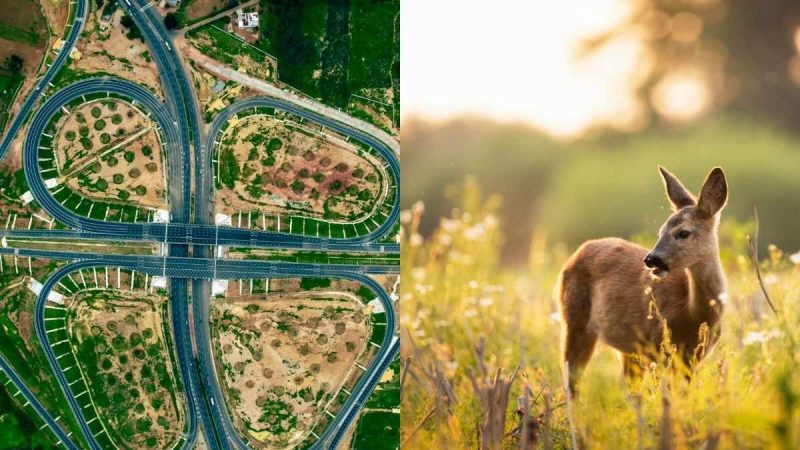
Chennai and Bengaluru are set to witness a rare integration of infrastructure and wildlife conservation with the upcoming Chennai-Bengaluru Expressway. Authorities have announced plans for a dedicated wildlife overpass within the Mahimandalam Reserve Forest, creating a secure route for animals across the 258-kilometre, four-lane expressway. The corridor aims to reduce human-animal conflict while preserving local biodiversity amid rising transport and development pressures.
The overpass, spanning 90 metres in length and 25 metres in width, will be elevated 5.5 metres above the road. Industry sources indicate that the structure will feature dense, manmade grasslands to replicate the surrounding forest ecosystem, helping it blend seamlessly into the natural landscape. Urban planners note that such initiatives are increasingly critical as expressways and urban expansion fragment wildlife habitats, raising risks to both animals and motorists.
Construction of the Chennai-Bengaluru Expressway began in May 2022 and is expected to be fully operational by mid-2026. While the Karnataka segment of 71 kilometres is already functional, work continues across Andhra Pradesh and Tamil Nadu. Experts emphasise that integrating ecological corridors at planning stages, rather than retrofitting them later, provides both environmental and economic efficiencies, reducing long-term mitigation costs and road maintenance risks caused by wildlife collisions. Mahimandalam Reserve Forest, situated between Ranipet and Vellore, is home to species such as Indian gaur, elephants, panthers, deer, and wild boar. Environmental analysts argue that expressways traversing such ecologically sensitive areas often disrupt migratory patterns and breeding grounds, creating cascading impacts on local ecosystems. The expressway’s wildlife corridor reflects a broader trend in India and internationally, where infrastructure design increasingly prioritises coexistence with natural habitats.
From an urban development perspective, the corridor highlights a shift towards people-first, climate-resilient transport planning. Safety for both road users and wildlife reduces accident-related disruptions, benefiting logistics, commuters, and regional trade. Urban economists also suggest that such investments could enhance the environmental value of nearby land, encouraging more sustainable real estate development along the corridor. While the overpass addresses immediate ecological concerns, planners stress the need for complementary measures, including noise barriers, regulated lighting, and community awareness campaigns, to ensure long-term effectiveness. As India expands its high-speed road networks, the Chennai-Bengaluru Expressway’s wildlife integration may serve as a replicable model for balancing growth with conservation.