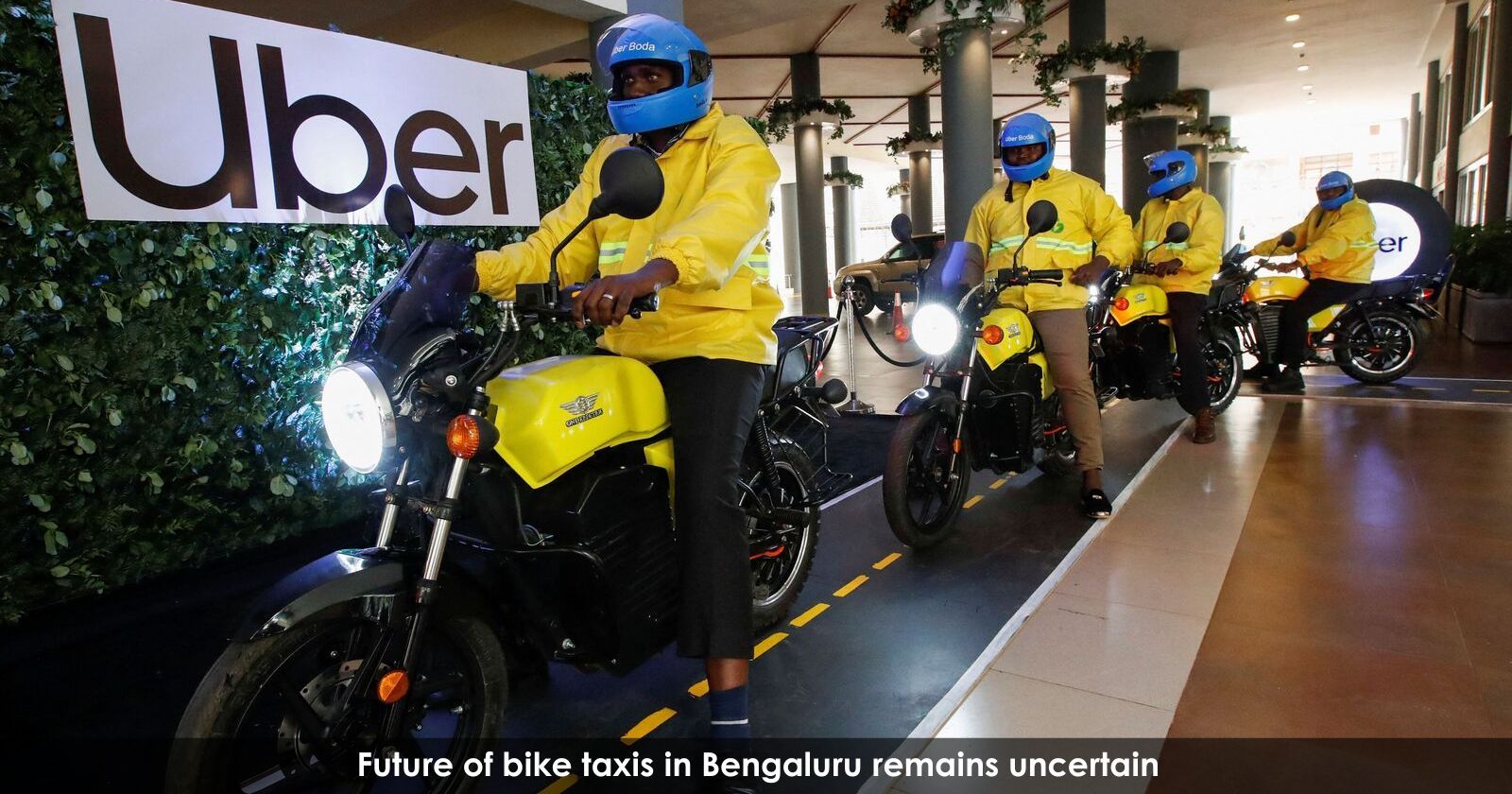
Bengaluru Bike Taxis Return Despite Policy Uncertainty
Bike taxis have quietly reappeared on city streets after a two-month suspension, reigniting debates over the legality and sustainability of app-based two-wheeler services. While digital ride-hailing firms resumed operations this week, the state government maintains that no formal approval has been granted, leaving the future of this urban mobility option in regulatory limbo.
The suspension was imposed in mid-June after the transport department launched an aggressive crackdown, seizing bikes and penalising riders attached to aggregator platforms. Officials argued that unregulated operations posed safety, legal, and revenue challenges. The matter was escalated to the state’s high court, where hearings continue. The court recently urged the government to frame a definitive policy on bike taxis, acknowledging their role in livelihoods and urban mobility, but has not permitted full-scale resumption.
Industry analysts estimate that prior to the ban, more than 1.20 lakh bikes were linked to platforms in Bengaluru, with nearly six lakh people across the state depending on these services—either as drivers or as affordable daily commuters. The sudden halt had disrupted incomes for thousands, particularly from lower-income households, many of whom had shifted to bike taxis during the post-pandemic mobility surge.
Transport officials maintain that any continuation of services without a formal regulatory framework risks undermining passenger safety and fair competition with auto-rickshaws and licensed taxis. However, urban mobility experts argue that two-wheeler ride-hailing can significantly reduce congestion and emissions if integrated into the city’s sustainable transport plan. They note that shared mobility, when regulated, can cut down reliance on private vehicles and enhance last-mile connectivity to metro and bus stations.
Civil society voices are equally divided. Commuters cite affordability, speed, and convenience as major reasons for embracing bike taxis, particularly for short trips that otherwise add to road congestion. On the other hand, traditional transport unions continue to resist, citing unfair competition and loss of income.
The legal ambiguity underscores the need for a clear, city-focused mobility policy. Many states have already moved towards recognising and regulating bike taxis, treating them as part of shared transport infrastructure. Bengaluru, which markets itself as a global innovation hub, now faces pressure to balance technological disruption with social equity and environmental responsibility. For now, bike taxis are back on the roads, but under a shadow of uncertainty. Whether they evolve into a recognised pillar of sustainable mobility or remain entangled in policy disputes will depend on the state’s forthcoming decisions, which could set a precedent for other Indian cities navigating the future of urban transport.