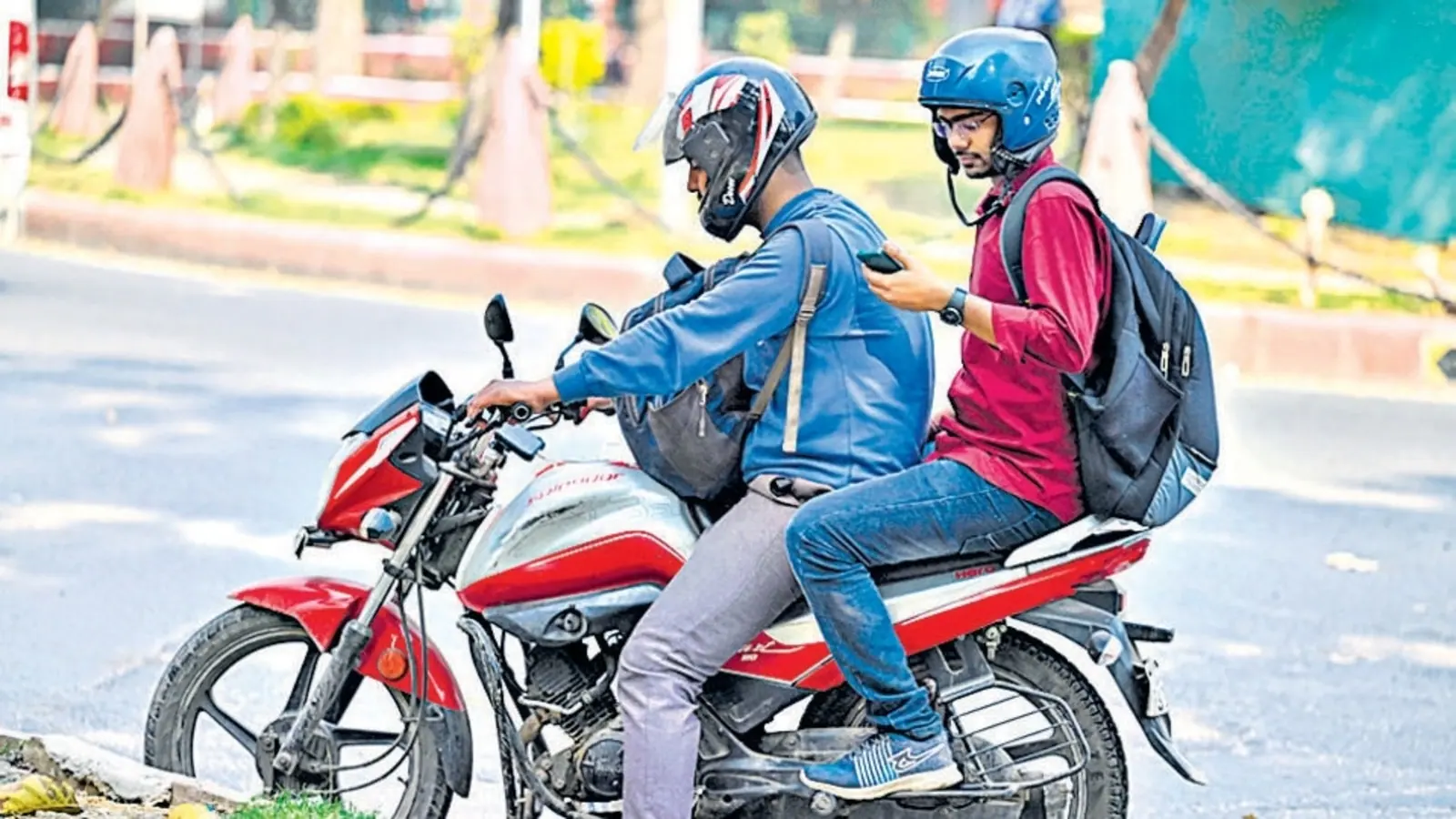
Bengaluru Bike Taxis Return As Commuters Seek Sustainable Rides
Bengaluru’s bike-taxi services have made a cautious comeback, offering affordable and quick mobility options to commuters who have long struggled with unreliable last-mile connections. Despite the regulatory ambiguity, thousands of riders are back on the roads, reflecting the city’s growing dependence on low-cost, sustainable transport choices.
The Karnataka High Court has clarified that it has not formally authorised the resumption of bike taxis but has directed that individual riders should not be harassed, even as the state government retains the authority to regulate aggregators. This nuanced position has allowed major ride-hailing platforms to quietly reinstate bike-taxi services after a two-month suspension, with officials indicating they will closely monitor compliance.
For daily commuters, the return of two-wheeler taxis has been an immediate relief. Many pointed out that bike rides cost nearly half of what an auto-rickshaw or cab charges for the same distance, making them a vital link for students, office workers, and residents in fast-growing suburbs. The affordability, coupled with the ability to manoeuvre through Bengaluru’s congested roads, has reinforced bikes as an indispensable mode of urban transport.
The revival has also restored livelihoods for thousands of riders who had shifted to other gig roles during the suspension. Many shared that delivery jobs provided lower earnings and longer waiting times, whereas bike taxis could generate steady income of up to ₹1,000 a day. Industry representatives have urged aggregators to temporarily waive platform fees, arguing that reduced commissions could help riders regain financial stability after two months of disruption. Transport experts note that Bengaluru’s transport ecosystem suffers from a persistent last-mile connectivity gap. Metro stations and arterial bus stops often remain poorly linked to residential and employment hubs, leaving commuters dependent on costly cabs or autos. In such a scenario, bike taxis emerge not only as a convenient option but also as an environmentally lighter one, consuming less road space and fuel per passenger compared to larger vehicles.
However, regulatory uncertainty continues to cloud the sector. State transport officials have reiterated that aggregators must comply with existing rules, and violations could invite action. Analysts suggest that the lack of a clear, long-term policy risks stalling innovation in urban mobility, where two-wheelers could play a critical role in reducing congestion and emissions. The resumption of services, though fragile, highlights the city’s urgent need for inclusive, affordable, and eco-friendly transport alternatives. As Bengaluru continues to urbanise, the challenge lies in aligning regulation, technology, and sustainability to create a transport framework that works for both riders and commuters.