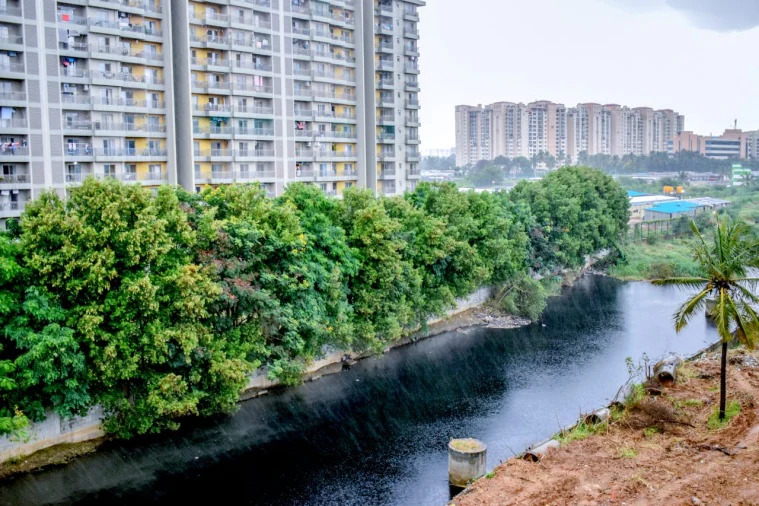
Bengaluru Bellandur Lake Sees Partial Rejuvenation Progress
Bengaluru’s Bellandur Lake, long plagued by pollution and urban encroachment, has reached a critical stage in its restoration, with major desilting operations largely complete. City planners and resident volunteers conducted a joint site inspection over the weekend to assess the ongoing rejuvenation and verify alignment with official restoration plans. While the work signals progress for urban water management, uncertainties around financing, sewage management, and long-term upkeep remain.
Officials report that nearly all lake fencing and dewatering works have been executed, with around two-thirds of the desilting of the tank bed and feeder channels completed. Wetland construction, a key ecological component intended to improve water quality and biodiversity, is roughly 56 percent complete. The height of the lake bund has been raised, a preventive measure against the mixing of sewage and rainwater during monsoon events, reflecting an integrated approach to flood and pollution control.
Urban development specialists note that the Bellandur initiative carries broader implications for Bengaluru’s sustainability goals. “This project is a test case for urban water governance,” said a senior environmental planner. “If executed with consistent monitoring and funding, it could inform similar lake rejuvenation efforts across the city and reduce downstream environmental risks.” Economically, restored water bodies improve real estate stability, urban microclimates, and local livelihoods tied to ecosystem services, particularly in high-density corridors like the Bellandur catchment. Despite technical progress, residents voiced concerns over financial transparency and governance. Although state authorities released nearly ₹100 crore in late 2025, volunteer groups point to insufficient clarity on expenditure tracking and resource allocation. In addition, reduced staffing for lake marshals raises the risk of illegal waste dumping, encroachments, and partial sewage inflows, potentially undermining months of work. Some experts suggest incorporating GPS tracking for desilting operations and routine citizen audits to bolster accountability.
The partial diversion of sewage remains a key challenge, with inflow channels still active in some sections. Urban infrastructure analysts emphasise that sustainable lake restoration requires ongoing operations beyond one-off desilting regular maintenance, monitoring of water quality, and ecological management of wetlands are essential to preserve the gains. Bengaluru’s Bellandur Lake rejuvenation illustrates the tension between infrastructure execution and civic oversight in rapidly urbanising areas. While residents cautiously welcome the improved pace, long-term success will depend on transparent fund management, robust sewage control, and institutionalised guardianship. With monsoon season approaching, authorities are under pressure to ensure that the lake receives fresh rainwater free from contamination, setting a precedent for climate-resilient urban water bodies in India’s fastest-growing cities.