


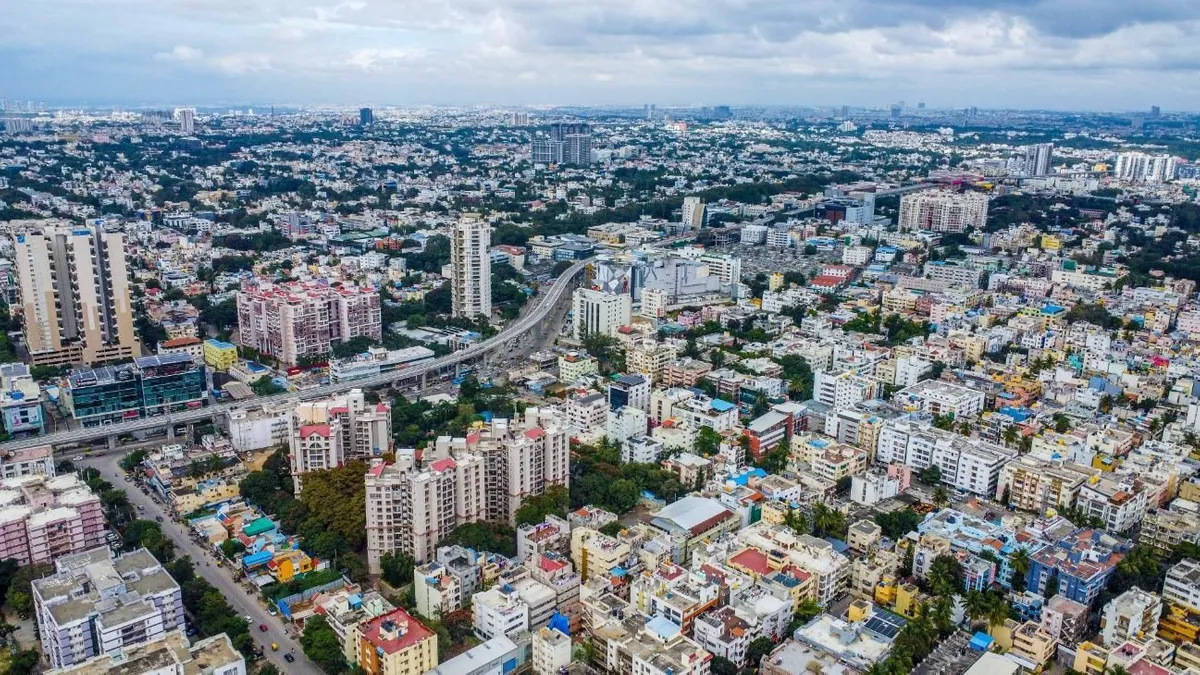
The Bengaluru Development Authority (BDA) is currently holding nearly 1,910 unsold housing units across its recent projects, even as officials maintain that overall absorption remains steady. The inventory forms part of approximately 4,782 units constructed in the latest development cycle, with around 65 per cent already allotted.
The figures highlight a nuanced demand pattern in Bengaluru’s public housing segment. While apartment units continue to find buyers at a moderate pace, villa-format homes particularly in peripheral locations have seen slower uptake. Among the key projects, the authority’s villa development at Hunnigere, around 30 kilometres from the city centre, reflects this trend. Of 322 four-bedroom villas launched under a mix of direct sale and e-auction formats, roughly 140 have been allotted, leaving 182 still available. Priced between Rs 80 lakh and Rs 1.2 crore, the homes target higher-income households, a segment that tends to move cautiously in government-led layouts. Urban economists point out that villas typically require larger upfront capital commitments and carry higher maintenance expectations. In contrast, mid-rise apartment units especially in growth corridors align more closely with the purchasing capacity of salaried middle-income buyers, who form a substantial share of BDA’s applicant base. Across all projects completed in recent years, BDA has constructed over 6,700 units, of which more than 4,300 have been allotted. An additional 470 flats are undergoing repairs and renovation, including several Economically Weaker Section (EWS) units at the Aluru project that required rectification before sale. Officials say these temporary withdrawals from inventory have affected the immediate availability of stock.
Project-level data shows varied performance. Kaniminike and Aluru have recorded allotment levels exceeding 75 per cent, while Gunjuru and Thippasandra have crossed the 70 per cent mark. Kommaghatta presents the largest absolute unsold stock among the recent batch, with over 800 units yet to be allotted. Meanwhile, 1BHK units in one Hunnigere scheme have seen particularly weak traction, suggesting limited demand for compact units in that micro-market. BDA representatives attribute the rise in unsold numbers partly to multiple new project launches entering the market simultaneously. They emphasise that the authority is not discounting units and continues to follow standard pricing norms. From a broader housing policy perspective, the data underscores the complexity of supply-demand alignment in India’s fastest-growing technology hub. Bengaluru’s private residential market has remained buoyant, but public agencies must calibrate product mix, location and pricing carefully particularly in peripheral areas where social infrastructure and transport connectivity are still evolving.
For a city grappling with affordability pressures and infrastructure strain, the pace at which public housing inventory is absorbed will serve as an indicator of how effectively planned layouts meet the needs of diverse income groups.
Also Read: Greater Noida Delta 2 gets mixed use project
Bengaluru BDA housing stock shows mixed demand
