


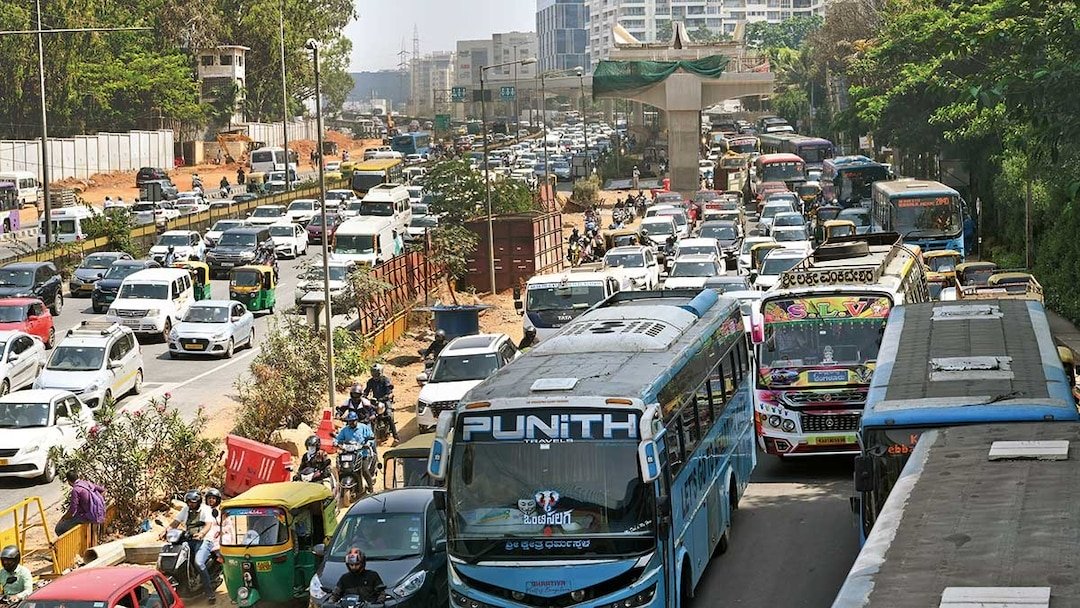
A critical stretch of Bannerghatta Road in Bengaluru is emerging as a major congestion hotspot, with commuters facing prolonged delays and unpredictable travel conditions.
The situation along this key urban corridor highlights the growing mismatch between infrastructure capacity and traffic demand in one of the city’s busiest zones.The Bengaluru Bannerghatta Road congestion problem is particularly acute along a six-kilometre segment that connects major residential areas, healthcare institutions and commercial hubs. Peak-hour traffic has become increasingly difficult to manage, with bottlenecks, roadworks and high vehicle density contributing to severe slowdowns.Urban mobility experts note that the Bengaluru Bannerghatta Road congestion reflects systemic challenges in corridor-level planning. Incremental infrastructure changes, such as partial road widening or isolated junction improvements, often fail to address the cumulative impact of traffic from multiple entry and exit points.From a commuter perspective, the implications are significant.Extended travel times not only affect daily routines but also increase fuel consumption and stress levels.For many residents, this stretch has become a predictable point of delay, altering travel behaviour and route choices.The Bengaluru Bannerghatta Road congestion issue also has broader economic consequences. Delays in the movement of people and goods can reduce productivity and increase operational costs for businesses located along the corridor.Infrastructure constraints are a key factor.Limited road width, ongoing construction activities and insufficient traffic management measures can amplify congestion, particularly during peak hours.The presence of critical facilities such as hospitals further complicates traffic flow, as emergency access must be maintained.
Urban planners highlight that the Bengaluru Bannerghatta Road congestion underscores the need for integrated transport solutions.Expanding public transport options, improving last-mile connectivity and implementing intelligent traffic management systems can help alleviate pressure on road networks.Environmental impacts are also evident.Prolonged idling and stop-and-go traffic contribute to higher emissions, affecting air quality in surrounding neighbourhoods. Addressing congestion is therefore not only a mobility issue but also an environmental priority.The Bengaluru Bannerghatta Road congestion scenario points to the importance of coordinated planning across agencies. Road development, traffic management and land use planning must be aligned to ensure that infrastructure keeps pace with urban growth.Experts suggest that corridor-based planning approaches, which consider the entire stretch rather than isolated segments, can provide more effective solutions. This includes synchronised traffic signals, dedicated lanes and improved pedestrian infrastructure.Public transport integration is another critical aspect.Enhancing bus services or introducing mass transit options along the corridor could reduce dependence on private vehicles and ease congestion.Looking ahead, resolving the Bengaluru Bannerghatta Road congestion will require a combination of short-term interventions and long-term planning.Immediate measures such as better traffic management and enforcement can provide relief, while sustained investment in infrastructure and public transport is essential for lasting improvement.
As Bengaluru continues to expand, addressing bottlenecks on key corridors will be crucial to maintaining mobility and supporting economic activity. The challenges on Bannerghatta Road serve as a reminder of the need for proactive and integrated urban transport strategies.
Also Read:Bengaluru Road Design Study Highlights Urban Mobility Issues
