


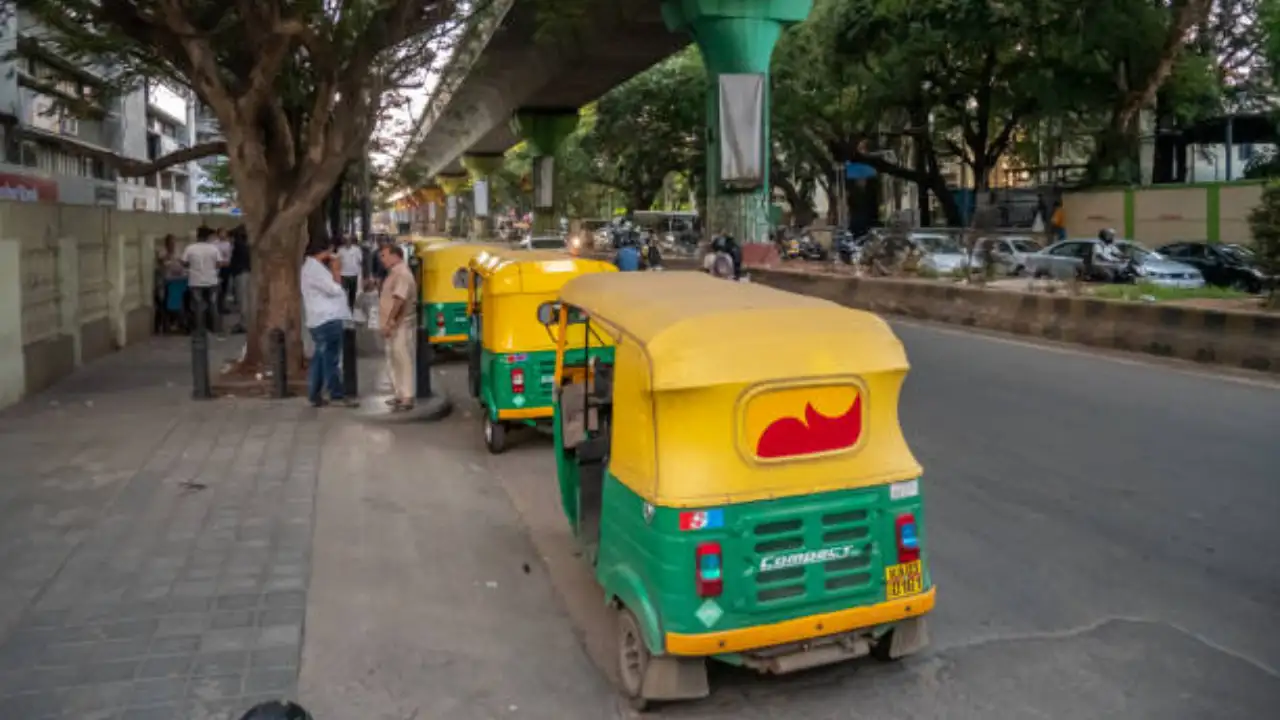
Bengaluru commuters woke up to a new auto fare regime on Saturday, as the revised meter rates came into force citywide. The updated tariff now fixes the minimum fare at ₹36 for the first two kilometres, a ₹6 hike from the earlier ₹30. The fare revision marks a significant shift in the cost dynamics of urban mobility, impacting over a million daily riders dependent on auto rickshaws for short to medium commutes.
The per kilometre rate has also been revised upward from ₹15 to ₹18 beyond the first two kilometres. The new fare structure applies to up to three passengers per auto and has been extended across Bengaluru with immediate effect. District transport officials confirmed the hike after a series of deliberations with the Auto Fare Revision Committee earlier this year. The revised rates are also accompanied by revised night charges, with one-and-a-half times the base fare applicable from 10 pm to 5 am. A wait time charge of ₹10 will be levied for every 15-minute halt after the initial five-minute grace period. The luggage policy now permits commuters to carry up to 20 kg at no extra cost, while loads above that are chargeable at ₹10, capped at 50 kg.
While auto driver unions have welcomed the hike as overdue compensation for rising fuel prices, maintenance costs, and inflationary pressure, many commuters have expressed dismay. Several daily travellers feel the hike may deter usage of auto rickshaws, especially for low-income groups and gig economy workers who rely on shared and short-distance transport modes. According to civic mobility experts, the fare hike may result in behavioural shifts among city travellers. Some predict increased reliance on BMTC buses or two-wheelers, while others argue that the new fare structure may indirectly encourage shared mobility and greater usage of app-based aggregators that offer fare transparency and route tracking.
Transport department officials clarified that the fare revision had been vetted by multiple stakeholders including driver associations and urban planners. The decision is rooted in balancing commuter affordability and driver sustenance, while remaining in line with public transport pricing trends in other metropolitan regions. The last fare revision was effected several years ago, with auto unions consistently lobbying for hikes in light of fuel price volatility. Experts note that regulated fare hikes, when implemented transparently and supported by grievance redressal mechanisms, can help maintain equilibrium in the city’s public transport ecosystem.
For now, Bengaluru’s auto drivers will begin re-calibrating their meters in accordance with the new structure. The city’s commuters, meanwhile, will be adjusting their wallets — some with frustration, others with resignation — as the evolving transport economy continues to shape the pulse of everyday urban life.
Also Read : Bengaluru Dengue Cases Drop by 90 Percent in July
