


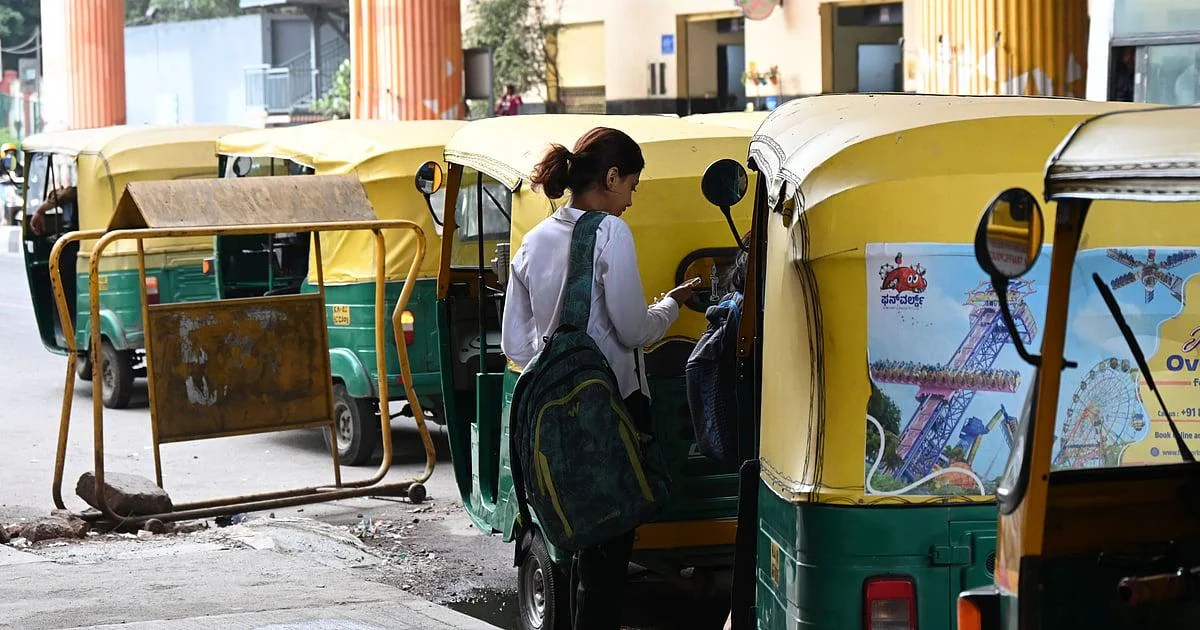
A sharp rise in autorickshaw fares across Bengaluru during a recent festive weekend has highlighted persistent gaps in last-mile connectivity and fare regulation, placing additional strain on daily commuters.
The surge, driven by high demand and limited availability, has once again drawn attention to the fragility of informal transport systems in rapidly growing urban centres.Passengers across key transit points reported significantly higher charges, particularly during peak hours and late evenings, when public transport options were either limited or overcrowded. The situation underscores the city’s continued dependence on autorickshaws as a primary last-mile solution, despite ongoing investments in metro and bus networks.
Urban mobility experts note that Bengaluru auto fares often fluctuate during periods of increased demand, reflecting a mismatch between supply and commuter needs. While app-based ride services have introduced some transparency, a large portion of the city’s autorickshaw network still operates outside fully regulated pricing frameworks. This creates inconsistencies that disproportionately affect lower- and middle-income commuters who rely on these services daily.The issue also raises broader questions about equitable urban mobility.For many residents, particularly those living in peripheral areas, autorickshaws are not a convenience but a necessity to access workplaces, education and healthcare.
When fares spike unpredictably, it can disrupt household budgets and limit mobility options, affecting economic participation and quality of life.Authorities, including Bengaluru Transport Department, have previously introduced fare guidelines and digital meters to standardise pricing. However, enforcement remains a challenge, especially during high-demand periods. Experts suggest that strengthening monitoring mechanisms and expanding digital payment and tracking systems could improve compliance and transparency.From an infrastructure perspective, the recurring fare surge points to deeper structural issues. Limited integration between transport modes, inadequate last-mile connectivity and uneven service distribution across the city contribute to reliance on informal systems. Urban planners argue that improving feeder services, pedestrian infrastructure and shared mobility options could reduce pressure on autorickshaws and stabilise fare dynamics.There are also environmental implications. When commuters are priced out of short-distance travel or face uncertainty, they may turn to private vehicles, increasing congestion and emissions. A more reliable and affordable last-mile network is therefore essential not only for accessibility but also for achieving climate and sustainability goals.
The Bengaluru auto fares surge serves as a reminder that transport systems must evolve alongside urban growth. As the city continues to expand, ensuring fair pricing, reliable services and integrated mobility solutions will be key to building a more inclusive and resilient urban transport ecosystem.
Also Read:Bengaluru Property Tax Crackdown Targets Defaulters
