


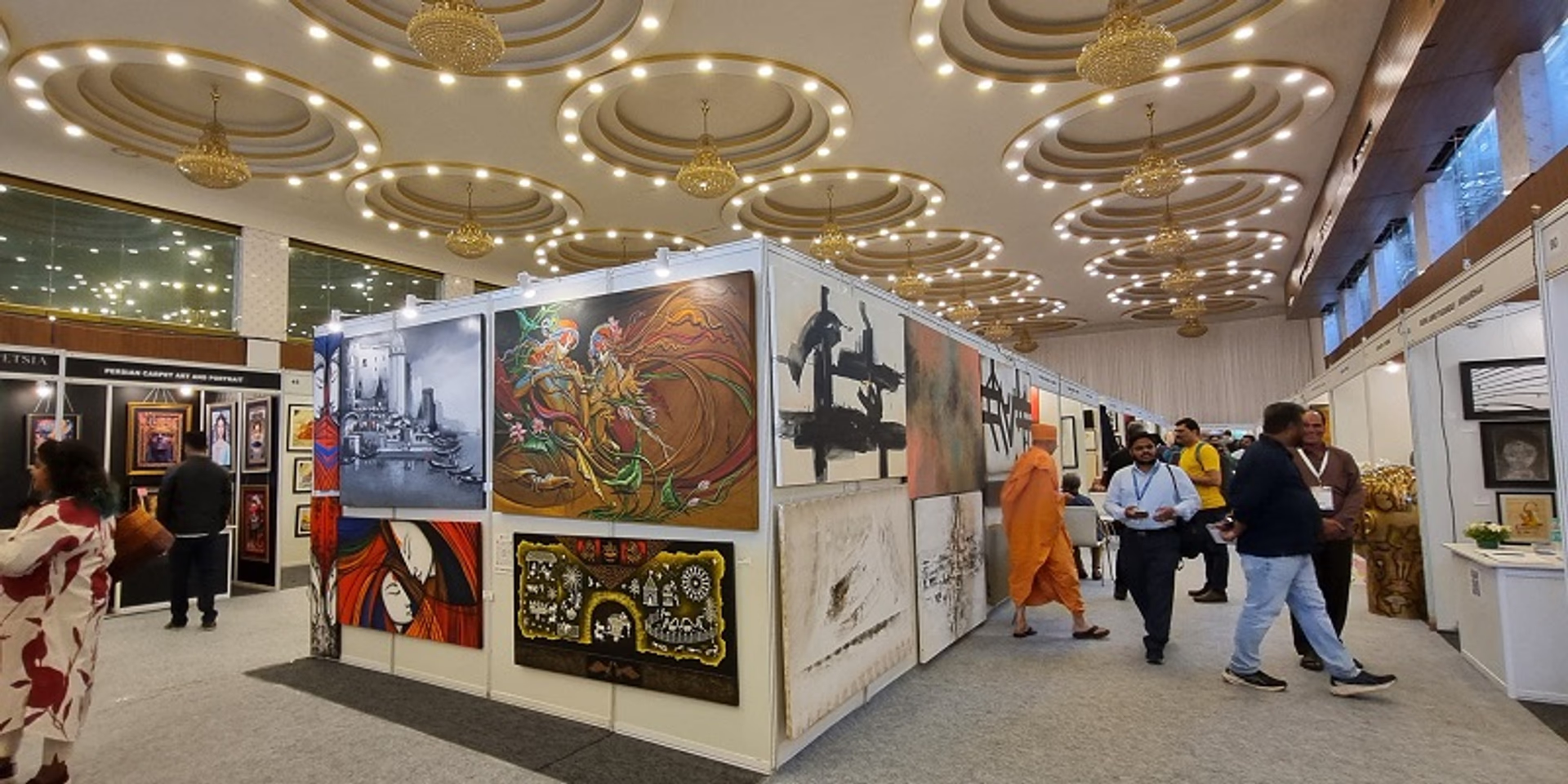
An art-led public initiative in Bengaluru is drawing attention to women’s experiences in urban spaces, using visual storytelling to highlight issues of safety, access, and inclusion.
The exhibition, held in a prominent city venue, reflects a growing intersection between cultural platforms and civic discourse, where art is being used to question how cities are designed and who they serve.The showcase brings together works that explore everyday realities faced by women in metropolitan environments—from navigating public transport to accessing safe public spaces.Through installations, paintings, and mixed media, the exhibition frames these concerns not as isolated experiences but as structural urban challenges. Organisers indicate that the goal is to make conversations around gender and city planning more visible and accessible to a wider audience.Urban planners say such initiatives are increasingly relevant as cities expand rapidly without always integrating gender-sensitive design. Issues like poor street lighting, lack of last-mile connectivity, and limited representation in planning processes often affect women disproportionately. In this context, the Bengaluru art exhibition serves as a platform to bridge the gap between lived experiences and policy discussions.The exhibition also reflects a broader shift in how urban narratives are communicated.Cultural spaces are emerging as informal forums for civic engagement, where residents can engage with complex topics outside traditional policy channels.
A senior urban development expert noted that art can humanise data-driven debates, making them more relatable and prompting public participation in city-building processes.Beyond awareness, the initiative has implications for urban governance and real estate development. As cities compete to attract talent and investment, inclusivity and liveability are becoming critical benchmarks. Developers and planners are increasingly expected to consider gender-neutral design principles—such as well-lit streets, accessible transit nodes, and mixed-use developments that enhance safety through activity and visibility.The economic dimension is equally significant. Safer and more inclusive urban environments can improve workforce participation, particularly among women, contributing to broader economic growth.Experts suggest that integrating insights from such exhibitions into planning frameworks could lead to more equitable infrastructure investments, benefiting both communities and city economies.There is also a sustainability angle. Inclusive urban design often aligns with climate-resilient planning, encouraging walkability, public transport use, and community-centric spaces.By addressing the needs of diverse user groups, cities can create environments that are not only safer but also more sustainable in the long term.As Bengaluru continues to evolve as a major urban hub, initiatives like this highlight the importance of embedding social equity into development strategies.
The conversation sparked by the Bengaluru art exhibition underscores a critical question for growing cities: how to ensure that infrastructure and public spaces are designed for all, not just a few. The answer may lie in integrating cultural insights with formal planning processes, creating cities that are both inclusive and resilient.
Also Read:Bengaluru Ad Revenue Redirected To Urban Development Projects
