


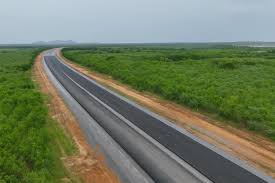
A major expressway connecting Bengaluru with key urban and economic centres in Andhra Pradesh has marked a significant moment in India’s infrastructure build-out, highlighting how highway construction is evolving in scale, speed and execution. On an under-construction stretch of the Bengaluru–Kadapa–Vijayawada economic corridor, the National Highways Authority of India achieved two globally recognised benchmarks for continuous road-laying within a single 24-hour cycle.
The corridor is designed to strengthen connectivity between Bengaluru India’s largest technology and employment hub and rapidly growing cities in southern Andhra Pradesh. For policymakers and urban planners, the development matters because it accelerates regional integration, linking industrial supply chains, agricultural markets and emerging logistics clusters to Bengaluru’s wider economic ecosystem. Infrastructure specialists say the achievement reflects a broader shift in how expressway projects are being delivered. Large-format construction, once spread over extended timelines, is now increasingly executed through tightly coordinated operations involving advanced machinery, round-the-clock workforce deployment and real-time quality monitoring. This has implications not only for cost efficiency but also for how quickly regions can unlock the economic benefits of improved mobility. The Bengaluru-linked corridor is expected to ease pressure on existing highways that currently handle long-haul freight and commuter traffic. Reduced travel times could lower fuel consumption and vehicle emissions over the long term, particularly for logistics operators moving goods between southern manufacturing zones and eastern ports. Urban transport experts note that such corridors, when planned responsibly, can contribute to more climate-resilient mobility systems by cutting congestion-related emissions.
Beyond transport efficiency, the expressway is already influencing land-use dynamics along its alignment. Improved access to Bengaluru is likely to increase demand for warehousing, industrial estates and residential developments in intermediate districts. Urban development analysts caution that this growth must be guided carefully, with planning frameworks that prioritise compact development, adequate civic infrastructure and protection of environmentally sensitive areas. From a construction standpoint, the corridor’s progress demonstrates growing capacity within India’s highway ecosystem. Continuous laying of bituminous concrete across multiple lanes requires uninterrupted material supply, strict temperature control, precision paving and immediate quality checks. Industry observers see this as evidence that Indian contractors and public agencies are closing the gap with global infrastructure execution standards. Officials associated with the project indicate that similar high-output construction efforts are planned on adjoining packages of the Bengaluru Andhra Pradesh corridor. The intention is to compress delivery timelines without compromising durability or safety, a balance that remains critical as expressway networks expand.
As Bengaluru’s economic influence continues to spill beyond state boundaries, corridors like this one will shape how cities, towns and rural regions integrate into shared growth pathways. The long-term test will lie not in record-setting milestones, but in how effectively these highways support inclusive development, resilient urbanisation and sustainable regional economies.
Also Read: Mahindra Lifespaces Advances Low Carbon Housing Strategy
Bengaluru Andhra Pradesh Corridor Redefines Highway Construction Scale
