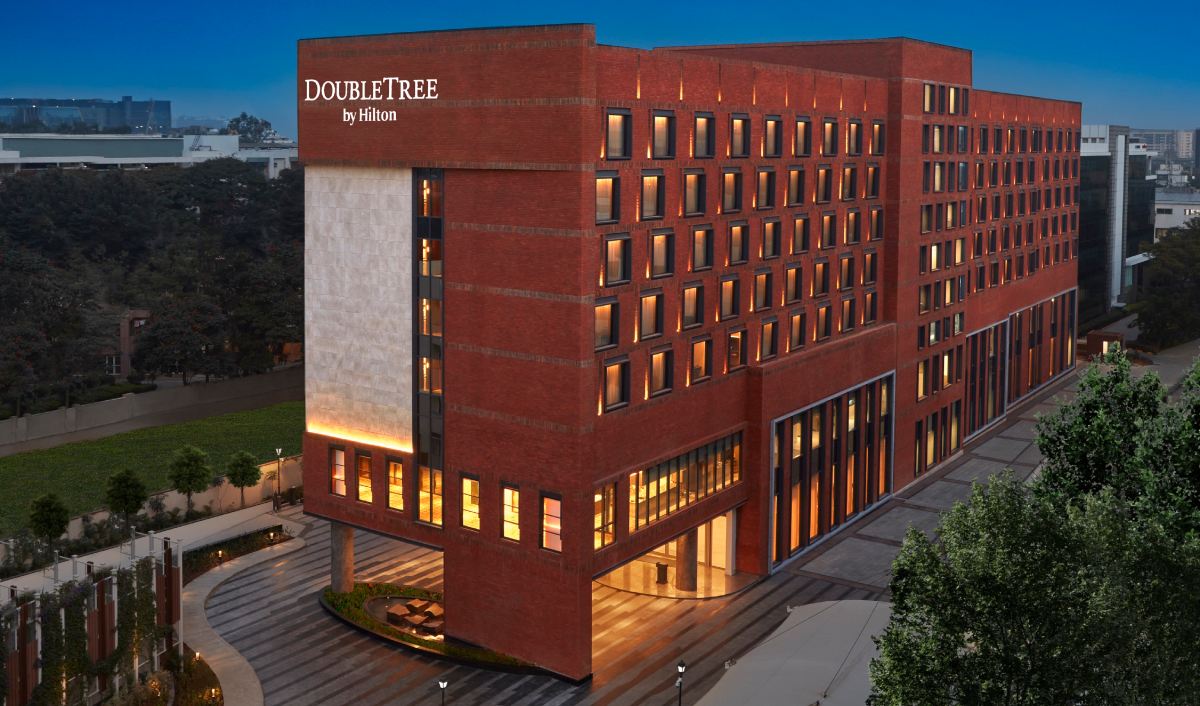
Bengaluru Airport Welcomes India’s Largest DoubleTree Hotel
BENGALURU – The city’s northern airport corridor has gained a significant boost in hospitality infrastructure with the opening of India’s largest DoubleTree by Hilton. Strategically located 15 minutes from Kempegowda International Airport, the 304-room hotel is designed to cater to corporate travellers, transit passengers, and emerging business districts within the Aerospace Park and nearby industrial hubs. Experts suggest the development signals Bengaluru’s growing appeal as a commercial and technology-driven urban centre.
Urban planners and hospitality analysts highlight that the hotel’s placement reflects the city’s ongoing transformation of peripheral zones into integrated commercial nodes. Bengaluru’s airport-adjacent corridors have witnessed rapid growth in IT, aerospace, and logistics clusters, driving demand for large-format accommodations. The new property, with extensive meeting spaces and event facilities, aligns with a rising trend of hotels functioning as multi-purpose business hubs rather than purely leisure destinations.
The facility offers over 9,000 square feet of flexible meeting and conference spaces, alongside three dining outlets, wellness amenities, and an outdoor leisure area. According to industry observers, these features cater to both domestic and international travellers, reflecting a shift in hotel design towards experience-driven hospitality that supports business productivity and well-being. The combination of high room inventory and proximity to transport infrastructure enhances the corridor’s capacity to host corporate events, training programmes, and sector-specific gatherings. Economically, the development underscores the role of private partnerships in urban expansion. Collaboration between international hotel brands and local developers is increasingly shaping Bengaluru’s urban real estate landscape, bringing in capital investment, employment opportunities, and ancillary service demand. Observers note that such projects contribute to equitable growth by generating diverse job categories, from hospitality and food services to facility management and event coordination.
From a sustainability perspective, experts emphasise that large hotels in rapidly urbanising zones carry responsibility for energy-efficient operations, water management, and low-carbon mobility integration. The focus on transit-oriented locations, close to airports and industrial clusters, reduces dependence on long-distance commuting, supporting more climate-conscious urban mobility patterns. As Bengaluru continues to consolidate its status as a major commercial and technology hub, the airport corridor is likely to see further hospitality and mixed-use developments. Planners suggest that careful integration with urban transport, green infrastructure, and inclusive design will determine whether these expansions enhance the city’s liveability and economic resilience over the next decade.