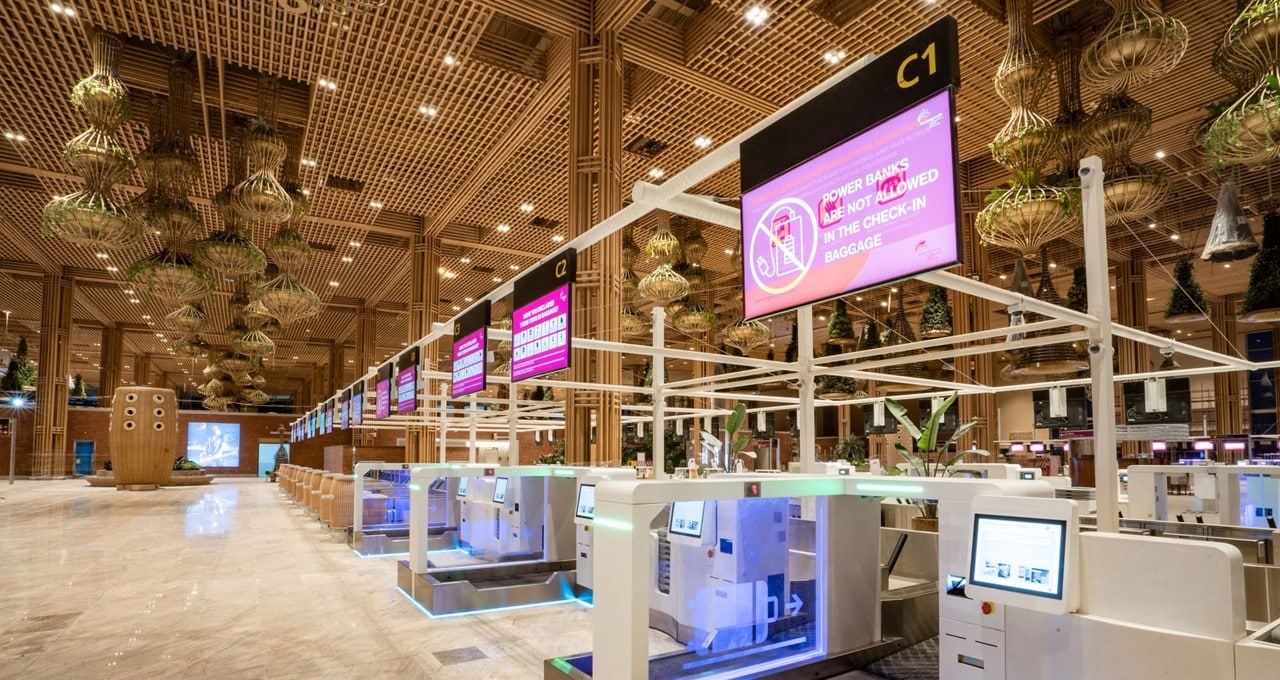
Bengaluru’s Kempegowda International Airport has introduced a new premium social lounge within Terminal 2, signalling a strategic shift in how major Indian airports design and monetise passenger spaces. Branded as Gate Z, the facility departs from conventional business lounges to prioritise social interaction, flexible work and experience-led design, an approach increasingly shaping next-generation transport infrastructure.
Located airside in Terminal 2, after immigration and security clearance, the lounge sits adjacent to the existing international premium facilities but follows a markedly different design philosophy. Airport planners involved in the project indicate that Gate Z was conceived to reflect changing passenger demographics, particularly younger professionals, remote workers and leisure travellers who value connectivity, ambience and shared experiences over secluded comfort. From an urban infrastructure perspective, the development reflects a broader recalibration underway at large transport hubs. Airports are no longer treated solely as transit points; they are evolving into mixed-use environments that blend hospitality, work and leisure. Industry experts note that this transition has direct economic implications, as non-aeronautical revenue generated from lounges, retail and food services now plays a critical role in airport sustainability and long-term financial resilience.
Gate Z has been structured around four distinct zones catering to varied passenger behaviours, ranging from café-style social areas to quieter seating designed for focused work. The integration of AI-enabled navigation and assistance tools within the lounge also mirrors wider investments in digital infrastructure across Indian airports, aimed at improving passenger flow while reducing operational friction. Such systems, according to aviation analysts, can support efficiency goals without expanding physical footprints—an increasingly relevant consideration for climate-conscious infrastructure planning. Sustainability has been positioned as a design driver rather than a marketing add-on. Urban planners familiar with Terminal 2’s development note that experiential spaces like Gate Z align with people-first design principles by encouraging longer dwell times in shared areas, potentially easing congestion elsewhere in the terminal. However, they also caution that premium access models must be balanced against inclusivity, particularly in publicly significant infrastructure assets.
Access to Bengaluru Airport Gate Z is currently limited to travellers holding select Indian and international premium cards or those willing to pay a walk-in fee. While this positions the lounge firmly within the premium segment, airport economists suggest that such differentiated offerings allow operators to cross-subsidise broader passenger amenities without placing additional cost burdens on standard users. As Indian cities invest heavily in aviation-led economic growth, experiments like Bengaluru Airport Gate Z offer insight into how infrastructure providers are responding to evolving work cultures, digital mobility and urban lifestyles. The long-term test will be whether such spaces can scale sustainably while remaining adaptable to diverse passenger needs in one of the country’s fastest-growing metropolitan regions.