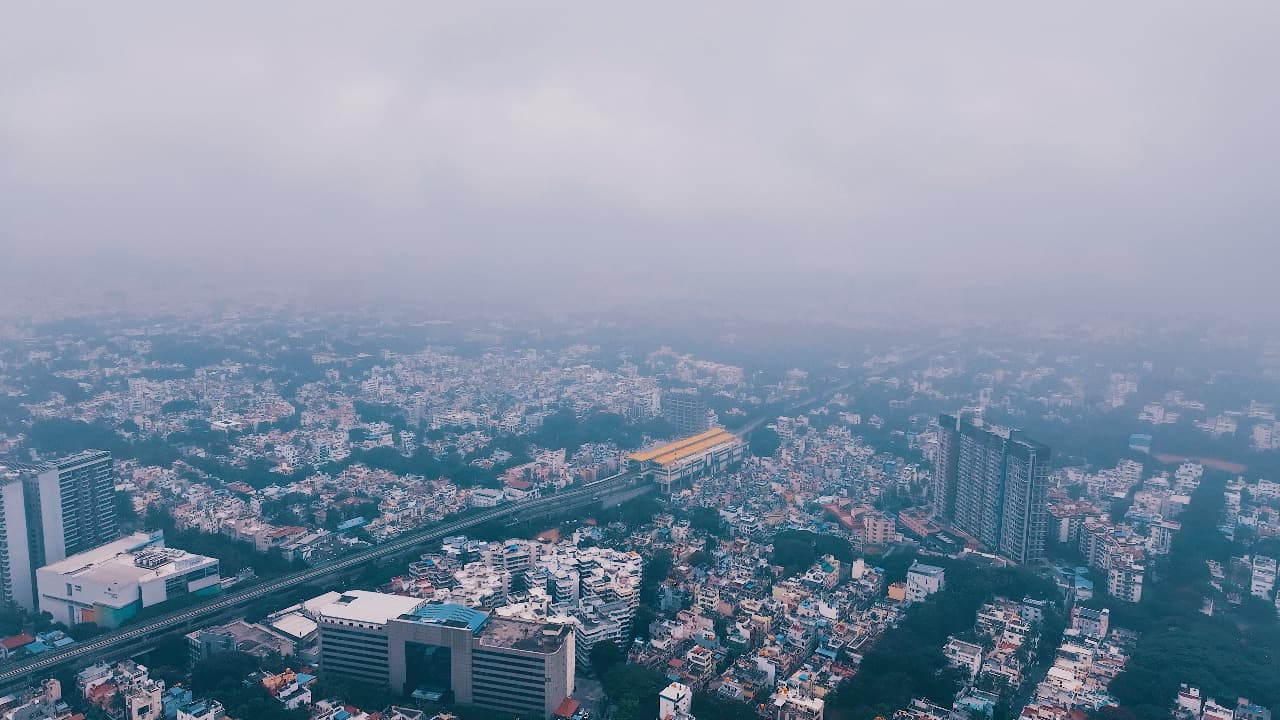
Bengaluru entered Friday under clear skies and mild winter warmth, offering residents a familiar January pattern that supports daily mobility, outdoor work, and construction activity. Daytime temperatures are settling in the high twenties, while early mornings remain cool, reinforcing the city’s seasonal balance. Yet beneath the pleasant surface, moderate air quality levels continue to underline the structural challenges facing India’s technology capital as it expands.
Weather stability matters in Bengaluru not just for comfort, but for how the city functions. With peak temperatures hovering around 27°C and low humidity, the conditions support smoother traffic flow, reduced energy demand for cooling, and improved productivity across outdoor-dependent sectors such as infrastructure maintenance, real estate development, and last-mile logistics. Urban planners note that predictable winter weather provides a crucial operational window before pre-monsoon volatility begins later in the year. However, air quality remains a parallel concern. Recent readings placed the city’s Air Quality Index in the moderate range, driven primarily by fine and coarse particulate matter associated with vehicular emissions, road dust, and ongoing construction. While not classified as hazardous, this level of pollution disproportionately affects children, older residents, and people with respiratory sensitivities, particularly during peak commute hours.
The current dry spell presents a mixed outcome for air conditions. Light winds offer intermittent dispersion of pollutants, but the absence of rainfall limits natural cleansing of airborne particles. Environmental analysts point out that such patterns are becoming more frequent, reflecting how climate variability and urban density interact in rapidly growing cities. For Bengaluru, this reinforces the need for long-term investments in clean transport corridors, dust management at construction sites, and expanded urban green buffers. From a civic perspective, the weather outlook for the coming days suggests relative continuity, with stable daytime temperatures and gradually warming nights. While forecasts indicate a brief chance of light rainfall over the weekend, rainfall volumes are expected to be minimal. This provides short-term predictability for outdoor events, housing site work, and public infrastructure operations, though city agencies remain alert to sudden microclimatic shifts.
For residents, the implications are practical. Early mornings and evenings remain the most comfortable for outdoor activity, while midday sun exposure requires basic precautions. Health experts advise those sensitive to air pollution to avoid heavy exertion near high-traffic corridors and to prioritise hydration during dry conditions. Looking ahead, Bengaluru’s winter weather once again highlights the delicate balance between climate comfort and environmental stress. As the city continues to grow vertically and outward, aligning urban design, mobility planning, and environmental safeguards will be essential to ensure that seasonal advantages translate into long-term liveability and resilience.