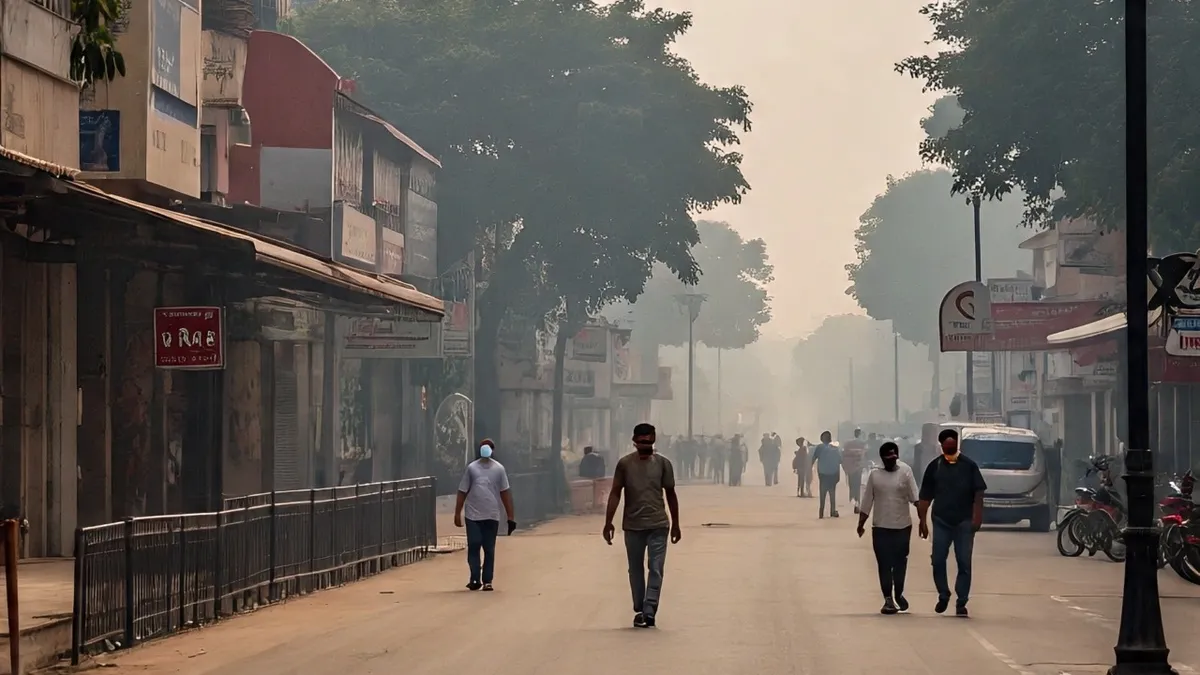
Bengaluru Air Quality Improves Forty Four Percent During Deepavali 2025
Bengaluru recorded a remarkable 44 percent improvement in air quality during the Deepavali festivities this year compared to 2024, according to data released by the Karnataka State Pollution Control Board (KSPCB). Between October 20 and 22, 2025, the city’s average Air Quality Index (AQI) fell to 83 from 120 last year, reflecting the combined impact of green firecracker usage, reduced vehicular traffic, and timely rainfall.
Data from the KSPCB’s Continuous Ambient Air Quality Monitoring Stations (CAAQMS) showed a consistent trend of improvement across most city monitoring points. While the Hebbal station witnessed a steep 179 percent decrease in AQI from 185 to 66, other key stations such as NIMHANS, Jigani, and Peenya reported reductions of 62 percent, 60 percent, and 59 percent, respectively. The only exception was Saneguruvanahalli, which saw a slight increase of 2 percent in AQI compared to 2024, reaching 84 this year.
Daily patterns during the festival revealed fluctuations in pollution levels. On October 20, the first day of Deepavali, the average AQI was 77. The second day experienced a temporary spike to 94, before dropping significantly to 72 on October 22. Comparisons with pre-festival levels showed a moderate 5 percent improvement, as the AQI on October 13 was 93. Across Karnataka’s 28 other monitoring stations, average AQI decreased from 73 to 56, indicating a statewide reduction of 29 percent.
Experts from KSPCB attributed the improvement to multiple factors. The adoption of green firecrackers played a crucial role in limiting particulate matter, while rainfall during the festivities helped reduce airborne pollutants by increasing atmospheric moisture. Officials also noted that lower vehicular movement within the city contributed to cleaner air during the three-day celebration.However, despite the improvement in air quality, noise pollution surged significantly during the festival. Manual ambient noise monitoring at Sarjapur recorded an average of 90.4 decibels, an 11 percent rise from pre-Deepavali levels. Peenya and Yelahanka saw even sharper increases of 42 percent and 24 percent, with decibel levels reaching 72.88 dB and 79.72 dB respectively, highlighting the continuing challenge of managing noise during large-scale festive celebrations.
Environmental experts emphasized that while the reduction in air pollution is a positive outcome, city authorities must continue promoting sustainable practices, including stricter enforcement of green cracker usage and public awareness campaigns on noise mitigation. These measures, combined with infrastructure planning, can help Bengaluru maintain healthier air quality in future festivals.As the city celebrates festivals within an eco-conscious framework, the Deepavali 2025 air quality data demonstrates the potential for sustainable urban festivities, reflecting the collective benefits of responsible behaviour, natural weather factors, and effective pollution monitoring.