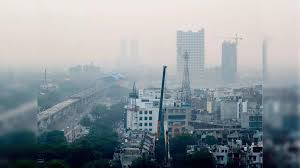
Bengaluru continues to struggle with deteriorating air quality despite significant public investment aimed at reducing pollution levels, highlighting the growing complexity of environmental management in rapidly expanding Indian cities.
Government data reviewed in Parliament shows that more than ₹427 crore has been allocated to improve air quality in the city under the National Clean Air Programme (NCAP). However, Bengaluru remains categorized as a non attainment city, meaning its pollution levels continue to exceed India’s national ambient air quality standards.The designation applies to urban areas where concentrations of major pollutants such as particulate matter consistently cross regulatory limits. Bengaluru is among more than a hundred Indian cities included in the national programme, which was launched to address rising urban air pollution through targeted mitigation strategies and long-term monitoring.
Officials involved in environmental oversight say a large portion of the allocated funds has already been utilized to support city-level interventions. These measures include the deployment of mechanized road sweeping machines, efforts to increase urban green cover, and initiatives to control dust generated by construction activities.Despite these steps, environmental experts say Bengaluru air quality remains under pressure due to multiple overlapping pollution sources. Rapid urbanization, expanding vehicle ownership, and dense traffic corridors continue to contribute to emissions across the metropolitan region. In addition, road dust and debris from ongoing construction projects have emerged as major contributors to particulate pollution.Urban planning specialists point out that cities experiencing sustained economic growth often face similar environmental challenges. Bengaluru’s expanding technology sector and population growth have increased commuting demand, intensifying traffic congestion at key intersections and transport corridors.
To better understand pollution patterns, authorities have undertaken scientific studies that analyze the origins of pollutants in the urban atmosphere. Such research helps identify the relative contribution of sources such as vehicle exhaust, industrial activity, road dust and construction debris. Policymakers rely on these findings to develop targeted air quality improvement strategies.Based on these assessments, city officials have introduced a range of interventions including stricter monitoring of construction and demolition waste, improved street cleaning systems and initiatives encouraging cleaner transport options. Increasing green spaces along major roads and public areas has also been part of the strategy to improve urban air quality.
However, environmental analysts say addressing Bengaluru air quality challenges requires coordinated long-term action beyond individual projects. Urban infrastructure planning, public transport expansion, and improved enforcement of construction norms are seen as key elements in reducing pollution levels.
As Indian cities continue to grow, Bengaluru’s experience illustrates the broader challenge of balancing economic development with environmental sustainability. The effectiveness of future air quality initiatives will likely depend on how well urban planning, transport policy and environmental regulation work together to create healthier and more resilient metropolitan environments.
Bengaluru Air Quality Challenge Raises Urban Policy Questions.