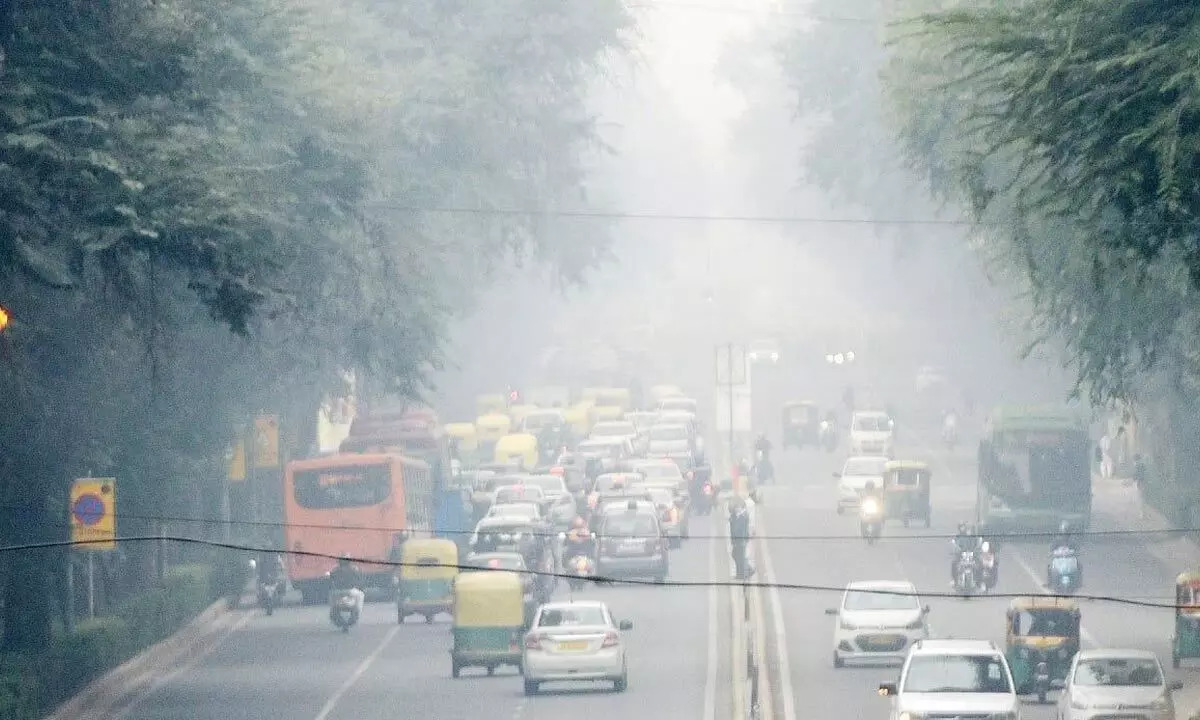
Bengaluru’s air quality has slipped into the ‘poor’ category across several monitoring locations on Saturday, with the highest readings recorded near Silk Board, raising renewed concerns over urban exposure risks in one of India’s fastest-growing metropolitan regions. The latest Bengaluru AQI Today data shows particulate concentrations at levels that may cause breathing discomfort, especially for vulnerable groups.
Real-time monitoring indicates PM2.5 levels around 174 and PM10 near 93 at Silk Board, a traffic-heavy junction that routinely experiences congestion from intercity and IT corridor movement. The lowest recorded AQI in the city stands at 133 in Bapuji Nagar, which still falls within the ‘poor’ band under national standards. On Friday, the citywide index averaged 154, signalling sustained particulate build-up rather than a one-day spike. Under India’s air quality classification system, readings between 101 and 200 are categorised as ‘poor’, suggesting potential respiratory stress for children, senior citizens and individuals with pre-existing health conditions. Urban health specialists say prolonged exposure at these levels can increase vulnerability to asthma, bronchitis and cardiovascular strain, particularly during peak traffic hours.
The pattern is not unexpected for February. Pre-summer atmospheric stability, combined with vehicular emissions and construction dust, tends to trap pollutants closer to ground level. Silk Board’s recurring high readings underline the environmental cost of dense transit corridors that have outpaced public transport capacity. Urban planners argue that Bengaluru AQI Today trends should be read alongside land-use and mobility data. Rapid real estate expansion across the city’s southern and eastern zones has intensified commute distances, while construction activity linked to commercial and residential growth continues to add to particulate load. Experts say this reinforces the need for transit-oriented development, dust management norms, and electrification of public transport fleets.
The economic implications are equally significant. Poor air quality can reduce outdoor productivity, strain public health systems, and deter global talent in a city that markets itself as a technology and innovation hub. For real estate developers and institutional investors, environmental performance metrics are increasingly shaping long-term asset valuation and tenant preferences. Civic officials maintain that monitoring networks are expanding and that mitigation measures including mechanised road sweeping and emission enforcement drives are being strengthened. However, sustainability analysts note that episodic interventions may not deliver lasting impact without deeper structural shifts in mobility planning and energy use. As summer approaches, residents are being advised to limit prolonged outdoor activity during high-pollution windows and adopt protective measures where necessary. The broader challenge for Bengaluru lies in translating daily AQI alerts into systemic climate-resilient urban reforms ensuring that growth does not come at the cost of breathable air.