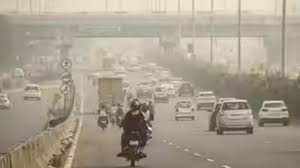
Bengaluru Air Pollution Dispersion Improves Urban Air Quality
A recent environmental analysis suggests that natural wind circulation has helped moderate particulate pollution levels in Bengaluru, offering temporary relief to the city’s air quality despite rising urban emissions.
The study indicates that atmospheric movement across southern India has played a key role in dispersing fine particulate matter in cities such as Bengaluru and Chennai. While several northern and inland urban centres experienced worsening pollution due to stagnant atmospheric conditions, stronger wind movement in parts of southern India helped prevent a similar build-up of pollutants.Air quality experts say the findings highlight how regional weather patterns can significantly influence urban pollution levels. In cities where wind speeds are higher and atmospheric mixing occurs regularly, pollutants are more likely to disperse rather than accumulate close to the ground.Bengaluru’s geographical setting and seasonal wind flows appear to have helped reduce concentrations of PM2.5, a category of fine particulate matter considered particularly harmful to human health because it can penetrate deep into the lungs and bloodstream.Environmental researchers note that during periods when atmospheric conditions remain stable and air circulation slows, particulate pollution can accumulate rapidly in dense urban areas. Such stagnation events often contribute to prolonged smog episodes in several major cities.
However, in Bengaluru’s case, consistent air movement has helped dilute pollutant concentrations and transport them away from the immediate urban environment. Similar conditions were observed in Chennai, where coastal wind patterns also support greater atmospheric dispersion.Urban sustainability experts caution that favourable weather patterns should not be interpreted as a long-term solution to urban pollution. While Bengaluru air pollution dispersion may temporarily reduce pollution intensity, underlying sources of emissions continue to grow as cities expand.Traffic congestion, construction activity, industrial emissions and waste burning remain key contributors to particulate pollution in metropolitan areas. Without structural interventions such as improved public transport, stricter emissions control and sustainable construction practices, pollution levels could rise during periods when atmospheric conditions become less favourable.Urban planners say the study underscores the importance of integrating environmental considerations into city planning. Expanding green cover, strengthening non-motorised transport networks and promoting low-emission infrastructure can help reduce pollution loads at the source.In addition, improved monitoring systems and real-time air quality tracking are becoming increasingly important tools for city administrations seeking to manage environmental risks.
For Bengaluru, the findings illustrate both the advantages and limitations of natural atmospheric processes. While wind patterns may occasionally reduce pollution intensity, long-term improvements in Bengaluru air pollution dispersion will depend on sustained policy efforts aimed at cleaner mobility, better waste management and climate-resilient urban development.
As Indian cities continue to urbanise rapidly, balancing economic growth with environmental sustainability will remain a central challenge for policymakers and urban planners alike.
Bengaluru Air Quality Improves Due To Wind Dispersion.