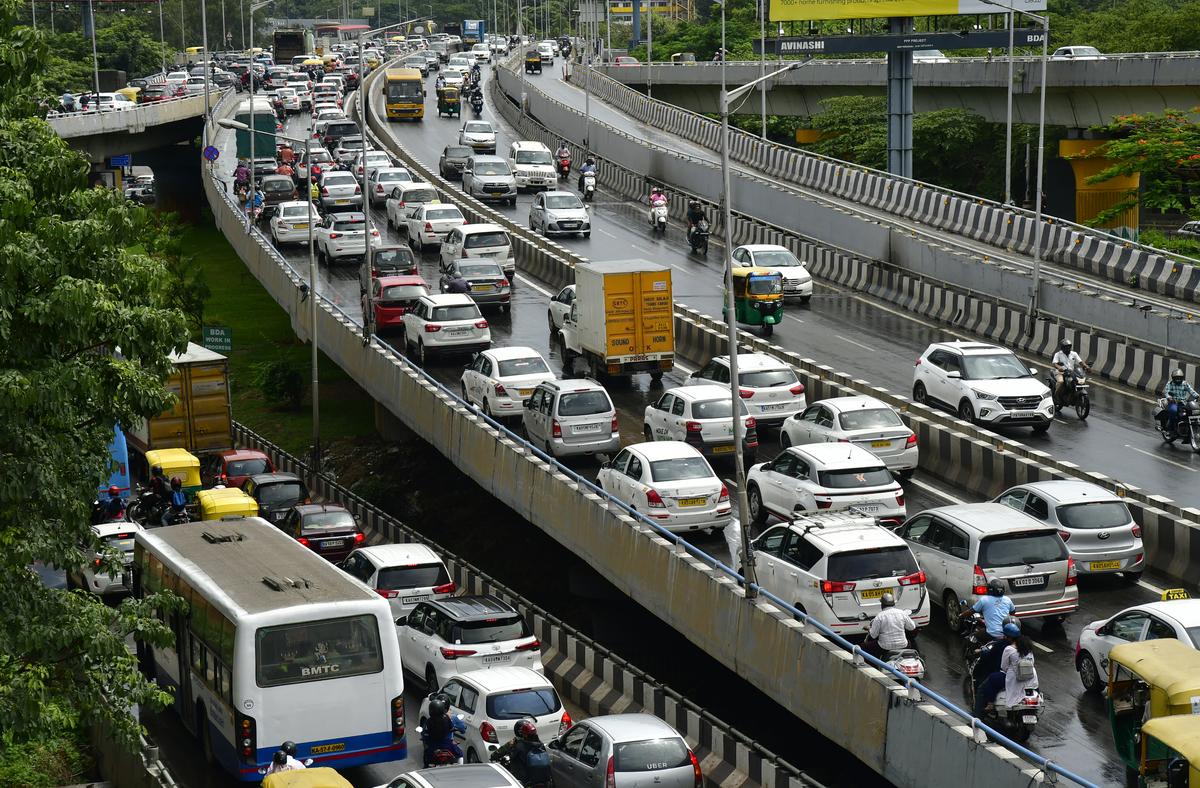
A major road infrastructure programme is being planned in Bengaluru, where the state government has proposed covering hundreds of kilometers of city roads with concrete surfacing over the next three years.
The initiative is intended to improve road durability and reduce frequent repairs in India’s technology capital, where rapid urban expansion and rising traffic volumes have intensified pressure on civic infrastructure.According to budget announcements by the state administration, authorities aim to undertake an extensive Bengaluru white topping plan that will cover approximately 450 kilometers of road corridors across the metropolitan area. The project is expected to involve an investment of nearly ₹3,000 crore and will be implemented in phases.White topping refers to the process of laying a concrete layer over existing asphalt roads. Engineers say this method can extend road life cycles significantly, as concrete surfaces are more resistant to potholes, heavy vehicle loads and extreme weather conditions. While the initial construction cost is typically higher than asphalt, maintenance requirements are considerably lower over time.
Urban infrastructure specialists note that the Bengaluru white topping plan reflects a broader shift in Indian cities towards more durable road construction techniques. With frequent monsoon damage and heavy commuter traffic, many metropolitan regions are reconsidering traditional asphalt surfaces that require repeated patchwork repairs.The city has already experimented with similar projects. Infrastructure authorities have ongoing concrete road works across key corridors, covering more than 150 kilometers. Earlier initiatives undertaken by municipal agencies have also completed close to 100 kilometers of white-topped roads across different neighborhoods.Officials say the new expansion will build upon these earlier efforts while integrating wider road development strategies aimed at improving mobility and connectivity. Alongside the concrete surfacing programmer, authorities are implementing major upgrades to arterial and sub-arterial routes to ease congestion in several busy parts of the city.Urban planners suggest that strengthening core road infrastructure is essential as Bengaluru continues to expand as a technology and economic hub. Increasing commuter traffic from satellite towns and suburban residential developments has placed unprecedented strain on existing transport networks.In addition to the white topping initiative, local authorities are advancing several other projects designed to improve the urban road system. These include ward-level road resurfacing works aimed at improving neighborhood connectivity and a major upgrade programme for the city’s Outer Ring Road Bengaluru, a critical mobility corridor linking technology parks and residential zones.Meanwhile, regional planners are reviewing proposals to revive a long-pending ring road corridor connecting per-urban areas on the city’s western outskirts. If implemented, the project could improve freight and commuter movement while easing traffic pressure within the urban core.
Experts emphasis that durable road construction must also align with broader sustainability goals. Efficient road infrastructure can reduce congestion, lower vehicle emissions and improve mobility access for residents across economic groups.As the city’s population and economic activity continue to grow, infrastructure investments such as the Bengaluru white topping plan will likely shape how the metropolitan region balances mobility, environmental resilience and equitable urban growth in the years ahead.
Bengaluru Plans Major White Topping Expansion Across City Roads