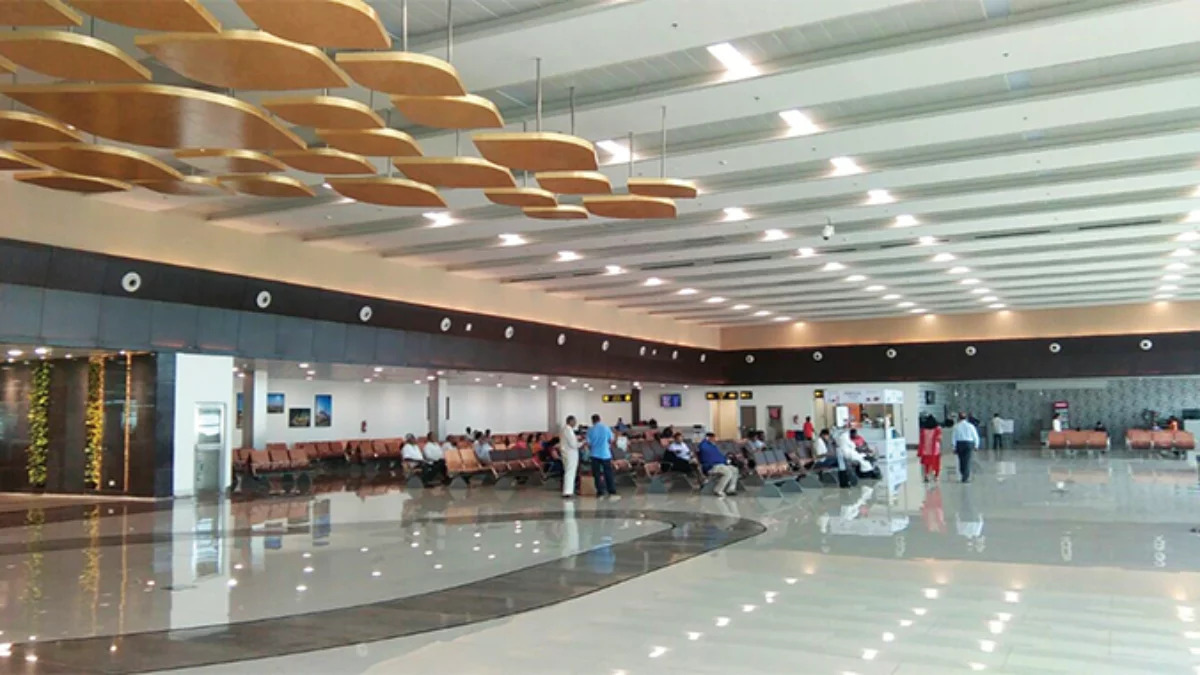
Belagavi Airport Expansion For 3.5 Million Annual Passengers Underway (1)
Belagavi’s airport is undergoing a major transformation, with a significant investment of over ₹322 crore from the Airports Authority of India (AAI) to construct a new terminal. The expansion, driven by consistent passenger growth, is set to increase the airport’s annual capacity from 0.8 million to 3.5 million. This project is not merely an infrastructure upgrade; it represents a strategic move towards creating a more sustainable and equitable urban landscape, positioning Belagavi as a crucial air travel hub for North Karnataka and fostering decentralised economic growth.
The current facility, equipped with a 2,300 x 45-metre runway capable of handling Airbus A320-type aircraft, has witnessed a steady climb in passenger traffic, from 0.30 million in 2022-23 to 0.34 million in 2024-25. This growth signals a burgeoning demand that the new terminal is designed to accommodate. However, the true significance of the project lies in its potential to integrate green infrastructure. Aviation experts and city planners see this as a critical opportunity to incorporate sustainable design principles from the outset, such as using renewable energy sources like solar panels for terminal operations, implementing rainwater harvesting systems, and deploying energy-efficient lighting. Such measures would not only reduce the airport’s carbon footprint but also set a benchmark for future regional infrastructure projects across the country.
The expansion can serve as a catalyst for equitable urban development. By strengthening Belagavi’s connectivity, the project reduces the reliance on congested metropolitan airports, distributing economic opportunities more evenly across the state. A new, modern airport can attract investments, boost tourism, and create a wide range of employment opportunities, from construction to airport management and hospitality. This decentralised growth is vital for building a more balanced and resilient economic ecosystem, preventing over-concentration of resources in a few major cities.
Beyond economic benefits, the airport upgrade holds the promise of contributing to a gender-neutral and inclusive city. A state-of-the-art facility can be designed with features that enhance safety and accessibility for all passengers and staff, irrespective of gender. Furthermore, the creation of new jobs in a modern, professional environment can be a powerful tool for promoting gender-equitable employment practices. The aviation sector offers diverse roles, and a new facility provides a unique opportunity to build an inclusive workforce from the ground up, ensuring that a significant proportion of jobs—technical, administrative, and operational—are accessible to women.
While the prospect of international operations remains contingent on traffic demand and regulatory clearances, the domestic expansion alone is poised to transform Belagavi’s connectivity landscape. The completion timeline is subject to various factors, including land acquisition and regulatory approvals, but the overarching vision for a sustainable and inclusive hub is clear. The success of this project will ultimately be measured not just by its increased passenger capacity, but by its long-term contribution to a greener, more equitable, and economically vibrant Belagavi. The city’s new airport is poised to be a symbol of progress, demonstrating that development and sustainability can and must go hand-in-hand.