


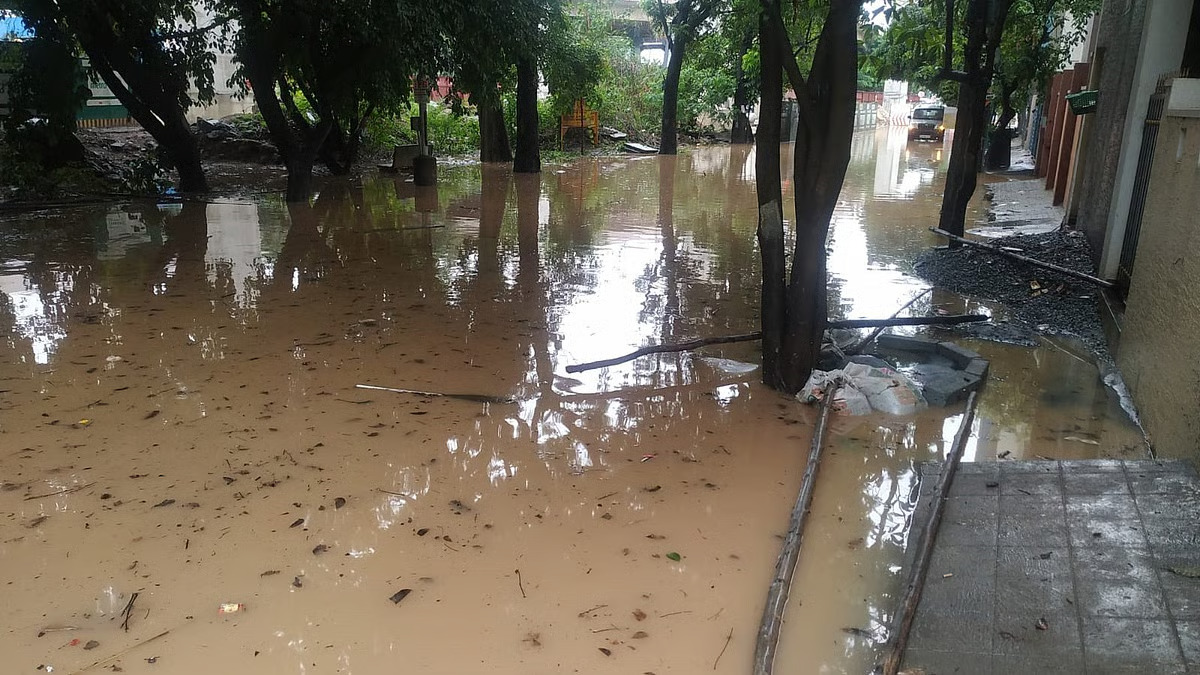
Bruhat Bengaluru Mahanagara Palike (BBMP) is facing mounting criticism from residents over its prolonged neglect of the northern portion of Benniganahalli Lake.
Local communities, particularly those living in the Kasturi Nagar and BDA Layouts, are holding the civic body responsible for repeated flooding incidents due to the lack of desilting and maintenance in this neglected waterbody segment. The seven-acre northern section of the lake, located in Survey Number 55 in CV Raman Nagar, has reportedly not undergone desilting for over 25 years. Unlike the southern part of the lake — developed in 2018 and maintained with community support — the northern side remains choked with silt and encroachments, resulting in severe waterlogging in nearby residential areas during recent downpours.
Residents allege that BBMP’s Lake Division has selectively developed only a portion of the lake — the side that lies in Survey Number 47 — while ignoring the rest. During the most recent rainstorm, stormwater from two major drains was unable to drain into the lake, causing it to reverse and spill into the streets and homes of over 40 families. “The stormwater drainage failed entirely. The water came gushing back into our homes,” said one elderly resident and long-time member of the local welfare association. “This could have been avoided had the northern part of the lake been desilted and restored like the southern side.”
The problem is further compounded by the lake being physically divided by a railway track belonging to the South Western Railways. This track isolates the northern side of the lake, which is bordered by railway lines on three sides. BBMP officials admit this has created logistical constraints and jurisdictional hurdles in accessing the site and initiating any meaningful restoration work. An official from the BBMP’s Lake Division confirmed that a formal request was sent to the Railways Department to allow access and permission for restoration. However, the civic agency is yet to receive a response. The delay in inter-agency coordination has now led to intensified public frustration.
Residents from Pai Layout and surrounding communities, who had previously taken up voluntary initiatives to revive parts of the lake, say their efforts have reached a standstill due to lack of official support. “Volunteers and citizen groups can only do so much. It is ultimately BBMP’s responsibility to ensure the lake functions as a stormwater buffer, especially as rainfall patterns grow more erratic due to climate change,” said a local expert on water management. Many residents fear that continued inaction could lead to severe repercussions during the upcoming monsoon season. “If there’s another spell of heavy rain upstream, in areas like Hebbal and Nagawara Valley, we are staring at more floods. Some tenants have already expressed interest in moving out due to recurring water damage,” said a female resident, highlighting the socio-economic distress faced by senior citizens and low-income families in the area.
The lake, once part of Bengaluru’s natural stormwater drainage system, is now a critical flashpoint in the larger debate over urban water management and sustainable city planning. Experts argue that the failure to desilt and maintain water bodies not only reduces groundwater recharge but also exposes densely populated areas to avoidable disaster risks. Environmental planners stress the urgent need for integrated lake rejuvenation policies in Bengaluru. “The BBMP must work collaboratively with the Railways and state agencies to create access, resolve land-use conflicts, and prioritise the ecological restoration of Benniganahalli Lake,” said a city-based urban ecologist.
Despite repeated requests and visible flooding impacts, there is no fixed timeline for when BBMP might gain access or commence desilting works on the northern side of the lake. Residents are now calling for immediate intervention from senior civic leadership and the Karnataka government to break the bureaucratic deadlock. In a city where rapid urbanisation has already encroached upon hundreds of lakes, Benniganahalli serves as a sobering example of what happens when infrastructure is developed unevenly and ecosystems are left fractured. The growing citizen outcry, especially from communities most vulnerable to flooding, is a timely reminder that lake restoration is not just an environmental issue — it’s a matter of urban justice and resilience.
Also Read : Mumbai Ahmedabad bullet train nears 2028 launch
